


Luxembourg, officially the Grand Duchy of Luxembourg,] is a landlocked country in Western Europe. It is bordered by Belgium to the west and north, Germany to the east, and France to the south and west. Its capital and most populous city, Luxembourg City, is one of the four institutional seats of the European Union and hosts several EU institutions, notably the Court of Justice of the European Union, the highest judicial authority in the EU.
As part of the Low Countries, Luxembourg has close historic, political, and cultural ties to Belgium and the Netherlands. Luxembourg’s culture, people, and languages are greatly influenced by France and Germany: Luxembourgish, a Germanic language, is the only recognized national language of the Luxembourgish people and of the Grand Duchy of Luxembourg; French is the sole language for legislation; and both languages along with German are used for administrative matters.
With an area of 2,586 square kilometres (998 sq mi), Luxembourg is Europe’s seventh-smallest country. In 2026, it had a population of 693,916, which makes it one of the least-populated countries in Europe, albeit with the highest population growth rate; foreign nationals account for almost half the population. Luxembourg is a representative democracy headed by a constitutional monarch, Grand Duke Guillaume V, making it the world’s only remaining sovereign grand duchy.
Healthcare in Luxembourg is based on three fundamental principles: compulsory health insurance, free choice of healthcare provider for patients and compulsory compliance of providers in the set fixed costs for the services rendered. Citizens are covered by a healthcare system that provides medical, maternity and illness benefits and, for the elderly, attendance benefits. The extent of the coverage varies depending on the occupation of the individual. Those employed or receiving social security have full insurance coverage, and the self-employed and tradesmen are provided with both medical benefits and attendance benefits. That is all funded by taxes on citizens’ incomes, payrolls and wages. However, the government covers the funding for maternity benefits as well as any other sector that needs additional funding. About 75% of the population purchases a complementary healthcare plan. About 99% of the people are covered under the state healthcare system.
Source:https://en.wikipedia.org/wiki/Luxembourg
STATS
- GLOBAL PRETERM BIRTH RATES: Luxembourg
- Estimated # of preterm births: 7.3 per 100 live births
- (Global Average: 10.6)
- Source- https://worldpopulationreview.com/country-rankings/preterm-birth-rates-by-country

COMMUNITY

Top of Form
Abstract
Psychological intimate partner violence (IPV), a global public health problem, affects mothers during pregnancy. We evaluated its relationship with preterm birth. We established a cohort of 779 consecutive mothers receiving antenatal care and giving birth in 15 public hospitals in Spain. Trained midwives collected IPV data using the Index of Spouse Abuse validated in the Spanish language. Preterm was defined as birth before 37 completed weeks of gestation. Gestational age was estimated by early ultrasound. With multivariate logistic regression we estimated the relative association of IPV with preterm birth as adjusted odds ratios (AOR), with 95% confidence intervals (CI). In propensity score analysis, using weighting by inverse probability of exposure to IPV, the whole sample was used for estimating the absolute difference in probability of preterm amongst offspring born to mothers with and without IPV. Socio-demographic and other pregnancy characteristics served as covariates in both analyses. Preterm occurred in 57 (7.3%) pregnancies. Psychological IPV, experienced by 151 (21%) mothers, was associated with preterm birth (11.9% vs 6.5%; AOR = 2.4; 95% CI = 1.1–5.0; p = 0.01). The absolute preterm difference in psychological IPV compared to normal was 0.08 (95% CI = 0.01–0.16; p = 0.04). The probability of preterm birth was 8% higher on average in women with psychological IPV during pregnancy. As our analysis controlled for selection bias, our findings give credence to a causal inference. Screening and management for psychological IPV during pregnancy is an important step in antenatal care to prevent preterm birth.
Source: https://pmc.ncbi.nlm.nih.gov/articles/PMC8861009


Abstract
Aim:
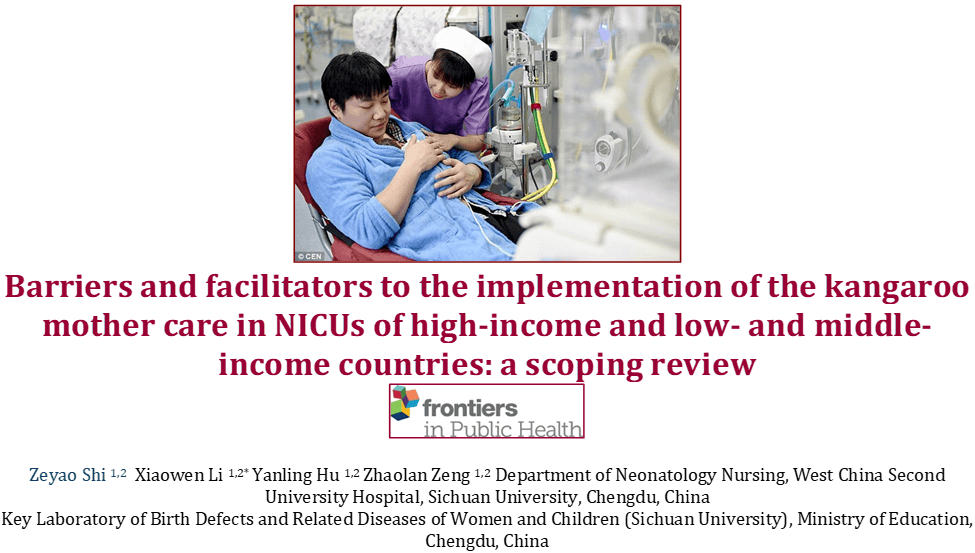
We aim to conduct an overview of barriers and facilitators to implementing kangaroo mother care (KMC) in neonatal intensive care units (NICUs) across different countries.
Design:
This study was guided by Arksey and O’Malley’s framework.
Data sources:
We searched the following databases on 15 December 2024: PubMed, Scopus, CINAHL, and Embase. We restricted the searches to articles between 1987 and the search date. The starting year was included because KMC was initiated in 1987.
Review methods:
A standardized data extraction form was developed and tested by the team. Data extraction was completed by Author 1 and Author 2. A table was used to extract data and synthesize results.
Results:
A total of 1,975 papers were yielded from the database search. We finally included 16 studies for narrative synthesis, executed in five high-income countries (HICs) and 11 in low- and middle-income countries (LMICs): 11 qualitative and four quantitative studies and one mixed-method study. We identified four themes, including hospital factors, parental factors, social-cultural factors, and financial factors, from the included articles. A total of 30 items of barriers and 25 items of facilitators were summarized. Parental lack of KMC knowledge or practice, shortage of medical staff, parental reluctance to participate in KMC, safety concerns on infants of healthcare providers (HCPs), reluctance to allow KMC of HCPs, limited knowledge or practice on KMC of HCPs, social-cultural factors including religious beliefs, gender inequality or lack of women empowerment, and financial factors including no cost-sharing mechanism were all reported only in LMICs. Comfortable facilities, maternity leave, and financial resources were mentioned as facilitators only in HICs. Availability of space or beds, preparation for KMC implementation, localized KMC practice, obliging and competent staff, and recognition of low-birth-weight (LBW) infants were only found as facilitators in LMICs.
Conclusion:
Different influencing factors to implement KMC were reported in HICs and LMICs. A better understanding of the key factors can help hospitals and government leadership make related policies to promote KMC practice. We recommend that decision makers design strategies and adopt interventions that specifically address these barriers and facilitators to better uptake of KMC.
New contribution:
At present, no studies have identified and synthesized barriers and facilitators of KMC practice, and described different features between HICs and LMICs. In this review, we synthesized barriers and facilitators reported in studies. This scoping review provides government and hospital leaders with evidence to make policies to promote KMC practice.
Source: https://www.frontiersin.org/journals/public-health/articles/10.3389/fpubh.2025.1701738/full
HEALTHCARE PARTNERS
Abstract
Background:
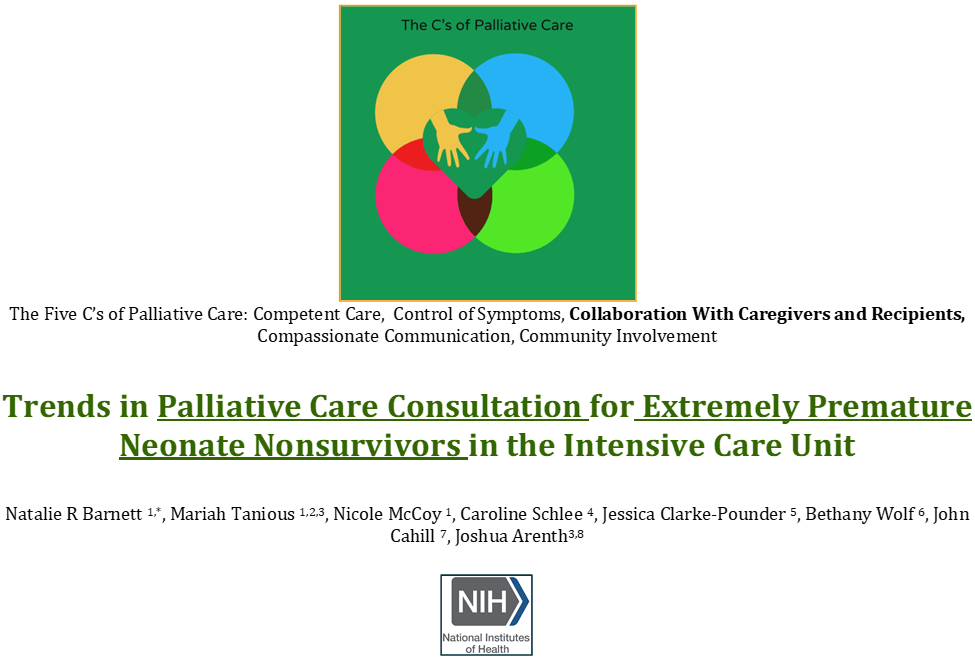
Extremely premature infants (<28 weeks gestational age) have a greater risk of mortality and, when they survive, higher rates of significant neurological disability and need for medical care. As a result, extremely premature infants and their families often benefit from early involvement of palliative care.
Objectives:
To identify possible associations between palliative care consultation and length of life, code status, and manner of death of extremely premature versus nonextremely premature neonates.
Methods:
A retrospective, cohort study of premature infants with a terminal admission at two academic medical centers in the southeastern United States. The primary hypothesis was that extreme prematurity was associated with receipt of a palliative care consultation. Secondary hypotheses examined the association between extreme prematurity with (1) time from admission to death and (2) code status and manner of death.
Results:
Extreme prematurity was associated with a lower likelihood of a palliative care consultation (p < 0.001) than for older neonates. When consultations occurred, they were often within the final days or hours of life. Females had a 43% higher likelihood of a palliative care consultation than males when controlling for other factors (p < 0.001). Extremely premature infants had lower odds of having an allow natural death versus full code status than older infants (p = 0.008).
Conclusions:
Infants born extremely premature were less likely to receive palliative care consultation during a terminal admission than older preterm infants. Considering the higher burden of comorbidities and later nature of consultation, extremely premature infants may benefit from earlier and more frequent integration of palliative care.
Full Study Access in Link Below. Discussion and Conclusions Follow:
Discussion
Hospital-based palliative care has existed in the United States for more than three decades. Yet, our findings from this retrospective, multicenter study align with previous work suggesting that formalized palliative care is often lacking or offered late in a neonate’s course. We found that extremely premature infants born at <28 weeks gestational age were less likely to receive a palliative care consultation during a terminal admission than were older preterm infants. When palliative care was used, extremely premature infants received consultation later in the terminal admission, often within the last hours to days of life, than older preterm infants. Extremely premature infants were more likely to receive full resuscitation attempts at the time of death and more likely to have a full code status at the time of death than older preterm infants, which aligns with the findings of other retrospective analyses. These findings suggest a potential opportunity to intensify involvement of palliative care specialists in the care of extremely premature infants and the potential impact an increase in specialty involvement and/or crossover palliative care principles by neonatologists may have for this patient population.
To address the heterogeneity in palliative care consultation for premature neonates, standardized care practices could be implemented. For example, in some institutions, palliative care involvement is automatically triggered for neonates who are at the margins of viability, have an antenatal or postnatal diagnosis of a life-threatening condition, or have deteriorated despite all appropriate medical efforts.
Introduction of triggers for palliative care consultation was shown by Nguyen et al. to increase consult rate and awareness of services, providing clear guidelines for providers to complement their existing knowledge from intensive care training. Also, given the high predicted mortality in certain infant populations in the NICU, involvement of a palliative care team early in the patient’s course could help establish a known and trusted source of support for families whose infants experience complications or who do not survive. This approach could improve inconsistencies across care teams and work shifts that are related to the current model of using palliative care “as needed.”
Importantly, given the relative shortage of palliative care physicians, additional or strengthening of existing training for neonatologists in palliative care practices could help bridge potential care gaps. For example, the neonatology team can provide primary palliative care concepts such as pain management, and begin discussions surrounding prognosis, goals of treatment and code status. Fellowship-trained palliative care physicians can assist with more complex medical cases or conflict management, whether between care teams and the family or among multidisciplinary or subspecialty teams. Given the ever-increasing medical complexity of this patient population, the expansion of primary palliative care, as managed by the neonatologists, could benefit patients and their families. These standardized practices could help facilitate specialized palliative care consultation earlier, alongside primary palliative and curative care, and across what can be a long, unpredictable NICU course.
An important challenge with palliative care is ensuring equitable, consistent use of palliative care consultation. Our findings uncovered potential disparities in receipt of palliative care services across sex, race, ethnicity, and insurance status, similar to that found in other studies. For example, in our cohort, we uncovered differences in timing of palliative care delivery between male and female neonates in a multivariable model. In other studies, palliative care consultation was delayed or referred less often among various subsets of pediatric populations, which revealed racial, ethnic, and socioeconomic inequities. To address these disparities, a standardized approach for palliative care consultation, as well as other multilevel interventions, could be implemented in the NICU and tailored to existing resources.
The benefits of integrating palliative care services in the NICU are multifold. First, early palliative care integration helps to build a solid foundation with the patient’s family and may facilitate difficult discussions across multiple specialties and subspecialties. Second, consultation and co-management by a palliative care team may reduce potential harms to neonates and decision-making distress for caregivers. Third, palliative care is a potential longitudinal resource for care coordination in the rising number of preterm infants and their families who survive to discharge or for those families of neonates who die.
Finally, in a survey of NICU professionals, nearly all respondents reported that their medical team and families would benefit from a dedicated, formal palliative care team. However, given the relative shortage of specialized palliative care physicians, encouraging education and coordinated training for primary neonatologists with specialized palliative care physicians could facilitate wider access to care. These compounding benefits suggest a crucial need to integrate palliative care access across the care continuum of a neonates’ hospital admission, whether by expanding primary palliative care by the primary neonatology team or by earlier consultation of specialized palliative care.
To establish and expand a neonatal palliative care service, several strategies can be explored. For example, prenatal education and counseling, when feasible, can help families understand where palliative care and intensive care approaches overlap and where they diverge, including considerations as the gestational age decreases. The generalist plus specialist concept for primary palliative care prior to consultation for specialty palliative care can expand overall access to primary palliative care by neonatologists while targeting more complex cases for the specialty-trained palliative care physician. To this end, process frameworks could screen all admitted patients for appropriateness of palliative care consultation. Appropriate assessment could include diagnosis-specific triggers based upon neonatology and palliative care discussions and preferences at each individualized center. This screening would address commonly reported barriers to palliative care use, including prognostic uncertainty, team or family acceptance of prognosis, lack of education, and lack of consistent care models. In addition, the approach of using trigger criteria has sustained success in improving access to palliative care in neonates admitted to the NICU with severe, life-threatening conditions.
The results of this study should be interpreted in the context of several limitations. First, our retrospective approach of describing the use of palliative care consultation may not capture all instances of team involvement (e.g., “curbsides”), late documentation of consultations, or consultations that took place before admission (outside institution or prenatally). Second, we did not describe efforts from the primary NICU team to provide goal-concordant care through prognosis conversations, family meetings, code status discussions, or goals of care documentation. Third, we did not capture neonates who received palliative care consultation, survived, and were discharged from the hospital. Fourth, while we did attempt to control for severity of comorbid disease by accounting for major comorbidities, congenital heart disease, chromosomal abnormalities and syndromes, this may not fully capture the severity of illness or the suddenness versus expectedness of the terminal event when comparing the relationship between gestational age, deaths and palliative care consultation. Fifth, the two high-volume NICU centers in this study showed important differences. For example, AHLCH had less-frequent use of palliative care consultation and a lower median gestational age of infants. However, both centers had a balanced total proportion of extremely premature infants and, even after adjusting for center, the trends remained significant. Although these centers have several differences, both are in the same geographic region and may not represent all NICUs across the United States.
Conclusions
In this study, we found that extremely premature infants were less likely to receive a palliative care consultation during their terminal admission than older preterm infants. When extremely premature infants did receive a consultation, this consultation occurred later during their care. Moreover, extremely premature infants were less likely to have limited resuscitation than a full code at the time of death. Although more work is needed to develop an intervention that increases awareness and use of palliative care for extremely premature infants, our study highlights the urgent need for greater integration of palliative care for these high-risk infants. Moreover, there is an opportunity for future research in the palliative care utilization and patterns in the neonatal population, especially within diagnosis-specific trigger criteria and within gestational age ranges (i.e., 22–24 weeks vs. 25–28 weeks).
Source: https://journals.sagepub.com/doi/10.1177/26892820261454692
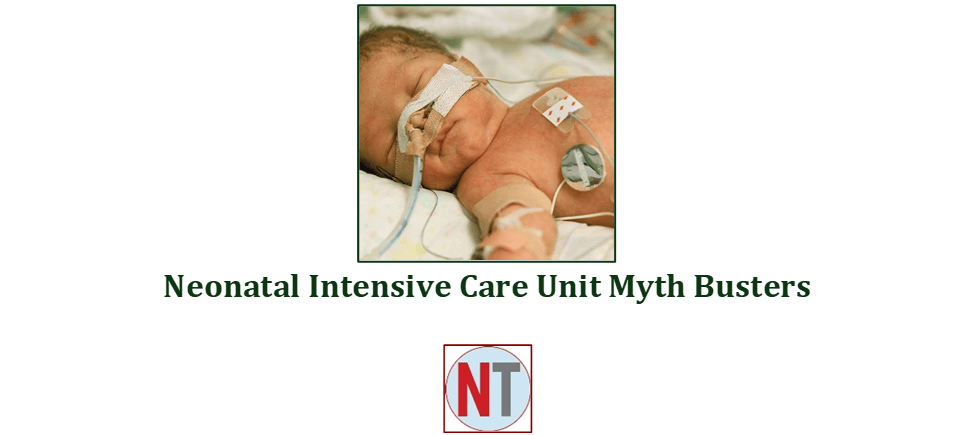
President John F. Kennedy and First Lady Jacqueline Kennedy’s youngest child, Patrick Bouvier Kennedy, died on August 9, 1963, 39 hours after his birth. Patrick was born at 34 weeks postmenstrual age, and while many infants born at this gestation do well with minimal or no respiratory support, he was not one of them. He succumbed to what was then called hyaline membrane disease, now defined as respiratory distress syndrome (RDS). Treatment of RDS at the time was limited to supplemental oxygen – exogenous surfactant was not available, nor were mechanical ventilators suitable for use in the neonatal population.
Patrick Bouvier Kennedy would never know it, but his death resulted in a massive influx of money directed at the treatment of premature infants. The birth of modern neonatology and NICUs is his legacy, and his death prevented the deaths of countless babies. Still, outdated or completely false beliefs remain.
FiO2 0.4-0.6 (or more) is acceptable:
In the 1960s and 1970s, an infant of 30 weeks PMA was considered premature; surfactant was unavailable; and neonatal ventilators were relatively crude pressure-limited, time-cycled machines. High FiO2 was necessary, and chronic lung disease (CLD) was ubiquitous. Through to the late 1990s, infants < 24 weeks PMA were rarely offered resuscitation; the ventilation modes available were not capable of adequately supporting these infants. The widespread use of synchronized modes, volume regulation, high frequency oscillation (HFO) (with or without volume targeting), and high-frequency jet ventilation (HFJV) enabled clinicians to resuscitate extremely premature infants at 22-23 weeks PMA.
Oxidative stress is cumulative and damages DNA. Rapidly dividing cells, such as pulmonary cells in the premature infant, are most susceptible to this damage, as are others. While FiO2 >0.4 may be acceptable for those born at >30 weeks PMA (this is debatable to this writer), those born at 22-28 weeks PMA are a completely different animal. A study of CLD and FiO2 in premature infants reveals this difference (1). Cumulative FiO2 exposure predicts CLD development (2). Reactive oxygen species (commonly referred to as free radicals) increase as FiO2 increases; this may not be linear, although no studies report an exponential relationship. In the rest of the body, the partial pressure of oxygen in the blood drives free radical production.
Adult medicine provides ample evidence of the perils of excessive oxygen. Baboons breathing 60% oxygen for only a few days have been found to have lung damage, as evidenced by “pulmonary toxicity with alveolitis, hyaline membrane formation, Home oxygen companies in Ontario do not have tank regulators that deliver < 125 mls/min, and do not offer low flow flowmeters adjustable to as low as 5 mls/min. Given the evidence, this is a travesty.
Babies with or at risk of persistent pulmonary hypertension of the newborn (PPHN) need to have SpO2 98-100% cellular infiltration, pulmonary oedema and subsequently, fibrosis” (3). Healthy adults breathing 30-50% oxygen for only 45 hours also suffer lung damage. A study of liberal vs conservative oxygen therapy in patients with chronic obstructive pulmonary disease (COPD) showed 1 additional death for every 14 patients treated in the liberal oxygen group. Another study showed a 20% increase in in-hospital patient death with liberal oxygen therapy (3).
Physiological stress affects virtually every system, and the common practice of maintaining SpO2 >96% does not seem wise. Limitations with home oxygen devices mean many babies whose SpO2 is acceptable on very low flow (5-50 mL/min) still have SpO2 of 100% at all times. This is anything but desirable. Home oxygen companies in Ontario do not have options.
A survey of neonatologists revealed that 70% targeted SpO2 >95% or 95-98%, and those with more than 10 years of experience targeted the lower end of this range and weaned FiO2 more quickly—none aimed at sustained SpO2 of 100% (4).
Reactive oxygen species production increases with PO2 and is known to blunt the effects of inhaled nitric oxide (iNO) and create pulmonary vasoconstriction independent of iNO administration (5). Limiting excessive oxygen levels must be balanced with pulmonary vascular resistance, but once adequate tissue oxygenation is achieved, FiO2 should be weaned judiciously.
ETT = CLD and NIV = no CLD:
This is a tough one. While evidence overwhelmingly supports non-invasive ventilation (NIV) to reduce CLD, this is not absolute. Lung-protective ventilation, provided by skilled clinicians and modern ventilators, does not necessarily result in CLD, and babies who have been managed exclusively with NIV can and do develop CLD, and I have witnessed this many times. The key is extubation at the earliest appropriate time and careful monitoring of pulmonary recruitment.
Failed extubation may increase the risk of CLD as well as the risks inherent to the intubation procedure itself. Weight, gestational age, presence of left-to-right ductal shunting, pre-extubation pH, and respiratory drive all influence the likelihood of success. Calculators to predict successful extubations are of limited use in smaller infants, achieving overall accuracy of 73%, but 34% when applied to a 750-gram, 24-week PMA infant with a pH of 7.25 and FiO2 0.25 (6).
Fixation on “hyperinflation” and mean airway pressure (MAP) has led many to trade increased FiO2 for lower pressure, and worse, to ignore climbing FiO2 post-extubation. Physiological hyperinflation does not exist without compromised cardiac output and tissue perfusion, and it occurs at the lowest achievable FiO2 . Rising FiO2 reflects decreased pulmonary gas-exchange efficiency and is more likely due to derecruitment than hyperinflation. Pulmonary consolidation triggers an inflammatory response and will likely extend the need for respiratory support, the opposite of the result hoped for by reducing pressure. FiO2 and SpO2 are usually the most reliable indicators of pulmonary function. If oxygen or pressure requirements increase after weaning PEEP/MAP, go back.
Volume-targeted ventilation = lung-protective ventilation:
This is only true if the lung is fully and optimally recruited. Delivering 4 mL/kg to a lung that is only 50% recruited equates to 8 mL/kg.
Pressure-support ventilation is more lung-protective than volume targeted ventilation in a poorly recruited lung. This is because pressure support terminates inspiration when flow decreases to approximately 25% of peak inspiratory flow.
Invasive NAVA (Neurally Adjusted Ventilatory Assist) is superior to other modes:
This statement is partly true and depends on the patient. Aside from a superior trigger and on-the-fly adjustment of pressure (and resulting volume), this is still a conventional ventilation mode. Backup ventilation in this mode is the same as intermittent mandatory ventilation (IMV). The benefits of NAVA apply only if the baby has a good drive to breathe, and the mode is not ideal if alveolar and airway stability are an issue. This is not the case in the extremely premature (7). The mode has also not been evaluated vs HFO or HFJV.
Repositioning a baby means a 180-degree flip: Repositioning/positioning of extremely low birthweight/premature infants is the most frustrating part of maintaining invasive ventilation. Most babies have a “favoured” side or position where their FiO2 and pressure requirements are lowest. Then the baby is repositioned, and ventilation pressure and oxygen needs increase significantly. If a baby’s ventilatory status deteriorates after a position change, change the position, not the ventilation!
The unstable nature of a very premature infant’s airways may cause partial airway obstruction, or the bevel of the endotracheal tube may be pressed against the side of the airway. Sometimes a small position change will correct this; sometimes complete repositioning is needed. Increasing ventilation rather than changing position may (and often does) cause CO2 to plummet when the position is changed again. The clinician responsible for the baby’s ventilatory management may be completely unaware of this change, and large swings in CO2 are not good for the brain.
Unstable infants cannot receive kangaroo care (KC):
This is a very contentious issue, but I firmly believe in offering KC whenever possible. Whether on conventional ventilation, HFJV, or HFO (unfortunately, the Sensormedics© oscillator does not lend itself to KC), offer KC. If the baby deteriorates significantly, KC may be stopped. As for unstable infants, if they are unstable in the incubator, they will be unstable during KC. However, they may become more stable once settled into KC. It is worth a try! Furthermore, it is devastating for parents to have never had the chance to hold their baby should it die. Advances in knowledge are moot if they do not translate into clinical practice. Change is hard, but it is at the heart of advances in medicine and improved outcomes. Just do it!
I dedicate this column to the late Dr. Andrew (Andy) Shennan, the founder of the perinatal program at Women’s College Hospital (now at Sunnybrook Health Sciences Centre). To my teacher, my mentor and the man I owe my career as it is to, thank you. You have earned your place where there are no hospitals and no NICUs, where all the babies do is laugh and giggle and sleep. – Rob Graham APN-RRT Advanced Practice Neonatal RRT
Source: https://neonatologytoday.net/newsletters/nt-oct26.pdf



PREEMIE FAMILY PARTNERS



Source: https://www.neopedia.org/parent-support/family-friends



INNOVATIONS

Abstract
Background
Extremely preterm (EP) infants are at high risk of long-term neurodevelopmental impairments. School-age outcomes have been well documented in large population-based cohorts worldwide. However, data on school-age cognitive outcomes in Japanese EP populations remain limited, particularly on infants born at 22–23 weeks of gestation, whose survival has increased in Japan.
Methods
This retrospective cohort study evaluated cognitive impairments at 8 years of age in children born before 27 weeks of gestation at a single tertiary center in Japan. A total of 73 children were assessed by either the Wechsler Intelligence Scale for Children (WISC-IV or WISC-V) or Kyoto Scale of Psychological Development. Longitudinal outcomes between ages 3 and 8 were also assessed; however, due to variations in assessment tools, these changes were reported descriptively. Perinatal characteristics were compared between the gestational age groups.
Results
Lower gestational age was associated with lower birth weight, higher incidence of chorioamnionitis, and increased rates of retinopathy of prematurity and bronchopulmonary dysplasia. The median full-scale IQ scores at 8 years were below the national average across all gestational age groups, though scores significantly increased as gestational age advanced (p = 0.001). Longitudinal analysis revealed descriptive transitions in cognitive categories; the proportion of children categorized within the normal range was 25.0% at 3 years and 51.3% at 8 years.
Conclusion
Children born before 27 weeks of gestation, particularly those born at 22–23 weeks, remain at risk for cognitive impairment at school age; however, cognitive outcomes significantly improved as gestational age increased. The potential for changes in cognitive categories underscores the necessity for structured, long-term follow-up programs extending into school age to support the evolving needs of this high-risk population.
Source: https://www.pediatr-neonatol.com/article/S1875-9572(26)00071-9/fulltext
Key Points
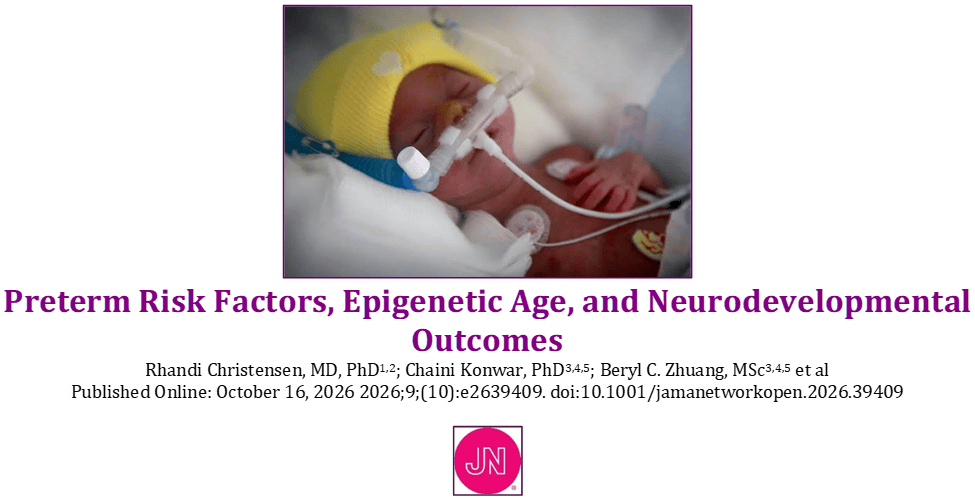
Question What is the association among preterm risk factors, epigenetic aging, and neurodevelopmental outcomes in children born preterm?
Findings In this cohort study with 102 children, epigenetic aging, higher maternal education level, extreme prematurity, and severe brain injury were associated with neurodevelopmental outcomes. The association between epigenetic aging and motor outcomes was modified by severe brain injury.
Meaning The findings suggests that the association between epigenetic aging and neurodevelopment among children born preterm is context dependent and can vary based on the presence of preterm risk factors.
Abstract
Importance Studies examining biological factors associated with neurodevelopment in the preterm population are limited. It was previously demonstrated that epigenetic age acceleration was associated with better neurodevelopmental outcomes among children born preterm. It is unclear whether this association is modified by clinical and environmental preterm risk factors.
Objective To examine whether the association between epigenetic aging and neurodevelopmental outcomes is modified by preterm brain injury and socioeconomic status.
Design, Setting, and Participants This was a prospective cohort study of children born at 24 to 32 weeks’ gestation, recruited from 2 neonatal intensive care units from 2015 to 2019 and followed up to January 2026. The cohort was well characterized with clinical data, brain magnetic resonance imaging, and neurodevelopmental assessments (Bayley-III cognitive and motor domains) at 3 years. Participants with buccal epithelial cell DNA collected at 3 years were included.
Exposure Epigenetic age (in weeks) at 3 years was determined using the pediatric buccal epigenetic clock and corrected for chronological age to give epigenetic age difference.
Main Outcomes and Measures Primary analyses used linear regression to examine the association between epigenetic age difference, preterm risk factors (any brain injury, severe brain injury, maternal educational level), and cognitive and motor outcomes at 3 years. Secondary analyses examined whether brain injury and maternal education level modified the associations between epigenetic age difference and cognitive and motor outcomes at 3 years.
Results A total of 102 study participants (median gestational age, 27.0 weeks [IQR, 25.6-28.9 weeks]; 54 female [53%]) were included. Higher maternal educational level (β = 11.65; 95% CI, 3.55-19.76; P = .005) and epigenetic age acceleration (β = 0.07; 95% CI, 0.01-0.14; P = .04) were associated with higher cognitive scores. Epigenetic age acceleration was also associated with higher motor scores (β = 0.16; 95% CI, 0.06-0.27; P = .003), while extreme prematurity (β = –5.66; 95% CI, −10.85 to −0.46; P = .03) and severe brain injury (β = –10.99; 95% CI, −21.32 to −0.66; P = .04) were associated with lower motor scores. Severe brain injury modified the association between epigenetic aging and motor outcomes (β = 0.41; 95% CI, 0.08-0.74; P = .02), and children with epigenetic age acceleration in the presence of severe brain injury had higher motor scores.
Conclusions and Relevance In this prospective preterm cohort study, epigenetic aging, severe brain injury, and socioeconomic status were associated with neurodevelopmental outcomes. Children with severe brain injury along with epigenetic age acceleration had higher motor scores. These findings suggest the association between epigenetic aging and neurodevelopment is context dependent and can vary based on the presence of preterm risk factors.
Source: https://jamanetwork.com/journals/jamanetworkopen/fullarticle/2855388?resultClick=1
Abstract
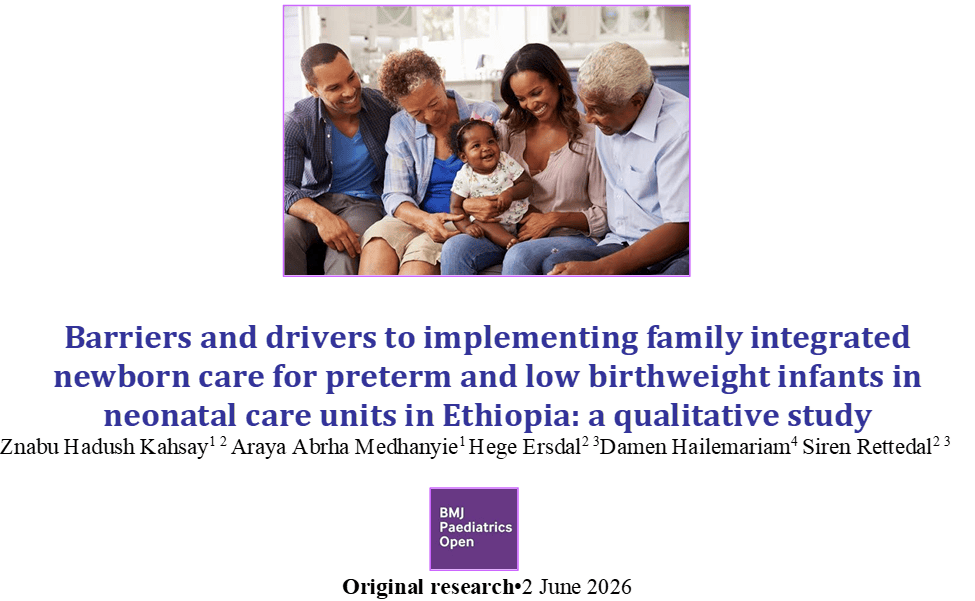
Background The WHO recommends family involvement and support in the care of hospitalised preterm and low birthweight infants. However, little is known about the factors affecting uptake in resource-limited settings. This study aimed to understand the narratives of barriers and drivers of implementing Family Integrated Newborn Care (FINC) for preterm and low birthweight infants in neonatal care units (NCUs) in Ethiopia.
Methods A constructivist grounded theory was employed, involving face-to-face interviews with participants recruited from eight hospitals in Tigray, Northern Ethiopia. The study involved semistructured interviews with 21 purposively selected participants: 11 with healthcare providers (HCPs), four with key informant researchers and six with mothers of preterm or low birth weight infants. Data were inductively coded line-by-line, codes were translated into concepts, and concepts were transcended into abstract codes using Atlas.ti software.
Results Five core categories emerged as narratives of barriers and drivers to FINC implementation in NCUs, including two barriers and three drivers. The barriers were mainly related to (1) perceived increased risk of infection and (2) ignorance regarding families’ roles and rights. The drivers of FINC implementation included (1) reduced risk of infection, (2) mitigating safety concerns and (3) reduced workload. The narrative of a perceived heightened infection risk overshadowed the system-level infection risks, which misled healthcare establishments into adopting a restrictive visitation policy.
Conclusions Despite the potential role of families in preventing infection, mitigating safety concerns and reducing workload, a dominant narrative of perceived heightened infection risk resulted in a restrictive family visitation policy in NCUs. Linking the rights of families and neonates with the pragmatic clinical benefits of implementing FINC was recommended.
Source: https://bmjpaedsopen.bmj.com/content/10/1/e004254



November is here, Warriors, and it’s our month! November is Prematurity Awareness Month, and World Prematurity Day lands on November 17. It falls right as the holiday season starts, a time for gratitude, gathering, and giving back. Many of us began life fighting for every breath, cared for by nurses, doctors, and families who refused to give up on us. Now it’s our turn to show up for the next generation of tiny fighters and the families who love them.
You don’t need a title to be a leader. Leadership can be as simple as telling your story at the Thanksgiving table, answering a nervous NICU parent’s questions, or just being living proof that small beginnings can grow into big futures. Think back to who believed in you along the way: a parent, a nurse, a teacher, a coach, or a fellow preemie who showed you what was possible. Mentorship is how we pass that belief forward. Experience can mentor ambition, and every one of us has experience worth sharing, whether you’re 8 or 80.
Ready to lead this season? Here are some ideas:
- Wear purple on November 17 and tell people why. Purple stands for sensitivity and uniqueness, and that describes us perfectly.
- Share the socks line. Hang one tiny pair of purple socks next to nine full-sized pairs to show that 1 in 10 babies worldwide is born preterm.
- Become a mentor. Groups like Hand to Hold and Graham’s Foundation match experienced families and preemie graduates with families who are just starting their NICU journey.
- Give back for the holidays. Put together care packages, donate preemie clothes or books, or write thank-you cards to the NICU team that cared for you.
- Lift up a younger Warrior. Invite a preemie kid in your community to a holiday activity, cheer at their game, or simply tell them, “I was a preemie too.”
- Lead something local. Organize a purple-themed potluck, a story night, or a community cleanup in honor of World Prematurity Day.
A gentle reminder as we gather: holiday travel and big get-togethers come right in the middle of cold, flu, and RSV season. Leading by example means washing your hands, staying home when you’re sick, and checking with your care team about seasonal vaccines. That’s especially important around newborns and our Warriors with lung or long-term health needs. Protecting our most vulnerable is one of the best gifts we can give.
This season, let’s be grateful for how far we’ve come and generous with what we’ve learned. Somewhere a family is sitting beside an incubator, listening to the monitors beep and wondering what the future holds. Your story might be the hope they need. Happy holidays and happy Prematurity Awareness Month, Warriors. Go lead the way! 🦃💜🧦✨