

Voices, Targeting Healthcare, Breaking Bread

Lebanon, officially the Republic of Lebanon, is a country in the Levant region of West Asia. Situated at the crossroads of the Mediterranean Basin and the Arabian Peninsula, it is bordered by Syria to the north and east, Israel to the south, and the Mediterranean Sea to the west; Cyprus lies a short distance from the coastline. Lebanon has a population of more than five million and an area of 10,452 square kilometres (4,036 sq mi). Beirut is the country’s capital and largest city.

Lebanon is a parliamentary democracy that includes confessionalism. The National Pact, erected in 1943, laid out a governing arrangement intended to harmonize the interests of the country’s major religious groups. The President has to be a Maronite Christian, the Prime Minister a Sunni Muslim, the Speaker of the Parliament a Shi’a Muslim, the Deputy Prime Minister and the Deputy Speaker of Parliament Eastern Orthodox. This system is intended to deter sectarian conflict and to represent fairly the demographic distribution of the 18 recognized religious groups in government.

Source: https://en.wikipedia.org/wiki/Lebanon

Background

Most of the Infant and Family Centered Developmental Care (IFCDC) Standards focus on evidence-based approaches to care of the baby and family while in intensive care. An ever expanding literature provides rationale for promoting the best care environments for the baby’s developing brain, as well as for parents’ physical and emotional adjustment as they transition to parenthood. As babies may spend days, weeks, and sometimes months during a critical time for brain and behavioral organization, an emphasis has been placed on neuroprotective caregiving strategies and environmental protection to enhance medical, developmental, and psychosocial outcomes.

Both neurodevelopmental and physiological research focus primarily on the age range of babies from birth to discharge, typically ending at 40 weeks post-conceptional age, or when the baby goes home. As babies may be discharged at earlier ages than in previous years—when medically stable, but before many neurodevelopmental tasks have been firmly established (e.g., coordinated eating, sleeping, and regulation)– it is important to extend the focus to the weeks and months after discharge when the baby is still in a developmental fast track.

Babies deemed medically stable enough to transition home need appropriate supports for discharge and preparation for life after hospitalization. A growing literature documents best practices for that preparation, assuring a smooth and uncomplicated transition to community services.

Post-discharge visits to the baby’s pediatrician typically focus on medical stability, as is appropriate. However, most follow-up clinic visits, which include developmental assessment and monitoring, may not occur until the baby is 3-6 months of age. Early intervention services in the United States provide developmental assessment and intervention, if appropriate, for those babies who are “categorically eligible” through Part C of the Individuals with Disabilities Education Act (IDEA). https://www.ed.gov/laws-andpolicy/individuals-disabilities/idea.

Each state determines the qualifications for eligibility, often including diagnoses of established conditions that demonstrate evidence of significant developmental delay (e.g., Down syndrome, chromosomal abnormalities, deafblind conditions, etc.). Often, low birthweight is either not included or restricted to birthweight under 1200 grams, which excludes those babies who have been identified as likely to have lingering developmental deficits (e.g., late preterm babies 34-36 weeks post-conceptual age). Part C assessment and follow-up are mandated to occur within a 45-day timeframe. However, many babies are not identified while they are in the hospital and may not be deemed eligible until obvious developmental concerns surface.

Rationale for assuring continuity of developmental and psychosocial supports from hospital to home.

Support for early brain organization during the neonatal period and throughout the first years of a baby’s life is critical for later development. The literature is replete with evidence regarding neurophysiological and behavioral development, as well as an emphasis on the need for appropriate relationship environments to promote optimal outcomes. Emerging evidence of specific brain development during the first few months of a baby’s life (often referred to as “the fourth trimester”) lends emphasis to the importance of not only understanding the enormity of brain development during this period, but also the potential opportunities for creating appropriate environments and caregiving.

The impact of early birth, medical complexities, and associated hospitalizations on brain development and organization indicates that short and long-term neurophysiologic, behavioral, and mental health outcomes are affected. These and many other outcome studies emphasize the need for early, appropriate environmental and developmental protections, as well as individualized care. Given the recent findings regarding the significant brain development and organization during the first three to six months (in addition to development during the last trimester), it becomes apparent that a significant focus should be on effective interventions both before and after discharge.

Brain and behavior development in parents

Brain changes also occur as parents are transitioning to becoming primary caregivers of their new baby. Emerging evidence of neuroendocrine, neurophysiologic, and behavioral changes during pregnancy, delivery, and postpartum indicates that the experience of becoming parents—for both mothers and fathers — has significant implications for later physical and mental health. Fewer studies indicative of brain changes in parents of early born and medically fragile babies are available; however, there are clear associations with parental mental and physical health challenges.

 Punctuated events and recalibration

As babies transition from being fetuses to newborns, there is a significant impact on their brain and behavioral organization. The environment is significantly different, necessitating adaptation from uterine to a maternal caregiving environment. This dramatic change has been referred to as a “punctuated event,” which signifies a significant change in both physiology and behavior, resulting in a period of adaptation and recalibration of behavior.

As previously proposed, a similar punctuated event occurs when the baby transitions from the familiar hospital caregiving environment to the novel home/community environment. (39, 40) It is no wonder that the babies who transition home experience changes in physiology and behavior as a result. Often, medical issues arise, sleep states are disorganized, feeding challenges occur, and previously effective calming strategies seem to be ineffective.  If the parent and baby have not had a chance to experience intimate and consistent caregiving in the hospital, which provides the continuity of a trusting relationship, there can be challenges in the process of recalibration.

Parents also experience significant life-changing events to which they must adapt and recalibrate. Pregnancy to delivery and delivery to parenting represent significant punctuated events that may cause other physiologic and/or mental health concerns to emerge. Most parents of term and medically stable babies have had opportunities to adapt to this change cognitively and psychologically. For parents who have a challenging pregnancy, a difficult delivery, and/or a baby at risk for medical challenges, these punctuated events can raise physiological and psychological challenges to which recalibration is complicated.

As with the transition home for babies, the transition home for parents can be disorganizing and difficult. Parents may not only be dealing with their own physical and/or mental health issues as a result of pregnancy, delivery, and hospitalization of their baby, but with the full-time care and adjustment to care in their own home environment. (48-50) Often, the demands of baby care and selfcare are discrepant, resulting in poor sleeping and eating, lack of exercise and social interactions, and other mental health concerns becoming issues that need to be addressed. Unfortunately, these issues may not be addressed quickly and may persist for the first 3-6 months of the family’s life together at home.

Relationship environments are essential for optimal development.

 One of the most significant influences on babies’ outcomes is the relationship environment with their primary caregiver. Given the significant neurophysiological and behavioral changes that occur in both newborns and their parents during the first few months after delivery, the development of robust and mutually supportive interactions is fraught with a variety of challenges and successes. These are particularly challenging for parents who come to parenting with significant mental health issues, economic and/or cognitive challenges, few social supports, and/or limited educational backgrounds.  Effective interventions have been developed to enhance the parent/baby relationships applied in community settings.

Although effective interventions in communities to promote relationships between parents and their babies have been developed, the application of these programs for parents of medically fragile or early born babies and related research is limited.  Having a hospitalized baby presents challenges to early relationship development. A multitude of medical, psychosocial, environmental, cultural, and systems events can challenge early relationship development. Early separation of baby and parent, postpartum medical issues in the postpartum period, family and job responsibilities, grief reactions and fear, poor communication with professionals, as well as restrictive policies and procedures, are but a few of the interfering variables that can affect robust relationship development. 

The Infant and Family Centered Developmental Care (IFCDC) Standards address continuity from the hospital to the community.

The IFCDC standards emphasize the importance of collaboration with parents to ensure they are well-prepared to support their baby’s development both in the hospital and after discharge. Each NICU system should engage in collaborative efforts among team members, including parents and caregivers.

The focus should promote and ensure parents’ preparation for transition to community resources, which can be accomplished by providing competent and relevant physical, developmental, and psychosocial services throughout the hospital stay and into the community.

The IFCDC standards also emphasize the need for collaboration with follow-up and community providers who will support their families in the weeks and months after hospitalization.

Conclusion:

Continuity during the transition from intensive care to the family’s home and community presents neurophysiological, psychosocial, and behavioral challenges for both babies and their parents. These occur during a particularly vulnerable time, as the last trimester and the first 3-6 months represent a sensitive period of brain, behavior, and relationship development. Interventions in the hospital should focus not only on neurodevelopmental support and environmental protection but should also emphasize parental involvement in preparation for supporting their baby’s development after discharge. As delineated in the IFCDC standards, it is essential for the intensive care community to not only engage parents as team members and prepare them during hospitalization for post-discharge care, but also to ensure continuity of well-prepared community support and medical follow-up. Currently, the kind of intervention that addresses the specific needs of babies and their parents — early and often, during the first 3-6 months —is not consistently practiced in the United States. There is a need for appropriately trained providers who can sensitively and knowledgably address health, development, relationship, and mental health, development, relationship, and mental health issues for vulnerable families during this vulnerable period.                    

 View additional graphs and info

Source: https://www.marchofdimes.org/ways-to-give/donate?utm_campaign=2021advocacy&utm_content=footer&utm_medium=email&utm_source=advocacy

Since 7 October 2023, 47% of attacks on health care – 65 out of 137 – have proven fatal to at least one health worker or patient in Lebanon, as of 21 November 2024.

This is a higher percentage than in any active conflict today across the globe – with nearly half of all attacks on health causing the death of a health worker.

In comparison, the global average is 13.3%, based on the SSA’s figures from 13 countries or territories that reported attacks in the same period, 7 October 2023–18 November 2024 – among them Ukraine, Sudan and the occupied Palestinian territory (oPt). In the case of oPt, 9.6% of the total number of incidents has resulted in the death of at least one medical professional or patient.

According to the SSA, 226 health workers and patients were killed in Lebanon and 199 injured between 7 October 2023 and 18 November 2024.

In the same period, the SSA registered a combined total of 1401 attacks on health in oPt, Lebanon and Israel – 1196 in oPt, 137 in Lebanon and 68 in Israel.

Civilian health care has special protection

“These figures reveal yet again an extremely worrying pattern. It’s unequivocal – depriving civilians of access to lifesaving care and targeting health providers is a breach of international humanitarian law. The law prohibits the use of health facilities for military purposes – and even if that is the case, stringent conditions to taking action against them apply, including a duty to warn and to wait after warning,” said WHO Representative in Lebanon Dr Abdinasir Abubakar.

International humanitarian law states that health workers and facilities should always be protected in armed conflicts and never attacked. Health facilities must not be used for military purposes, and there should be accountability for the misuse of health facilities.

“There need to be consequences for not abiding by international law, and the principles of precaution, distinction and proportionality should always be adhered to. It’s been said before, indiscriminate attacks on health care are a violation of human rights and international law that cannot become the new normal, not in Gaza, not in Lebanon, nowhere,” said WHO Regional Director for the Eastern Mediterranean Dr Hanan Balkhy.

The majority of incidents in Lebanon impact health workers

The majority (68%) of incidents in Lebanon registered by the SSA impacted health personnel, a pattern seen repeatedly in the last few years, including in Gaza in the past year. In Lebanon, roughly 63% affected health transport and 26% affected health facilities.

Attacks on health care hit twice. First, when health workers lose their lives or when a health centre is obliterated, and again in the following weeks and months when the injured can’t be treated, those who are dependent on regular care don’t receive it and when children can’t be immunized. 

“Casualty numbers among health workers of this scope would debilitate any country, not just Lebanon. But what the numbers alone cannot convey is the long-term impact, the treatments for health conditions missed, women and girls prevented from accessing maternal, sexual and reproductive health services, undiagnosed treatable diseases and, ultimately, the lives lost because of the absence of health care. That is the impact that’s hard to quantify,” said Dr Abubakar.

1 in 10 hospitals in Lebanon directly impacted

The greater the blow to the health workforce, the weaker the longer-term ability of a country to recover from a crisis and deliver health care in a post-conflict setting.

Lebanon is a lower middle-income country with a fairly advanced health system that’s been hit hard by multiple crises in recent years. After hostilities in Lebanon escalated in September 2024, the growing number of attacks on health have caused further strain on an already over-burdened system.

Today, the country’s health system is under extreme duress, with 15 out of 153 hospitals having ceased to operate, or only partially functioning. Nabatieh, as an example, one of Lebanon’s 8 governorates, has lost 40% of its hospital bed capacity.

“Attacks on health care of this scale cripple a health system when those whose lives depend on it need it the most. Beyond the loss of life, the death of health workers is a loss of years of investment and a crucial resource to a fragile country going forward,” Dr Balkhy concluded.

So far this year, between 1 January 2024 and 18 November 2024, a total of 1246 attacks on health care were registered globally, in 13 countries or territories, killing 730 health workers and patients and injuring 1255.

Note to editors

The Surveillance System for Attacks on Health Care (SSA), established in 2017 by the World Health Organization, is an independent global monitoring mechanism whose goal is to collect reliable data on attacks on health care and to then identify patterns of violence that inform risk reduction and resilience measures so that health care is protected. The SSA also provides an evidence base for advocacy against attacks on health care.

Source: https://www.who.int/news/item/22-11-2024-lebanon–a-conflict-particularly-destructive-to-health-care

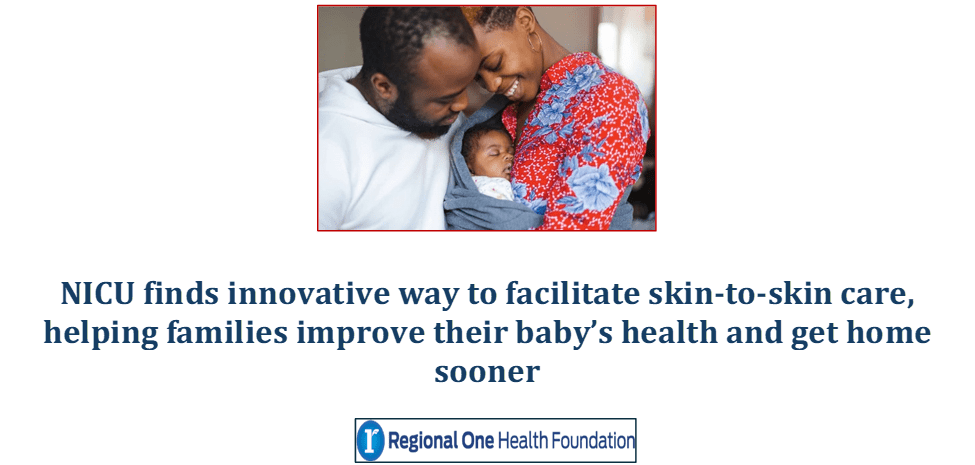
Skin-to-skin care helps newborn babies in many ways – brain development, regulating heart rate and body temperature, and bonding with their caregivers.

When a baby needs to be in the NICU, skin-to-skin care is especially important, but there can be challenges.

The team at Regional One Health’s Sheldon B. Korones Newborn Center is helping address that through an innovative use of existing equipment that helps facilitate skin-to-skin care.

After a baby is born, skin-to-skin contact is a powerful tool to bond with your baby, improve their brain development, and help them regulate their heart rate and body temperature. But when a baby needs to be in the NICU, skin-to-skin care can be more challenging.

“After a routine delivery, moms are encouraged to have skin-to-skin care right away,” said Ajay Talati, MD, medical director at Regional One Health’s Sheldon B. Korones Newborn Center. “If the baby has to go straight to the NICU for treatment, that can’t happen.”

Challenges can remain once a baby is in the NICU, said Kelley Smith, NICU Nursing Manager. If a baby is on an oscillator, a mechanical ventilation device used to help premature or ill infants breathe, they are connected to tubing that has to stay at the same level as their incubator.

“With an oscillator, the tubing is very stiff – it can’t be bent,” Smith explained. “That makes it hard to move the baby into the parents’ arms for skin-to-skin care.”

The NICU team started looking for a solution and found it in an innovative new use for a piece of equipment that is commonly found in other parts of the hospital.

Cardiac chairs are typically used to help cardiac and stroke patients rest in an optimal position. Because the chairs can go up and down, recline, and even lay flat, Smith and Assistant Nursing Manager Heather Burgess saw an opening to use them in the NICU for skin-to-skin care.

“With this chair, we can have the mom or dad sit in the chair and raise the chair to the level of the oscillator’s tubing,” Smith said. “It makes it easier to get the baby out of the incubator.”

Skin-to-skin care helps babies in a number of ways. “After a routine delivery, moms are encouraged to have skin-to-skin care right away,” said Ajay Talati, MD, medical director at Regional One Health’s Sheldon B. Korones Newborn Center

A generous Regional One Health Foundation supporter stepped up to donate a cardiac chair to the NICU, and the nursing team is now educating patients about its use and making it available to all families that can benefit. Along with families whose baby is on an oscillator, moms who have had a C-section are finding the chair useful.

“Many moms can’t sit upright for 12 to 24 hours after a C-section, and it can be uncomfortable trying to get in and out of a chair,” Dr. Talati said. “We use it whenever a mom or baby needs it. It’s great for when a baby is too sick to be lowered or when a mom has pain after a C-section.”

Burgess said finding a solution was important to the NICU team because skin-to-skin care has many proven medical benefits for babies and moms.

For the baby, skin-to-skin care helps regulate body temperature, breathing and heart rate and improves brain development, Burgess said. For moms, skin-to-skin can help improve breastmilk production, regulate postpartum hormone balance, and reduce anxiety and stress.

There’s also the matter of bonding, which applies not only to new moms, but to all caregivers.

“We encourage parents to do skin-to-skin care in the first week of their baby’s life, especially for very small, very sick babies,” Smith said. “When you have a baby in the NICU, you’re anxious and afraid, so sometimes parents wait until they go home. That can be a missed opportunity for bonding. The sooner we start skin-to-skin, the better off the family unit will be.”

Dr. Talati, Smith and Burgess have seen the value of skin-to-skin care on multiple occasions.

Moms, dads and other caregivers can all take part in skin-to-skin care. “We encourage parents to do skin-to-skin care in the first week of their baby’s life, especially for very small, very sick babies,” NICU Nursing Manager Kelley Smith said. 

The first mom to use the chair had impressive results. “Her baby came off the oscillator the next day!” Smith said. “It’s amazing to see. We’ll have babies on an oscillator with an oxygen saturation in the low 90s…then they do skin-to-skin and it shoots up to 100!”

Burgess said another mom provided skin-to-skin care in the NICU every day, and it contributed to her baby getting healthy enough to go home much sooner than originally expected.

Dr. Talati said there is plenty of evidence behind those individual experiences. Factors like better milk production and better feeding, the ability to regulate body temperature and heart rate, and increased oxygen saturation can all help a baby get stronger.

“It’s a lot of little things that can add up to the baby making faster progress toward going home,” he said. “We hope it can speed that up and we can help more babies go home sooner.”

Source: https://www.regionalonehealth.org/blog/2025/01/22/nicu-finds-innovative-way-to-facilitate-skin-to-skin-care-helping-families-improve-their-babys-health-and-get-home-sooner/

Have you ever wondered how the Neonatal Resuscitation Program (NRP) guidelines are created—and more importantly, who decides what changes and why? In this episode, we take you behind the scenes of the science and collaboration that shape NRP. From the rigorous evidence review conducted by the International Liaison Committee on Resuscitation (ILCOR) to how these findings are translated into bedside practice, you will learn exactly how research becomes reality. 

Together, Dr. Gary Weiner and Amanda Williams break down the multi-layered process of evidence evaluation, guideline development, and educational translation, while highlighting the critical role nurses play in shaping the NRP used daily. Whether you are new to NRP or a seasoned instructor, this episode will inspire you to see the program through a whole new lens and recognize the power of your voice in shaping neonatal care. 

Discover why NRP is more than a textbook—it is a living, breathing, global collaboration grounded in science and strengthened by the people who use it. 

For the past 10 years, I have worked as a pediatrician and neonatal hospitalist in multiple Level 2 NICUs across Georgia and other states. Over time, I have come to a realization that I cannot ignore: there is a significant public health imperative—and a gap in equitable access—when it comes to developmental and family support services in Level 2 NICUs.

Level 3 and 4 NICUs often have consistent access to lactation consultation, feeding therapy, physical and occupational therapy, and even music therapy. In Level 2 settings, those services are less consistently available—sometimes absent altogether. This discrepancy has a lasting impact on infants and families.

The common perception is that if a baby is born at or after 32 weeks and weighs ≥ 1500 grams—the typical admission criteria for Level 2—that they have “made it.” But research tells a different story. Moderately and late-preterm infants, even those who meet Level 2 thresholds, remain at high risk for readmission, feeding difficulties, developmental delays, and long-term neurodevelopmental challenges (1-4). Prematurity in any form is not a short-term hurdle—it is a lifelong risk factor that requires intentional support from the start.

So, why are we not introducing key developmental concepts, early intervention techniques, and consistent family education into Level 2 NICUs? Why are we not equipping nurses and families with the same foundational knowledge and access to services that higher-level NICUs utilize?

The NICU is not only a place for acute medical stabilization—it is a unique window of opportunity to shape lifelong outcomes. Families in Level 2 units should see themselves as vital participants in their baby’s success and be empowered with the tools to support feeding, bonding, sensory development, and early learning before discharge. Nurses should have access to training that enables them to integrate trauma-informed, developmental care principles into their daily practice, even when an entire therapy team is not available on the unit.

I believe it is time to establish a Task Force on Level 2NICU Care, bringing together neonatologists, neonatal hospitalists, nurses, therapists, public health professionals, and parents, to examine the current state of developmental and family support services in these units, identify barriers, and develop scalable strategies for improvement.

Potential strategies include: • Standardized education for nursing staff on early-intervention techniques, family engagement, and trauma-informed developmental care.

 • Telehealth access to lactation consultants, feeding/ occupational/physical therapists, and other specialists when on-site resources are limited.

• Parent-education toolkits that cover feeding, developmental milestones, safe sleep, and the importance of follow-up and early-intervention services.

• Structured discharge planning that includes referrals to early-intervention programs and developmental follow-up clinics for all eligible infants.

The public-health impact of closing these gaps is profound. If we can equip Level 2 NICUs with consistent developmental care education and tools, we can reduce readmissions, improve neurodevelopmental outcomes, and strengthen families’ ability to support their child’s growth and resilience.

The babies in Level 2 NICUs deserve the same intentional approach to developmental care as those in higher-level units. They may have “made it” past the highest-risk thresholds, but they have not yet crossed the finish line. We can—and must—do better.

Now is the time to act. Clinicians, hospital leaders, and policymakers must collaborate to prioritize Level 2 NICUs in state and national maternal-child health agendas. By identifying service gaps, piloting telehealth and staff-training models, and measuring family-centered outcomes, we can transform Level 2 NICUs from sites of short-term stabilization into launchpads for lifelong development, resilience, and equity.

Source: https://neonatologytoday.net/newsletters/nt-oct25.pdf

Introduction: The huge prevalence of neurodevelopmental disorders underscores the necessity for novel, comprehensive prevention strategies for neuroprotective intervention, particularly in preterm infants. The COVID-19 pandemic has accelerated the transformation of healthcare services, emphasizing the use of digital resources. Given the rapid brain development in infants in the first 1,000 days of life and the demonstrated impact of adaptive neuroplasticity, the implementation of early and ecological interventions are essential for supporting optimal neurodevelopment in this vulnerable population. Aim of this project is to develop a digital tool for parent-led parent-based intervention and assess its feasibility and accessibility.

Materials and methods: We collected evidence on early intervention strategies for preterm infants through a non-systematic review of current literature to develop the platform and created an ad-hoc questionnaire to evaluate the tool’s feasibility and acceptability in our neurological follow-up.

Results: “NE@R” is a digital platform designed to support neurodevelopment through parents-delivered play. The platform offers evidence-based information, videos, and practical activities to enhance motor, cognitive, social, and language development at each developmental phase. We introduce the resource in our clinical setting and collect 100 preterm infants’ families feedback. The majority of parents reported finding the resource beneficial, with many expressing increased confidence in supporting their child’s development.

Discussion: Preterm babies families’ support represents a precious field of intervention both for parents and infants at risk. “NE@R” has proven to be an effective, low-cost tool within our follow-up program, aligning with the principles of family-centered care.

Patricia Odero is an innovation facilitator extraordinaire based in Nairobi, Kenya, working for The Duke Global Health Institute. Patricia is trained in Medicine, Business and Social innovation and uses her skills and experience to help entrepreneurs in West Africa and beyond with funding and growth. She talks about the importance of networks, particularly in health entrepreneurship – long-term relationships and support programmes for organisations of different sizes and stages. Patricia has great advice for entrepreneurs and really interesting stories from the field. You can follow Patricia on Twitter @TrishOdero, BMJ Innovations @bmjinnovations and podcast host Helen Surana @hjsurana.

BMJ innovations is grateful to the World Innovation Summit for Health WISH for making this podcast series possible.

Takeaways

  • Children born preterm were significantly less likely to complete high school or university compared with full-term peers, according to a large Quebec-based study.
  • Non-graduation rates were highest among those born extremely preterm (40.2%) and lowest among full-term births (27.1%).
  • Low maternal education, male sex, unmarried parents, and low neighborhood socioeconomic status were major predictors of poorer academic performance.
  •  The odds of completing high school are reduced among children born preterm vs full-term, according to a recent study published in JAMA Network Open.

Approximately 10% of infants are born preterm, which may cause early exposure to noxious factors and influence brain development, challenging neurodevelopment and mental well-being. Additionally, socioeconomic factors often prevent children from accessing support systems that can mitigate disabilities.

“Few researchers have conducted studies on long-term educational outcomes across the full spectrum of preterm birth using large population-based cohorts that account for other health-related determinants and socioeconomic factors,” wrote investigators.

Assessing preterm birth and education

The birth cohort case-control study was conducted to assess the impacts of preterm birth and sociodemographic factors on educational outcomes. Live preterm births in Quebec, Canada, between January 1, 1976, and December 31, 1995, were included in the analysis.

Each preterm individual was matched with 2 full-term patients, defined as 37- to 42-weeks gestation. Exclusion criteria included multiple pregnancies, triplet births, and death between 1976 and 2019 without Quebec Ministry of Education records.

Extremely preterm birth was defined as under 28 weeks, very preterm as 28 to under 32 weeks, and moderate-to-late preterm as 32 to 37 weeks. Forty-three years of follow-up data was obtained from administrative databases.

High school performance was measured using the final high school average recorded in the Quebec Ministry of Education database, using marks obtained in grades 10 and 11. Covariates included year of birth, birth order, sex, stillbirth history, primary language, matrimonial status at birth, maternal education, and neighborhood socioeconomic status.

Participant characteristics and academic performance

There were 297,820 participants included in the final analysis, 0.6% of whom were born extremely preterm, 4.4% very preterm, 27.9% moderate-to-late preterm, and 67% full-term. Under 11 years of maternal school were reported in 20.6%, 24%, 23%, and 20.3%, respectively.

Preterm birth groups also more often reported primary languages other than French or English, and more recent birth years were reported in those born extremely preterm. Overall, the rate of preterm births in Quebec rose from 4.6% between 1976 and 1980 to 6.1% between 1991 and 1995.

Significant differences were not reported in high school performance based on preterm birth, with final mean scores of 69.4, 70.2, 70.7, and 71 for extremely preterm, very preterm, moderately preterm, and term births, respectively. However, rates of not graduating from high school were 40.2%, 34.4%, 31.1%, and 27.1%, respectively.

This data indicated significantly reduced odds of high school graduation from preterm birth. These patients were also more likely not to graduate from university. Rates included:

  • 83.3% for extremely preterm
  • 80.2% for very preterm
  • 78.2% for moderately preterm
  • 75.8% for full-term

Socioeconomic and demographic influences

In regression analyses, a B coefficient range of 0.15 to 1.45 was reported for the link between preterm status and final high school average. Low maternal education, male sex, low neighborhood socioeconomic status, not being first-born, and mother not married had the most significant B coefficients for low average marks of 4.43, 2.84, 2.30, 2.30, and 1.98, respectively.

These results indicated reduced odds of graduating from high school or university among children born preterm vs their full-term counterparts. Investigators concluded long-term follow-up is needed in both health care and education among individuals born preterm.

This data highlights the importance of preterm birth prediction. Identifying individuals at an increased risk of preterm birth may be more accurate through the use of neighborhood-level indices, according to Daniel L. Kuhr, MD, third-year fellow in maternal fetal medicine at the Icahn School of Medicine at Mount Sinai.

According to Kuhr, an increase in prediction was only noticeable when including individual patient characteristics. This highlights a need to evaluate other social determinants of health that may influence preterm birth risk.

“The best thing that you can do is take a really good history when you meet a patient at the beginning of pregnancy, and really make sure you can get accurate gestational ages of delivery when possible, because we do know that history of a prior spontaneous preterm birth is also a risk factor,” said Kuhr.

Source: https://www.contemporarypediatrics.com/view/preterm-birth-linked-to-reduced-odds-of-high-school-graduation

One of the first things that comes to mind when I think about the holidays is…food. Whether I’m crowded around a dinner table with family and friends or pulling my favorite cranberry and pear pie out of the oven to take to a holiday gathering, there’s something special about breaking bread with the ones you love.

Food, it seems, has a language of its own. In communities across the globe, food has a unique way of bringing people together. And this holiday season, we wanted to help you connect with your friends, family and with the World Relief community by sharing a few recipes from around the world in our new ebook — Breaking Bread Across Borders: Global Recipes from Refugee Kitchens.

https://worldrelief.org/blog-breaking-bread-recipes-around-the-world/DOWNLOAD THE RECIPES!

This ebook is filled with stories and recipes from immigrants who are part of  World Relief Western Washington’s Commercial and Teaching Kitchen — an innovative program that connects members of the community with their immigrant neighbors through workshops and events led by immigrant chefs while providing low-cost commercial kitchen space for immigrant caterers to rent and run their businesses. 

For women like Katya, who owned a bakery when she lived in Ukraine, the commercial and teaching kitchen is a way to bring people joy while pursuing her passion here in the U.S.
“​​I love to bring joy to people with my baking,” Katya said. “You become a piece of people’s special events [when you bake for them]. You become a piece of the joy.”

Source: https://worldrelief.org/blog-breaking-bread-recipes-around-the-world/

ABSTRACT

Background: 

The formation of the family is interrupted following a Neonatal Intensive Care Unit (NICU) admission, and fathers report experiencing delayed infant bonding due to unit barriers and separation. Fathers state comfort with early infant bonding through language, fearing physical contact with the sick newborn. During hospitalization, active engagement supports ongoing infant/parent vocalization and infant stabilization.

Purpose: 

This prospective descriptive pilot study explored the infant’s physiological response to the father’s voice during a live reading activity.

Methods: 

After Institutional Review Board approval and consent, 27 infant/father dyads were observed pre/post and during a live reading activity. All infants were in private rooms and positioned supine in open cribs, adjusted to 36 weeks or greater postmenstrual age, in a 34-bed Level III NICU in the Midwest. Outcome measures included cerebral oxygenation, oxygen saturation, heart rate (HR), and respiratory rate. Infants were monitored for 30 minutes prior to father reading, 10 minutes during and 30 minutes post reading.

Results: 

A clinically significant increase in cerebral oxygenation was noted, based on near-infrared spectroscopy readings in response to the father’s voice. Most infants had HR stabilization during the father’s active reading time frame.

Implications for Practice and Research: 

NICU nurses and staff can encourage a father’s engagement through speaking or reading to their infant. Nursing staff can promote verbal engagement between father–infant dyads by role modeling this behavior at the bedside. NICUs can provide books for families to further encourage exposure to father’s voices. Further study of premature infants at earlier chronological and adjusted ages is needed.

Source:https://journals.lww.com/advancesinneonatalcare/abstract/9900/the_response_of_the_infant_to_the_father_s_voice.231.aspx

About the Study

Anxiety disorders are defined and classified in diagnostic systems like the Diagnostic and Statistical Manual of Mental Disorders (DSM, currently version IV-TR, American Psychiatric Association) and the International Classification of Diseases (ICDS) (ICD, currently version 10, World Health Organization). Many anxiety disorders have clinical aspects across multiple systems, such as high levels of anxiety, physiological anxiety symptoms, and behavioural problems such as severe avoidance of fearful situations, and related discomfort or impairment. However, there are distinctions, and it’s worth noting that narrowly classified anxiety disorders like panic disorder, agoraphobia, and subtypes of certain phobias have a lot of phenotypic variety or heterogeneity.

From time to time, all children have worries and fears. However, anxiety in children can sometimes cross the line to a disorder that prevents them from normal everyday concerns doing the things they need to do. It may even prevent them from properly understanding life.

How do we determine whether the child’s worries and fears are more than just passing thoughts?

Here are a few questions to ponder:

• Do they express fear or anxiety on a regular basis, for weeks at a time?

• Is it difficult for them to sleep at night? Do they seem abnormally drowsy or exhausted during the day?

• Is it difficult for them to concentrate?

• Do they seem angry or easily irritated?

Anxiety disorders can manifest itself in a variety of ways in children. Some of the most common are:

Generalized Anxiety Disorder (GAD)

GAD children are overly concerned about a variety of things, including school, their own safety and health, the health of family members and friends, money, and the security of their families. The list could go on indefinitely. A child suffering from GAD may constantly imagine the worst-case circumstance. These anxieties may induce physical symptoms in children with GAD, such as headaches and stomach-aches. Because they are so burdened by their fears, your child may isolate themselves, avoiding school and friends.

Panic disorder

A panic attack is a sudden, acute experience of worry that occurs for no particular reason. The child’s heart may race, and he or she may be out of breath. The child may have tremors, dizziness, or numbness. (If the child is hyperventilating, encourage them to breathe gently and deeply.) Breathing through a brown paper bag can be beneficial.) Panic disorder is diagnosed when the child has experienced two or more of these episodes and is preoccupied with fears of them happening again.

Separation Anxiety Disorder (SAD)

Separation anxiety affects all children to some extent. It’s a normal developmental stage for babies and toddlers. Even older children, especially in new situations, may become clingy with their parents or caretakers. Separation anxiety disorder may affect older children who become especially upset when leaving a parent or another close relative, who have difficulty calming down after saying goodbye, or who become highly homesick and disturbed when away from home at school, camp.

Social phobia

In typical, everyday social circumstances, a child with social phobia experiences extreme anxiety and self-consciousness. This isn’t just a case of timidity. When talking with classmates, answering a question in class, or doing other common activities that require interacting with people, the socially anxious child is afraid of embarrassing themselves. This fear may prevent your child from attending school and participating in extracurricular activities. In severe instances, young children may even be unable to speak.

These are the type of anxiety disorders and their assessments on the children, to be considered by the parents, and treat their children accordingly.

Source: https://www.omicsonline.org/open-access/the-assessment-of-anxiety-in-children-and-the-types-of-anxiety-disorders-118047.html

✨ December Kindness for Neonatal Womb Warriors ✨

As December arrives—a month shaped by reflection, generosity, and deeper emotions—the Neonatal Womb Warriors community is reminded that kindness is one of the most powerful tools we have for calming fear and nurturing resilience. Many of us began life in fragile circumstances, where uncertainty, hope, and anxiety coexisted side-by-side. Because of that beginning, we understand how small comforts can soothe big worries. The neonatal world teaches us that healing happens moment by moment, and that gentleness, patience, and compassion are essential for helping families and children navigate anxious seasons.

For families with babies in the NICU, the holidays can intensify feelings of overwhelm, isolation, or emotional strain. Parents may carry silent anxiety about outcomes, siblings may sense stress without understanding it, and clinicians may feel the weight of supporting so many families at once. A simple act—sharing a grounding story of your own journey, sending a message of reassurance, offering a listening ear, or just showing presence without expectation—can ease the mental load for someone facing long days beside an incubator. These gestures remind families that they are not alone in managing the fear that often accompanies the NICU experience.

This month, we invite every Womb Warrior to choose a way—large or small—to give back emotionally or practically. Create a comfort bag for parents spending the holidays in the NICU. Donate time to a local children’s charity, NICU support network, or preemie nonprofit. Offer to read aloud or do a calming activity with siblings who may be feeling anxious. Volunteer at a community event that supports vulnerable families, or simply check in on someone who has been quiet. These actions not only lift others but also model for children that kindness is a powerful antidote to anxiety.

The strength of our community lies in its shared empathy—preemie survivors who have lived through uncertainty, NICU families who have learned courage through adversity, and clinicians who bring dedication and steadiness to every fragile moment. When we turn these lived experiences into acts of compassion, we help others feel grounded, less overwhelmed, and more hopeful. Kindness becomes the bridge between anxiety and reassurance, especially during a season that invites us to slow down and connect.

As we move through December, we encourage each of you to commit to one intentional act of kindness each week. Whether it’s offering comfort to a NICU family, expressing gratitude to a clinician, volunteering in your community, or choosing patience with yourself or your child during moments of stress—every act matters. Together, we carry forward the heart of Neonatal Womb Warriors: grounded in hope, strengthened by compassion, and united in helping families and children navigate anxiety with courage and care.

The whatifs/ A book to help kids overcome anxiety/bedtime story

Fun Story Time Kids Mar 30, 2022

What if my dog run away? what if I forget my homework? what if the sun stops shining? What if my crayon breaks? Will Cora be able to change her worry-filled thoughts into hopeful ones? Find out in this timely picture book about overcoming anxiety.

FELLOWS, FUTURES, FAMILIES

Senegal, officially the Republic of Senegal, is the westernmost country in West Africa, situated along the Atlantic Ocean coast. It borders Mauritania to the northMali to the eastGuinea to the southeast and Guinea-Bissau to the southwest. Senegal nearly surrounds The Gambia, a country occupying a narrow strip of land along the banks of the Gambia River, which separates Senegal’s southern region of Casamance from the rest of the country. It also shares a maritime border with Cape Verde. The capital and largest city of Senegal is Dakar.

Healthcare in Senegal is a center topic of discourse in understanding the well-being and vitality of the Senegalese people. As of 2008, there was a need to improve Senegal’s infrastructure to promote a healthy, decent living environment for the Senegalese.

Additionally, the country needs more doctors and health personnel, particularly general practitionersgynecologistsobstetricianspediatricianspulmonologist, and cardiologists. In fact, Senegal has seven doctors per 100,000 citizens, while 32% of rural citizens have no access to medical care at all. Moreover, there is a strong need to have more of these personnel in rural areas: in 2008, Senegal had only twenty full-fledged hospitals, seven of which are in Dakar.

From approximately 1905 to the present, there have been significant shifts in Senegal’s healthcare system, the system’s structures, specific diseases that are problematic in Senegal, as well as issues affecting women and children and access to healthcare in the country. As of 2019, there were 1,347 medical facilities, including 20 major hospitals.

 Problem Statement: Neonatal Intensive Care Unit (NICU) trainees experience high intensity situations under suboptimal physiologic and psychologic conditions that can lead to burnout and/or secondary traumatic stress. The mental health of NICU fellows can have significant impact on their well-being and the quality of patient care they provide. The overall goal of this project is to improve Neonatal Fellow mental health and well-being in a level 3 NICU by using Trauma Informed care (TIC) principles to identify needs that may warrant connection to further resources.

Abstract:

Methods:

 Key stake holders were identified: the ACGME director, the fellowship program director, the associate program director, the chief fellow, the psychologist, the fellow cohort, division chief, lead NNP, and the program coordinator. We aimed to develop a wellness curriculum and standardize the frequency of sessions, duration of sessions, attendance of sessions, confidentiality, location and topics. Key drivers rooted in the 6 principles of TIC became the foundation of the topics explored during the Wellness Sessions. These six principles / primary are 1. Safety, 2. Trustworthiness and Transparency, 3. Peer Support, 4. Collaboration and Mutuality, 5, Empowerment, voice, and choice, 6. Cultural sensitivities. These promoted the following standardized topics: Crucial conversations with mentors, Performance anxiety, Debrief challenging cases, debrief death, Navigating personal relationships (motherhood, significant other, daughter/son), Work life balance, Individualizing wellness, Cognitive behavioral strategy for stress management. A force field diagram was the QI tool used to mediate conversations to gain approval for this Wellness curriculum pilot. Driving forces in support of this pilot were having a dedicated NICU psychologist, ACGME recommendation for embedded Wellness training, fellow interest, previous match history, program evaluation demonstrating a gap for wellness training and existing private fellow office space. Restraining forces included scheduling time away from board preparation didactics, patient care and research duties, 360 degree buy in, post-call protected time, literacy of NICU psychologist role, and human bias to new process. Our outcome measure is compliance with monthly meetings characterized by completed monthly sessions from November 2023 to April 2024. The process measure is compliance with attendance for fellows that desired to attend the wellness session and not encounter barriers.

Results:

In the initial 6 months implementation period from November 2023 to April 2024 there was 30% compliance with monthly meetings. PDSA cycles revealed the challenges to completing a session. These included the available protected didactic times were filled with other lectures and case conferences, preparation for In-training-exams (ITE’s), research timelines, graduating fellow interviews, schedule gaps for anticipated and unanticipated medical leaves, and fellow graduation exit procedures. Compliance for attendance of the fellows conflicted with patient care duties and lack of commitment to protected time away from the NICU. Qualitative feedback from fellows was in support of establishing the permanence of this wellness curriculum and they specifically appreciated the topics and the time to pause and reflect on their experiences. Fellows’ feedback included: “mental health sessions are equally as important as the pathophysiology lectures,” the curriculum prioritizes “resetting the mindset more positively” and “improve work-related satisfaction.” This feedback, the start of the new chief fellow term, and persistent advocacy to establish this wellness curriculum enabled this pilot to continue for an additional 6 months. The frequency of sessions has increased in collaboration with program director approving bimonthly sessions.

Conclusions:

Implementation of a fellow wellness program was met with initial resistance, but over time has proven beneficial in fellow satisfaction and performance leading to increased support from key stakeholders, increased frequency of scheduled sessions and reduction in barriers to allow for fellow attendance. Future direction is to incorporate fellow wellness curriculum into monthly didactic schedule and standardize a curriculum to be replicated.

Source: https://neonatologytoday.net/newsletters/nt-sep25.pdf

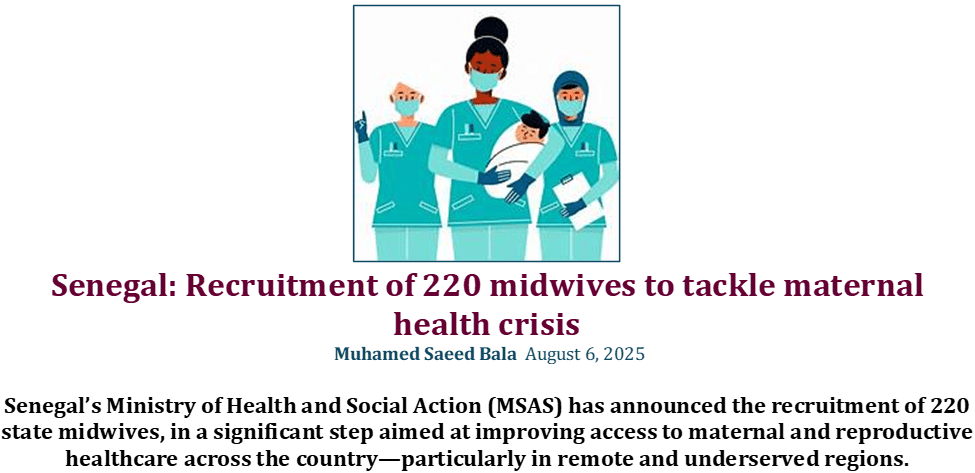
The latest statistics from the MSAS reveal a critical shortfall: there is currently only one midwife available for every 1,197 women of reproductive age.

This shortage has left numerous health centers, especially in rural areas, operating without qualified personnel capable of providing prenatal care or safely assisting with deliveries.

In some of the country’s most isolated communities, pregnant women are still forced to travel dozens of kilometers in search of professional medical assistance.

This persistent gap in healthcare access continues to put adolescent girls, expectant mothers, and newborns at risk, especially when it comes to managing high-risk pregnancies.

In response, the government has initiated a targeted recruitment drive under the broader SWEDD+ program—an initiative for Women’s Empowerment and the Demographic Dividend in West Africa.

The project aims to recruit a total of 500 midwives across 11 of Senegal’s most vulnerable regions, where the shortage is most pronounced.

The newly announced recruitment of 220 midwives marks the first wave of this effort, which is supported by key international partners including the World Bank and the United Nations Population Fund (UNFPA).

Beyond simply filling vacant roles, the goal is to ensure that skilled healthcare professionals are present and retained in the country’s most neglected areas—regions often bypassed by young professionals due to poor infrastructure and difficult living conditions.

Authorities hope this measure will significantly reduce maternal mortality, limit preventable childbirth complications, and improve access to essential services for women and adolescents.

However, health experts warn that recruitment alone will not be enough. For the initiative to succeed in the long term, newly deployed midwives will require proper housing, transportation, equipment, and incentives to remain in rural posts.

Despite these challenges, the decision signals a shift in policy direction. While the number of recruits may not fully meet the country’s needs, the move represents a concrete and long-overdue commitment to rebuilding Senegal’s maternal healthcare system from the ground up.

Source: https://dailymailafrica.com/senegal-recruitment-of-220-midwives-to-tackle-maternal-health-crisis/

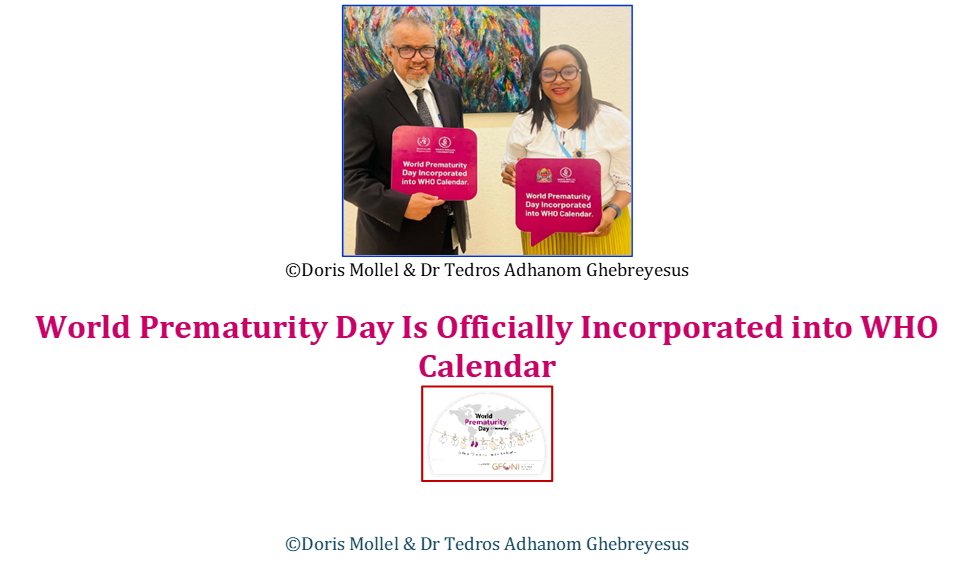
The World Health Assembly has officially designated November 17 as World Prematurity Day! The recent WHO endorsement is a major step forward – calling on governments around the world to prioritize preterm birth in their national health agendas. 

“As one of the founding organizations of World Prematurity Day in 2008, we at GFCNI are deeply proud to see it officially recognized by the World Health Organization,“ says Silke Mader. “This milestone is a tribute to our tireless efforts together with parent and patient organizations, healthcare professionals, and advocates around the world. A heartfelt thank you to Doris, whose dedication made this endorsement possible. Together, we have turned a vision into a worldwide movement for preterm babies and their families.”

This is truly a huge milestone for the global movement for premature babies,” adds Doris Mollel, founder of the Doris Mollel Foundation in Tanzania, whose tirelessly advocacy, supported by the Tanzanian government, has been pivotal in bringing global attention to the needs of preterm infants. “This is just the beginning. Together, we are building a future where every child has a fighting chance, and every life matters.”

Source: https://www.gfcni.org/campaigns/world-prematurity-day

The latest statistics from the MSAS reveal a critical shortfall: there is currently only one midwife available for every 1,197 women of reproductive age.

This shortage has left numerous health centers, especially in rural areas, operating without qualified personnel capable of providing prenatal care or safely assisting with deliveries.

In some of the country’s most isolated communities, pregnant women are still forced to travel dozens of kilometers in search of professional medical assistance.

This persistent gap in healthcare access continues to put adolescent girls, expectant mothers, and newborns at risk, especially when it comes to managing high-risk pregnancies.

In response, the government has initiated a targeted recruitment drive under the broader SWEDD+ program—an initiative for Women’s Empowerment and the Demographic Dividend in West Africa.

The project aims to recruit a total of 500 midwives across 11 of Senegal’s most vulnerable regions, where the shortage is most pronounced.

The newly announced recruitment of 220 midwives marks the first wave of this effort, which is supported by key international partners including the World Bank and the United Nations Population Fund (UNFPA).

Beyond simply filling vacant roles, the goal is to ensure that skilled healthcare professionals are present and retained in the country’s most neglected areas—regions often bypassed by young professionals due to poor infrastructure and difficult living conditions.

Authorities hope this measure will significantly reduce maternal mortality, limit preventable childbirth complications, and improve access to essential services for women and adolescents.

However, health experts warn that recruitment alone will not be enough. For the initiative to succeed in the long term, newly deployed midwives will require proper housing, transportation, equipment, and incentives to remain in rural posts.

Despite these challenges, the decision signals a shift in policy direction. While the number of recruits may not fully meet the country’s needs, the move represents a concrete and long-overdue commitment to rebuilding Senegal’s maternal healthcare system from the ground up.

Source: https://dailymailafrica.com/senegal-recruitment-of-220-midwives-to-tackle-maternal-health-crisis/

Was your baby born more than 3 weeks early? Premature development differs from full-term, but there’s no need to worry! Let’s explore effective ways to understand and support your baby’s growth and milestones. Premature babies are often born with more extended (straight) positions, while full-term babies get a curled up (flexed) feeling from being in the womb longer. Babies need both flexion and extension to help their motor skill development. Try these activities to aid your preemie’s physical growth and work on their flexion. Always consult your healthcare provider for personalized advice. • Swaddling: Helps bring your baby’s arms to the middle, providing comfort and aiding in muscle development. • Side Lying: Reduces gravity’s impact, making it easier for your baby to move their arms and legs. • Bringing Arms and Legs to Midline: Encourages flexion by helping your baby bring their limbs to the center of their body. • Tummy Time: Strengthens neck, back, shoulder, and core muscles crucial for overall development.

 👪 ABOUT PATHWAYS.ORG Pathways.org is a non-profit organization that provides free, trusted resources so that every parent is fully empowered to support their child’s development. Our milestones are supported by American Academy of Pediatric findings. Our resources are developed with and approved by expert pediatric physical and occupational therapists and speech-language pathologists.

Source: file:///C:/Users/Kathy%20P/Downloads/Global_Preterm_Birth_Organizations_Map_2025.html

Join Our Global Community

If your country or region isn’t yet listed, we’d love your help expanding this network.  Share your local preemie-family organization, NICU support group, or foundation by contacting us at NeonatalWombWarriors@gmail.com Together, we can make sure every family and their communities — no matter where they are — are able to gain needed support. We are stronger together.

Having a baby in the hospital NICU is a very stressful time for all members of a family, including big brothers and sisters. Siblings often feel confused, anxious, or even left out during a NICU stay. Children look to adults for reassurance, so it’s important to guide them through the experience with honesty, love, and consistency.

This guide offers simple, practical tips for NICU sibling support that help kids feel included, valued, and secure during this challenging time.

Helping Children Cope with a NICU Stay

BE CONSISTENT

Maintaining normal routines like bedtime, meals, and school helps young children feel safe. Consistency is especially important during a time when so much else is changing.

SET ASIDE SPECIAL TIME

Even small moments of connection, like reading a bedtime story, a short walk, or a chat in the car, can go a long way. Your time and attention matter more than perfection.

ASK FAMILY AND FRIENDS FOR HELP

Don’t be afraid to lean on your support system. People want to help, but they don’t always know how. Let them know what you need. Ask friends or family to help with school drop-offs or meals. Giving others a chance to help allows you to show up more fully for your children.

SURROUND THEM WITH FAMILIAR PEOPLE

If you have family members and friends providing child care, have them come to your home as much as possible. With so many changes, having a known and trusted adult around will help younger children cope, especially if they have a difficult time being separated from mom and dad. Familiarity offers comfort when parents are spending long hours at the hospital.

ADAPT THEIR DAILY ROUTINES

Routines are an important part of helping children cope with the NICU. You may have to temporarily change up your child’s routines to align with having a baby in the NICU. If your usual family dinners are now spent at the hospital, try shifting that special time to breakfast or bedtime instead. Flexibility can help kids still feel connected.

LEAVE NOTES OF LOVE

Leave your children love notes and messages when you have to be away. You may even sign some messages from the baby: “I am so lucky to have you as my big sister!” This can help them feel connected to the baby, especially if they can’t visit them.

CELEBRATE THEI ROLE AS BIG BROTHER OR SISTER

Remind siblings how important they are. Make a list of all the things your older children can do that the new baby can’t do and share it with them. Talk about their role in the family and how they will be helping to teach the new baby about these things.

ENCOURAGE YOUR CHILDREN TO TALK ABOUT THEIR FEELINGS

Even if they don’t ask, make time to talk. Let them know that it is okay if they are feeling sad, angry, lonely or frustrated. Let them know that they can tell you if they feel like they need you to spend some time with them. Create space for your children to talk about how they’re feeling by asking simple questions like: “What was the best part of your day?” or “Is anything making you feel sad or worried today?” Let them know it’s okay to feel all their feelings, and that you’re always there to listen.

LET THEM ASK QUESTIONS

Children often have big imaginations and need help making sense of what it means that the baby is in the NICU. Giving them age-appropriate, honest answers can ease their fears. For example: “The baby is in a special place where doctors are helping them get stronger.”

What are they worried about? What do they think might happen? Let their questions guide your conversations.

Model Coping and Resilience

Kids learn by watching you. Show them that it’s okay to be sad or overwhelmed, and that those feelings don’t last forever. Let them see you ask for help, take breaks, and care for yourself.

You Are Not Alone

The NICU experience can be tough on siblings, but it can also bring families closer. The most important thing we can do for our children is to give them support, encouragement, information and most of all reassurance that they are still important members of the family. With thoughtful support and simple routines, you can help your children feel secure, seen, and loved during this time.

Source: https://handtohold.org/im-special-too-how-to-support-siblings-when-your-baby-is-in-the-nicu/

Abstract

Purpose

The purpose of this research is to evaluate how AI integration in nursing education influences educational and practice performance outcomes, and to understand the roles of technological acceptance and institutional support in this process. Issue: AI’s role in nursing education and practice is not fully understood, particularly in terms of its effects on performance and the barriers to its effective implementation.

Method

A sample of 500 participants was surveyed, and data was analyzed using Smart-PLS 4.0 to assess the direct, indirect, and moderating effects between variables like AI integration, performance outcomes, and institutional factors. Results showed significant positive relationships between AI application in practice and nursing performance, with technological acceptance acting as a strong moderator.

Findings

AI integration in nursing education positively affects nursing performance (p < 0.001). Technological acceptance significantly enhances both educational and clinical outcomes, with interaction effects between technological acceptance and AI integration improving performance (p < 0.001).

Research policy implications

Policy should focus on supporting AI adoption in nursing curricula, with investments in faculty training, technological infrastructure, and fostering technological acceptance to maximize AI’s benefits in healthcare settings.

Conclusion

AI integration is crucial for advancing nursing education and practice, with technological acceptance and institutional support playing key roles in successful AI adoption. The findings underline the importance of targeted policy initiatives to foster these elements.

Introduction

Artificial Intelligence (AI) is rapidly transforming healthcare and nursing, providing new opportunities for education and practice. The integration of AI in nursing education is reshaping the way nursing curricula are developed, while the application of AI in clinical settings is enhancing the efficiency and accuracy of patient care. Despite these advancements, the impact of AI on global nursing education and practice remains inadequately explored, with few studies addressing both its benefits and challenges. This research aims to provide a comprehensive understanding of how AI integration in nursing education influences nursing performance, both in academic and clinical settings, and how AI applications in practice improve patient outcomes and care efficiency (Iqbal et al., 2025)

The adoption of AI in nursing education and practice is growing at an unprecedented rate, offering tools that range from curriculum enhancement through AI-driven learning tools to decision support systems (DSS) in clinical settings. AI is revolutionizing nursing by providing advanced technology for clinical training, decision-making, and patient monitoring (Chowdhury et al., 2021; Rana et al., 2024). However, the integration of AI in nursing education is often challenged by factors such as curriculum development, technology access, and the need for comprehensive training. Similarly, in clinical practice, the application of AI for clinical decisions and patient monitoring is reshaping nursing roles, yet concerns remain about how these technologies affect nursing practice performance (Denecke et al., 2020; Iqbal et al., 2023, 2024). Despite these changes, few studies have explored how these technological advances impact both nursing education and clinical performance in a holistic manner.

Although AI is increasingly being implemented in nursing education and practice, there is a lack of comprehensive research examining the direct effects of AI integration on nursing education performance (NEP) and nursing practice performance (NPP). Moreover, the factors that moderate or mediate the influence of AI such as technological acceptance, institutional support, and infrastructure have not been fully investigated. Understanding how these variables interact can provide valuable insights into the effectiveness and challenges of AI implementation in nursing.

These main three main research questions are:

1. How does AI integration in nursing education (curriculum design, technology access, and clinical training) influence nursing education performance, including academic performance, skill development, and clinical competency?

2. In what ways do AI applications in nursing practice (clinical training, decision support, and patient monitoring) affect nursing practice performance, particularly patient outcomes, satisfaction, and clinical accuracy?

3. How do factors such as technological acceptance and institutional support mediate and moderate the effects of AI integration and application in nursing education and practice?

These main three main research objectives are:

1.To examine the impact of AI integration in nursing education on nursing education performance (NEP).

2. To assess how AI applications in nursing practice affect nursing practice performance (NPP).

3. To analyze the role of technological acceptance and institutional support in moderating and mediating the relationship between AI integration and performance outcomes in nursing education and practice.

This study will provide crucial insights into how AI integration in nursing education and practice affects various performance outcomes, offering actionable recommendations for educators, healthcare policymakers, and technology developers. By exploring the moderating and mediating effects of technological acceptance and institutional support, the research will help identify strategies to overcome barriers to effective AI adoption in nursing. The findings will also contribute to the development of a conceptual framework for evaluating AI’s role in nursing education and practice, promoting more effective and sustainable implementation of AI in these fields.

This study will be conducted using Smart-PLS 4.0 to analyze the relationships between AI integration in nursing education and practice and its impact on nursing performance outcomes. The research will include an examination of the independent variables (AI integration in education and practice) and their effects on the dependent variables (nursing education and practice performance). Additionally, the moderating effects of technological acceptance and the mediating role of institutional support will be explored. This will lead to a set of practical recommendations for the integration of AI into nursing curricula and clinical environments.

Section snippets/Literature review

Artificial Intelligence (AI) has emerged as a transformative force in both nursing education and clinical practice. The integration of AI into nursing education, through innovations in curriculum design, clinical training, and simulation, is reshaping how nurses are trained and prepared for modern healthcare challenges. Similarly, AI applications in nursing practice, such as decision support systems (DSS) and AI-enhanced patient monitoring, are changing the way nurses deliver care, improving

Research methodology

This study will employ a quantitative research methodology to examine the impact of Artificial Intelligence (AI) integration on global nursing education and practice. The research will use Smart-PLS 4.0, a software tool for structural equation modeling (SEM), to analyze the relationships between the variables outlined in the study framework. SEM is chosen due to its capability to handle complex models involving multiple independent, dependent, mediating, and moderating variables (Hair et al.,)

Result analysis and discussion

The path coefficients in Table 1 reveal strong, significant relationships between AI integration and nursing performance outcomes. The T-values consistently exceed the threshold of 1.96, confirming the statistical significance of the direct paths. In Table 2, total indirect effects show meaningful mediating influences, with T-values above 1.96 for most variables, indicating significant indirect relationships. Confidence intervals in Table 3 further validate these findings, with narrow ranges

Conclusion

This study has demonstrated the significant impact of AI integration in both nursing education and practice. The results show that AI Application in Nursing Practice (AIANP) and AI Integration in Nursing Education (AIINE) have substantial positive effects on Nursing Education Performance (NEP) and Nursing Practice Performance (NPP). Key findings include the strong relationship between AIANP and Institutional Support (IS), as well as the enhancement of Technological Acceptance (TA) through AI.

Source: https://www.sciencedirect.com/science/article/abs/pii/S1355184125001000

The unpredictable hours of residency make romantic relationships tough—but not impossible. Here’s how to date and maintain a love life during residency.

The long and unpredictable hours of residency make starting and maintaining a romantic relationship tough. But it’s not impossible.

Here’s how to date and make the most of your love life during residency.

First, let’s address the elephant in the room. If you’re going into residency single and haven’t spent much time dating or figuring out what you need from a partner, taking on this challenge during residency will be difficult. Building a deep, romantic relationship requires time, which is something you have very little of in residency.

Even the act of finding a relationship requires a significant time investment. You’ll need to put yourself out there socially, such as going to events or joining community groups, work on your own personal development, and zero in on what you’re actually looking for from a partner.

If this sounds like you as a resident, do not despair. It is possible to find and build a relationship during residency, but you need to understand both what your priorities are and how many hours you have to find and keep that special someone. If finding a relationship in this stage of your life is important to you, you’ll need to intentionally carve out and block time for it, much like when you are studying for boards.

Don’t allow your years of residency to fly by without being intentional about every aspect of your life—this includes your professional development, personal wellness, hobbies and interests, and love life.

If starting a family and settling down is a top priority for you at this stage, you need to act like it. This will mean you have less time for other things, such as research you wanted to pursue, personal hobbies, or binging Netflix shows alone.

Alternatively, you may decide a serious relationship is less important to you at this time, which is perfectly okay too. Don’t fall into the trap of doing what those around you are doing just because it seems like the logical next step. Jumping into a serious relationship or beginning to start a family because you think you should, and not because you want to, is a recipe for disaster.

With that in mind, if dating is a priority for you, it’s time to get serious about identifying your needs.

Identify Your Needs

One of the biggest questions to ask yourself is whether or not you want to be with someone in medicine, as there are pros and cons to both choices.

A partner in a medical field, such as another resident or someone pursuing another healthcare career, will share an understanding of the time-consuming nature and challenges of residency. They are more likely to be comfortable with your limited and unpredictable hours because they experience the same thing. You’ll also have plenty to talk about in the realm of medicine, but this can be both positive and negative.

Your shared interests may keep the conversation going, but you run the risk of talking about medicine all the time. A partner outside of healthcare can offer new topics of conversation, and you can learn new things from each other. Additionally, a non-resident partner can more easily work around your rigid schedule.

If both of you are pursuing a career in healthcare, you may have similarly unpredictable schedules. If you each only have one small sliver of free time, it’s likely they won’t align, making it difficult to carve out time together.

However, your career path is only one small element of determining your own needs.

Are you looking for someone who wants to have children? Are you eager to start that process right away, or do you want to wait a few years? Do you want someone who shares your passion for fitness and wellness? Is preferring Star Trek over Star Wars a deal breaker for you?

By the time you’re in residency, you likely have a better understanding of yourself and what you hope your future will look like. Determine what you’re looking for in a partner to save yourself time during the dating process, as you don’t have any time to waste. However, ensure you’re not too rigid in your quest for love. The more you idealize your perfect partner, the harder your search will be.
After all, no one is perfect, and every relationship involves compromise.

Finding a Partner

After spending time identifying your preferences, it’s time to go out and find that special someone, which is easier said than done, especially for residents.

Unlike treatment algorithms, there are no x + y + z instructions to find a partner. It takes time, patience, and a whole lot of trial and error. Put yourself out there and continue meeting new people. Choose events, groups, and activities that align with your interests so you find someone who shares your values.

For example, if fitness is a top priority for you, join a gym or athletic community group you’re interested in, such as a running club, kickboxing class, or yoga in the park. If religion is an important aspect of your life, make time to go to church or temple events, and get more involved in religious community initiatives. If you’re passionate about books and storytelling, join local library events and begin participating in a book club.

Dating apps can also help you streamline the dating process. If used effectively, they can aid residents who have very little free time. Be sure to choose dating apps that align with your needs. If you’re looking for a serious relationship with someone who wants to start a family, don’t waste your time on an app known for its hookup culture.

If you’re looking for someone who is also in medicine, there are dating apps specifically for healthcare workers, such as ForeverX and DowntoDate.

Use dating apps to your advantage, but understand their limitations. If your residency is in a small town, you will have fewer options. The pros and cons of dating apps and how to optimize online dating are discussed in video on my Kevin Jubbal, M.D. channel.

Maintaining a Healthy Relationship

Starting a relationship is just one part of the equation. As a resident, you’ll have to put in more effort than usual to help maintain it. Here’s how to keep a healthy relationship strong.

1 | Be Clear About What to Expect

The first and most important tip is to be upfront with your partner about what to expect over the next few years. This will be easier if you’re dating a fellow resident or someone in the medical field, but either way, it’s vital that both of you have clear expectations.

Your free time will be very limited. Your schedule may be so hectic at times that all you can do after a long day is go home and sleep. Your free time will also be unpredictable, as you may be on call, which can and likely will result in cancelled plans, sometimes at the last minute. Preparing your partner for these situations from the outset will prevent conflict.

When approaching commitments, use percentages. With what percent confidence can you commit to an event? Is there a 90 percent chance you can make it, a 70 percent chance, or 30? Knowing this upfront will result in fewer misunderstandings and hurt feelings.

If hurt feelings do occur, be sure to allow your partner to vent. Constantly canceling plans will be frustrating for them at the very least, and if they aren’t working in healthcare, your schedule and priorities during this time will be difficult to understand.

Being in medicine in some ways is as close to being in the military as you can get, with an arguably even more unpredictable day to day schedule at times.

Be clear right from the start that you will be under a tremendous amount of stress. This is in no way carte blanche for you to be rude or self-obsessed; however, they should know there will be times when you come home after having been chewed out by an attending or after having lost a patient. You may not always be able to put on a happy face and forget about your day the moment you walk through the door.

2 | Develop Open and Honest Communication

Next, communication is the foundation of any strong relationship, and it’s what will save you during residency. Explain when your shifts are, when you’re on call, and share your exact schedule, but strive to go beyond that. You need to share what’s going on in your inner life as well, including your feelings, concerns, and current energy levels.

Be honest. Don’t put on a brave face. They need to know how to support you through your dark days, which means you need to give them the full and honest picture of the job from the start.

If a patient dies, it’s important to share how it affected you. Don’t act as though your partner can’t help you or pretend you don’t need help when they can see that you do. If you deny your feelings, you’re more likely to crack under the immense pressure you’re under. Plus, you’re taking away your partner’s agency. Of course, they can’t help you with everything, but when they can, let them. If you have the right partner, they’ll be happy to offer you support.

However, remember that communication is a two-way street. Your partner isn’t there just so you can talk at them about how rewarding or challenging it is to be a doctor. They need to know they can vent to you when they are stressed, no matter their career path. Being a teacher, accountant, waiter, or business owner comes with its own stresses. They must be able to talk about their day too.

While the relationship does largely rely on your schedule, it’s not all about you.

3 | Don’t Allow Medicine to Rule Your Life

Next, while it’s important to be honest about your work and how it makes you feel, it shouldn’t be the only thing you talk about, and it shouldn’t rule your lives.

It is essential to take time to decompress before you see your partner and to put a time limit on hospital or clinic talk.

Dr. Joshua Goldman has found success using his drive home to transition his mindset. He has two children, so he uses his commute to move from serious plastic surgeon to playful dad. Dr. Goldman shares how he balances his family and work life in an episode of Day in the Life.

Even though it may not feel like it at times, you are more than just a doctor. Developing a healthy life outside of medicine will aid both your relationship and your career. You’ll be able to go into work fresh and ready to start again, rather than carrying it with you 24/7.

Work with your partner on finding a balance in your conversations. This is especially important if both of you are in residency. It’s great that it’s a passion you both share, but you are more than just residents. What are your hobbies and values outside of medicine? If you have to, make a rule that when on dates or when sharing a meal, you don’t talk about medicine. This will allow you to get to know each other on a deeper level and grow your connection beyond your shared careers.

4 | Intentionally Block Time for Your Relationship

The fourth tip is to intentionally make time for your relationship and your partner. Even with your busy schedule, make specific plans, put them in your calendar, and do your best to commit to them. You may only have a few extra hours each week to dedicate to your partner, but know that any time spent together is better than nothing.

Neglecting time as a couple will erode any relationship. If you’re not careful, those few hours of free time will get eaten up by something else, and before you know it, four weeks will have passed by without the two of you spending any quality time together.

You need to block time for your relationship and ensure being together occurs in some form or another. When your schedule is tight, get creative about blending other commitments. How can you turn tasks like grocery shopping, cooking, or even cleaning the house into a date?

Completing these seemingly boring tasks together will make them more enjoyable while giving you more opportunities to see each other. That said, don’t allow your only time together to be over laundry and dishes, as this is a surefire way to lose that romantic spark.

On days when you only have a few moments to spare, taking the time for a small gesture like bringing home food or flowers or just texting them a kind message can brighten your partner’s day.

Don’t only focus on what you want out of a relationship. What does your partner prefer? You might care about gifts and small gestures while what’s most important to your partner is hearing words of affirmation.

This is commonly referred to as your love language. The five love languages are physical touch, acts of service, quality time, words of affirmation, and gifts.

If you don’t know your preferred love languages, there are plenty of online quizzes you can take. While by no means scientific, they can provide insight into your own needs and preferences as well as your partner’s. If your love languages align, awesome! If they do not, don’t be discouraged. Taking the time to learn more about each other’s preferences will help you both get what you need from the relationship.

This again falls back on effective communication. Neither of you are mind readers. Make every effort to ensure both of your needs are met.

Romantic relationships during residency can be tough—but they’re rewarding too. Residency is tremendously challenging, and having someone you can lean on during this time is extremely valuable.

Source: https://medschoolinsiders.com/medical-student/dating-and-relationships-in-residency/

Abstract

Background: 

Neonatal nurses have a major role in helping parents engage with their infant. A high level of parent participation, called Parent-Partnered Care, integrates parents as full partners in the delivery of hospital care to their infants. One parent-partnered intervention that improves infant, parent, and parent-infant outcomes is H-HOPE (Hospital to Home: Optimizing the Preterm Infant Environment). H-HOPE has 2 components: Massage+ and Parents+.

Purpose: 

The purpose of this article is to present an evidence-based guide showing how to deliver Parents+ and the implications for nursing practice.

Methods: 

The nursing approach to Parents+ includes participatory guidance and social support, which fosters a partnership with parents. The guidelines for using participatory guidance include a detailed description of each teaching/learning session along with implications for nursing practice.

Results: 

Parents’ experienced many benefits from participating in the Parents+ sessions. They reported feeling more confident in the care of their infant and more satisfied with learning and delivering Massage+. Additionally, parents also reported less fears handling their infants, increased feelings of bonding/attachment, and a sensitivity/responsiveness to their infant’s behavioral cues.

Implications for practice: 

Parents+ presents an opportunity for nurses to help parents engage with their infants and increase their confidence and competence. Parents’ desire a neonatal intensive care unit culture that embraces a comprehensive collaborative approach with healthcare professionals that is individualized to their infant’s health and well-being.

Neonatal nurses have a major role in helping parents engage with their infant and provide direct care. The inclusion of parents as full partners in the care of their infant in the neonatal intensive care unit (NICU) has greatly expanded to include routine caregiving, developmentally supportive care, and engagement with the neonatal team regarding infant healthcare decisions. A high level of parent participation in the care of their infants, called Parent-Partnered Care, is defined as “approaches that center or integrate parents as full partners in the delivery of hospital care to their ill or small newborns.”

One parent-partnered intervention that improves infant, parent, and parent-infant relationship outcomes is H-HOPE (Hospital to Home: Optimizing the Preterm Infant Environment). H-HOPE is a parent-focused intervention that fits within the Parent-Partnered Model of Care where members of the healthcare team partner with parents in care delivery . H-HOPE includes both an infant-focused intervention, Massage+ (formerly termed the ATVV, Auditory, Tactile, Visual, and Vestibular Intervention), and a parent-focused intervention, Parents+. A large body of research documents that Massage+ significantly increases infant alertness, clarity of the infant’s cues, oral feeding and growth, and fosters the development of infant social communication and the parent-infant relationship in hospital. Additionally, Massage+ has been associated with reduced acute care visits and improved parent-infant interaction at 6-weeks corrected age. Massage+ is designed to be provided by parents while Parents+ provides guidance and support from nurses so parents can confidently provide Massage+ with sensitivity to their infant’s cues.

H-HOPE: one model of parent-partnered care.

As an early behavioral intervention for preterm infants and their parents, H-HOPE is designed to be integrated within a culture that supports parents as partners in care. H-HOPE incorporates 3 key elements of Parent-Partnered Care: presence, participation, and engagement. The physical presence of parents is necessary to provide them the opportunity to participate in caregiving activities like Massage+. Parents may participate in care activities with the support of nurses or independently depending upon their confidence and experience. Parents+ requires collaboration between the nurse and parent to teach parents how to understand their infant’s behavior and deliver Massage+. Engagement occurs when a parent is emotionally involved in their infant’s health and healthcare through their actions. Engagement is not fixed, rather it exists along a continuum. Over time, the delivery of H-HOPE by parents increases parents’ confidence in their caregiving and engagement with the healthcare team.

A comprehensive toolkit, including instructions and videos showing the step-by-step process of Massage+ is available to support nurses and parents in the delivery of Massage+ on Pathways.org (https://pathways.org/massage-tool-kit-H-hope) at no cost. Pathways.org also has detailed information and developmental resources for nurses to use during the Parents+ sessions. After completion of Parents+, the website is available for parents.12 These materials and videos are especially helpful for parents to review content at any time. However, detailed guidelines for the nurse to deliver Parents+ is not currently available in the literature. Therefore, the purpose of this article is to present an evidence-based guide showing how to deliver Parents+ and the implications for nursing practice.

PARENTS+ CONCEPTUAL BASIS

Parents+ consists of teaching/learning sessions that help parents understand infant behaviors and cues, shows them the steps of Massage+, and provides experiences that build parent confidence in providing Massage+ guided by their infant’s cues. The conceptual basis supporting Parents+ includes participatory guidance,principles of adult learning and experiential learning.

  • Participatory guidance occurs when a skilled clinician guides the process of learning how to perform a complex task, with the mutual goal of moving the learner from novice to expert. This approach changes the relationship from “instructor-student” to a collaboration. When using this approach, nurses foster bidirectional communication with parents.
  • Adult learning involves respecting and integrating what the parent brings to the sessions, such as their own experience in caring for an infant. It is their “history” related to the context of their lives, including their preterm infant, family, socioeconomics, cultural factors, and other responsibilities.
  • Experiential learning provides opportunities that foster integration of the new experience into the learner’s everyday skills. This learning approach provides hands on practice (Massage+) and supports parents as they gain confidence and competence while interacting with their infants. Experiential learning is also a component of Bandura’s well-known social learning theory widely used as an effective model for behavior change programs.

The learning strategies derived from these concepts promote parent participation and engagement (Parent-Partnered Care), build trust between nurses and parents, and increase parents’ confidence and competence with infant care. The integration of these strategies fosters growing parent competency. One advantage of Parents+ is its strong conceptual approach that assists nurses in conducting parent education that is both planned and effective, allowing nurses to provide consist of support across shifts and nursing assignments. This common understanding of how to conduct parent education is much needed; as noted in a recent scoping review that described the inability of health professionals to articulate the systematic teaching strategies they used.

DESCRIPTION OF THE PARENTS+ SESSIONS

Parents+ consists of 3 to 4 sessions: 2 in-hospital and 1 to 2 post-discharge. The focus of each session is the parents’ engagement with their infant, as they learn to understand their infant’s behavioral cues and how to build the parent-infant relationship. Parents learn about cues both through the nurse teaching about behavioral cues as well as the nurse asking about what cues the parents have seen in their infant and pointing out cues the infant may exhibit during the Parents+ session (Table 1). Through this repeated process, parents learn to read, interpret and respond to engagement and disengagement cues. For example, when their infant is overstimulated and exhibits a potent disengagement cue, the parent learns how to modify his/her behavior to reduce overstimulation (see Session 1 for definitions of engagement and disengagement behaviors below).

TABLE 1. – Parents+ Content: Example Session Questions and Talking Points

Open session with parent concernsLet’s start by discussing how you’re doing. How are things going for you? Do you have any questions about your baby?
Infant behavioral statesHave you noticed how your infant wakes up? What state is your infant in right now?
Engagement & disengagement cuesThese pictures show some ways infants show they are ready to interact with you or want to continue. Which ones have you noticed that your infant does?
Orally directed behaviorsHere are some things infants do to show they are getting ready to eat. What does your infant do when s/he is ready to eat?
Hunger & satiation cuesHere are some things infants do to show they are getting ready to eat or that they are full. What behaviors does your infant have when they are getting ready to eat and when they are full?
Massage+Massage+ is an activity that stimulates all your infants’ senses and is enjoyable for both of you Massage+ helps infants become alert and ready to feed, so they eat and sleep better. Do you notice any benefits for your infant when doing Massage+? Infants may like some parts and not others. Do the parts your infant likes. Remember to pause if they need a break. How does your infant respond to Massage+?
Back to sleepDo you know the best position to put your infant in for sleeping?
Signs & symptoms of illnessBefore you go home, we’d like to review what you might see in your baby that would need immediate attention.
How to calm a fussy babyDoes your infant ever get fussy? What do you do? Let’s talk about different things that you can do to calm the infant when s/he is fussy.
Feeding is more than eatingFeeding is an important time to relate to your infant Whether breast or bottle feeding, your infant needs to be close to you and have your full attention while feeding. This is a time for you and your infant to relax and enjoy each other
Tummy timeTummy time is important for your infant’s development and achievement of milestones Let’s review ways you can get tummy time in each day
Developmental milestonesInfants do not develop the same way, but knowing what developmental milestones to be on the lookout for can help you monitor their progress. Let’s review some 0-3 month milestones. Have you seen any of these in your infant yet?
Close session with parent check-inDo you have any further questions or concerns about what we’ve discussed, or anything else?

Infant behaviors and Massage+ are introduced at the first session and reviewed and practiced in subsequent sessions. While teaching Massage+, the nurse talks about infant behaviors and caregiving, adding new content to each Parents+ session. Content of Parents+ can be divided into multiple smaller sessions to accommodate both parent and nurse time constraints. When this occurs, documentation of parent education in the electronic health record (ideally into the existing parent education documentation) serves as a communication tool between nurses to ensure completion of a Parents+ session, picking up where necessary. If an infant is discharged earlier than expected, missing content can be delivered during the post-discharge visits.

Each Parents+ session follows the same plan:

  • Address (re-address) parent concerns
  • Review any previous content
  • Introduce new content
  • Complete each session by returning to the parent’s continuing concerns and any questions about their infant.

The focus on parent needs at the beginning and end of each session is in response to the high stress, anxiety and fear many parents report during their time in the NICU. Nearly all parents’ have emotional needs related to caring for their vulnerable infants and are often hesitant about even touching their infant. The psychological distress of having a preterm infant, exacerbated by the stress of the NICU environment, along with the context of parent’s lives outside the hospital, affect their ability to fully participate in caregiving of their infant and engage with the healthcare team regarding their infant and family’s needs. For parents to fully engage during this stressful time, their needs must be addressed in conjunction with the infant’s needs. However, parents are rarely given an opportunity to discuss their own feelings and needs. Parents+ helps mitigate parents’ distress by acknowledging their needs and concerns and asking what they want to learn about their baby to support their learning and engagement.21 While some concerns are too complex to be resolved or may require referrals, simply acknowledging parent concerns helps parents feel heard and builds trust. Detailed guides for each session are available on Pathways.org.

Session 1

The first Parents+ session can be initiated when the parents are physically and emotionally ready, even if the infant is not old enough to receive Massage+ (Massage+ begins when the infant reaches 31-32 weeks postmenstrual age and is physiologically stable). Infants born between 33 and 35 weeks may also begin Massage+ once they are physiologically stable. This first session includes substantial content about preterm infant behaviors and cues that are highly relevant for all parent caregiving and engagement with the infant. Sharing information about preterm infant behavior and cues prior to the infant’s readiness for Massage+ allows parents’ time to become comfortable learning to read, interpret, and respond to their infant’s cues.

During Session 1, 4 content areas related to preterm infant behaviors are discussed. Nurses use active listening to understand parents’ concerns and tailor content to support learning. The session begins with a description of infant behavioral states and engagement and disengagement cues to help parents understand the many behaviors that infants use to express themselves. These cues also include orally directed behaviors (pre-feeding behaviors) and those that indicate hunger and satiation. When working with parents, using the term pre-feeding behaviors is easier for parents to understand. Later in this session, parents learn the steps of Massage+ and practice Massage+ on their infant with guidance. Cues are further reinforced when parents learn to read, interpret, and respond to the infant’s behavior while giving Massage+ to their infant.

  • Infant Behavioral States: Behavioral states include quiet sleep, active sleep, drowsiness, active alert, quiet alert, and crying. Identifying the infant’s behavioral state indicates readiness or lack of readiness to engage. During the active alert state, the infant’s eyes are open and the infant looks around; arms and legs may be moving, indicating readiness to feed. This state is most optimal for oral feeding, regardless of whether feeding is provided by bottle or breast feeding. During the quiet alert state, the infant’s eyes are open, the infant is calm and ready for social interaction with the parent.
  • Engagement and Disengagement Cues: These cues are important indicators of the infant’s readiness to interact or needing a break. Both engagement and disengagement cues can be potent (eg, easy to understand such as looking at the parent, or cry) or subtle (eg, difficult cue for the parent to read and interpret such as hands open or grimace). Preterm infants often show more subtle engagement cues such as brow raising, facial brightening, feeding posture, and hands open with fingers slightly flexed. As they mature, the frequency of potent cues increases. Potent disengagement cues include a cry face and halt hand, turning head away, and spitting up. Subtle disengagement cues include fast breathing, gaze aversion, and yawning.
  • Orally Directed Behaviors (Pre-Feeding): Orally directed behaviors indicate the infant’s readiness to feed. These include mouthing, rooting, tonguing, hand-to-mouth, hand swipes at mouth, empty sucking, sucking on hand, and sucking on tongue.7,30
  • Hunger and Satiation Cues: Hunger cues include arms and fingers bent, facial grimace or crying, mouthing and sucking movements. Satiation cues include arms relaxed or by the infant’s side, relaxed fingers, infant has a neutral face (no expression), or infant is asleep.26,27,31 These cues provide additional indicators of the infant’s hunger or feeling full. This is important for parents who often want to feed their preterm infant the entire oral feeding even though they are exhibiting satiation cues.

Session 2

Session 2 begins 1 to 2 weeks before discharge. Planning for Session 2 well before discharge allows additional time to address parents’ questions and concerns and to support the parent-infant relationship before heading home. This session also offers additional opportunities to integrate new information with previous learning.

Session 2 content includes signs and symptoms of illness and back to sleep. This information is often already incorporated into discharge education. However, the participatory guidance approach of H-HOPE (Parents+) acts as a reinforcement of the importance of active listening to address parents’ questions with bi-directional communication and incorporating the context of the parents’ needs and concerns as they transition to home. As discussed above, this may include referrals or additional resources to support parent self-care.

Sessions 3 and 4

One or two virtual sessions occur within 2 weeks after parents are discharged home with their infant. Parent feedback from our previous research indicated that this is also a stressful time for parents and they appreciated the additional support and educational content. The purpose of these post-discharge sessions is to offer support to parents, answer questions related to Massage+ and infant behavioral cues that were taught during the first session, as well as infant care. New topics include calming a fussy baby, feeding is more than eating, tummy time, and developmental milestones. Parents are also encouraged to use the Pathways.org App for continuing information about developmental milestones that can be easily downloaded onto their phones.

Depending on the parents’ schedules at home, these 2 sessions can be combined into 1 session. However, the rationale for providing 2 post-discharge virtual sessions was developed as a result of previous research with parents’ who found these visits valuable for their transition to home.

DISCUSSION

The purpose of this article was to present an evidence-based guide showing how to deliver Parents+ and the implications for nursing practice. While parents appreciated Massage+ in previous research studies, they reported high anxiety while handling their infants and not clearly understanding their infant’s behavior. Parent feedback led to the development of Parents+ which offers parent support and guidance to improve outcomes for infants, parents, and the parent-infant relationship. Massage+ is designed to be provided by parents while Parents+ provides guidance and support from nurses so parents can confidently provide Massage+ with sensitivity to their infant’s cues.

Parents+ is a model for collaboration between parents and nurses enabling the delivery of Parent-Partnered Care, and has benefits for parents, infants and nurses, as discussed below. The first Parents+ session was intentionally designed to guide parents in learning and practicing the steps of Massage+ on their infant. When Massage+ is provided by parents, they can see their infant’s positive behavioral responses and growing developmental capacities. The process of providing Massage+, a multimodal dyadic intervention, helps parents’ experience handling their infant and responding appropriately to infant cues; skills that readily transfer to virtually all other caregiving.

Thus, the experience of providing Massage+ begins to build the parent-infant relationship. In both qualitative and quantitative assessments, parents reported feeling more confident in the care of their infant and more satisfied with learning and delivering Massage+. In other intervention and engagement studies, parents reported improved mental health, increased confidence and competence while caring for their infant. Parents also reported less fears handling their infants, feelings of bonding/attachment, and parental sensitive-responsiveness to their infant’s behavioral cues.1Significantly, this response has been proposed as the foundation for the development of the parent-infant relationship.

Benefits for Parents+.

Overall, the benefits of H-HOPE (Massage+ and Parents+) for infants have been well documented in the literature. Infants of different post-menstrual ages (31-36 weeks) responded with improved alertness, increased orally directed behaviors, faster progression from gavage to oral feeding, improved growth, and fewer illness visits after hospital discharge.2,4,6-8 In addition, other investigators reported an improvement in neurodevelopmental outcomes following interventions focused on the parent-infant relationship. Interventions that also include the transition into the home as with Parents+ Sessions 3 and 4 are ideal because this offers additional support for parents and infants post-discharge.

Importantly, Parents+ also benefits staff, providing a practical guide that both novice and expert nurses can use to more effectively help parents engage with their infants. Conducting Parents+ using a participatory guidance approach further develops interactive and teaching skills for nurses. Essentially, the participatory guidance approach can be used for any instruction with parents. These skills foster a culture for parent participation, using bidirectional communication and demonstrating how parents can collaborate with the nurse as a partner. Showing respect and understanding of the parent perspective is particularly salient, as nurses play an important role in making parents feel comfortable and welcome in the NICU environment, as well as increasing their confidence in providing care for their preterm infants.

IMPLICATIONS FOR CLINICAL PRACTICE

Increasingly, the nurse’s opportunity to provide parent support and guidance is challenged by a continually, complex clinical environment, staffing shortages and family stressors. Parents+ presents an opportunity for nurses to help parents engage with their infants and increase their confidence and competence. Physical therapists, occupational therapists, and speech language pathologists trained to administer H-HOPE are well equipped to provide the intervention and can partner with nurses’ to provide these services. However, in most NICUs, the primary responsibility will likely reside with nurses, as they are the only clinicians in the NICU who are at the bedside 24/7. Moreover, evidence-based parent focused developmental approaches to preterm infant care have been shown to affect neurodevelopmental outcomes for infants, driving the need to become a standard of care in the NICU.45 The Vermont Oxford Network issued a statement, “All care is brain care,” to emphasize the importance of developmentally based care for the preterm infant.As NICUs move forward with advancing this type of care, a unit culture that incorporates a developmental and behavioral approach to caregiving by nurses is critical and necessary to achieve optimal outcomes. To support a unit culture of developmental care, staff education and training, from orientation through skill review sessions, is imperative.

The parent perspective can be found in the literature, via feedback from parent advisory groups, and local and national parent support networks (eg, https://nicuparentnetwork.orghttps://www.marchofdimes.org/our-work/nicu-family-supporthttps://handtohold.orghttps://www.projectnicu.com). Parents desire a NICU culture that embraces a comprehensive collaborative approach with healthcare professionals that is individualized to their infant’s health and well-being. The goal for all parents is to achieve optimal outcomes for their infant.44 However, this may require more than changing the NICU culture. There are many factors besides NICU culture and socioeconomics that are barriers and challenges for parents. These include insufficient knowledge about how to care for the infant and understanding realistic expectations for growth and development, as well as access to resources to support the parent’s and infant’s needs.


A successful practice change that incorporates the parent perspective also depends upon experienced leadership; operational and clinical leaders who set consistent expectations for implementing and sustaining evidence-based standards of care. In addition, assessment of staffing needs is critical to incorporate a practice change into nursing workflow. Parents need nurses who have the time to help them learn a behavioral intervention like H-HOPE and provide essential developmental care. NICUs where parent education and engagement are highly valued, and a cornerstone of nursing practice, will likely be more willing to accept H-HOPE. It is imperative for NICUs today to focus on meeting the needs of parents’ and infants, address the challenges, and implement evidence-based practices. In addition to assessing staffing needs, each institution must consider other logistical factors, such as reimbursement for services and who conducts the post-discharge sessions. While nursing time inpatient is not reimbursable, outpatient often is, which may cover the 2 post-discharge Parents+ visits. These post-discharge visits could be completed by a discharge nurse or developmental specialist, depending on the resources of each institution.

CONCLUSION

Parents+ is an innovative behavioral intervention with benefits for parents, infants and staff. Parents+ incorporates a model of Parent-Partnered Care, which helps mitigate parent’s distress by addressing parents’ needs and concerns to support their learning and engagement with their infant. The Parents+ sessions are designed to provide education and support during the NICU stay and post-discharge. Understanding the evidence that supports developmental and behavioral care is key to recognizing the rationale for incorporating Parents+ into the standard of care by staff. Incorporating a culture of developmental and behavioral care for parents and their infants is imperative to address their needs, improve outcomes, and advance nursing practice in the NICU.

 Summary of Recommendations for Practice and Research

What we know:Parents+ is a behavioral intervention that incorporates Massage+ to help parents learn their infant’s cues and contributes to optimal neurodevelopmental outcomes. Parents+ is an evidence-based approach to behavioral care in the NICU. Nurses are essential for providing Parents+.
What needs to be studied:Further research is recommended to identify effective strategies incorporating H-HOPE into neonatal nurses’ workflow. Research is critical to describe how NICUs embrace developmental care as the standard of care. Data are needed to document parent and infant outcomes from the delivery of Parent-Partnered Care.
What can we do today that would guide caregivers in the practice setting considering the use of this evidence for guiding practice?Provide leadership support for a developmental and behavioral approach to NICU care. Educate nurses on the principles of Parent-Partnered Care. Engage parents to understand the behavioral cues of their infant as a component of their caregiving.

Source: https://journals.lww.com/advancesinneonatalcare/fulltext/2025/10000/parents___an_early_behavioral_intervention_as_a.4.aspx?context=featuredarticles&collectionid=3

Club cell secretory protein (CC16) is a pneumoprotein that has anti-inflammatory and antimicrobial properties and whose levels are reduced in preterm infants.

Objective

We sought to investigate the role of circulating CC16 in the association of preterm birth (<37 weeks) with lung function and asthma from childhood into young adult life in longitudinal and mediation analyses.

Methods

Using the BAMSE (Swedish abbreviation for Barn/Children, Allergy, Milieu, Stockholm, Epidemiology) birth cohort (2,557 participants and 10,631 longitudinal observations), we assessed plasma CC16 (ages 8 and 24 years), spirometry (ages 8, 16, 24, and 26 years), and asthma (ages 8, 12, 16, 24, and 26 years). Longitudinal associations between preterm birth, CC16, percent predicted values of FEV1/forced vital capacity (ppFEV1/FVC), and asthma were examined in longitudinal multivariable mixed models. CC16 (ages 8-24 years) was tested as a mediator for the relationship of preterm birth to pre- and postbronchodilator ppFEV1/FVC and asthma in adulthood (ages 24-26 years).

Results

Preterm birth was associated with reduced plasma CC16 (−1.15 ng/mL; 95% CI, −1.22 to −1.08; P < .0001), lower ppFEV1/FVC (−1.9%; 95% CI, −3.1 to −0.8; P = .001), and higher risk for asthma (1.83; 95% CI, 1.28 to 2.62; P = .001) across ages 8 to 26 years. CC16 deficits were related to decreased ppFEV1/FVC (P < .0001) and increased risk for asthma (P = .007) in adulthood. Multivariable mediation analyses suggested that CC16 mediated 16% and 9% of the effects of preterm birth on ppFEV1/FVC and asthma in adult life, respectively.

Conclusions

Low CC16 is a potential mediator of the effects of prematurity on lung function deficits and asthma in young adulthood. Future studies should address whether CC16 can be used as a predictive biomarker and, possibly, a therapeutic target in individuals born preterm.

Section snippets

Participants

BAMSE is an observational population-based birth cohort study that enrolled 4089 children born in Stockholm between 1994 and 1996.35 The study design and enrollment process are detailed in this article’s Online Repository at www.jacionline.org. Perinatal data were obtained from the Swedish medical birth register.36 Plasma CC16 levels were measured at ages 8 and 24 years. Spirometry was conducted at ages 8, 16, 24, and 26 years. Asthma questionnaires were answered by parents at ages 8, 12, and

Results

Overall, 2,557 BAMSE participants were included in this study, contributing to a total of 10,603 longitudinal observations for asthma (526 for preterm participants) and 6,109 for lung function (324 for preterm participants). Compared with the 1,532 excluded participants because of missing CC16 and/or phenotypic data, those included were more likely to be females and have older, nonsmoking mothers and higher-educated parents with a history of asthma (Table I). There were no significant

Discussion

In this study—using a large, long-term, population-based birth cohort—we demonstrated that low circulating CC16 levels may mediate part of the effects of preterm birth on lung function and asthma in young adult life, supporting a protective role of CC16 in obstructive lung diseases of individuals born prematurely. These findings highlight the potential of CC16 for risk stratification and, possibly, novel therapeutic strategies for preterm individuals at risk for obstructive lung disease.

The role of CC16 in the associations of preterm birth with lung function and asthma in adult life – ScienceDirect

Empowering Voices: Honoring the Educators Who Shape Our Journeys

As we begin Neonatal and Preemie Awareness Month, we celebrate not just our survival stories, but the growth and purpose that follow. For those of us who began life in the fragile space of an incubator, this month is a reminder of how far we’ve come—and of the people who continue to help us become who we are meant to be. This November, our theme is “Educators as Warriors of Empowerment”—because teachers, mentors, and guides are often the ones who help transform early struggle into lifelong strength.

Many of us know that being a preemie can mean growing up with a different pace, a different rhythm, or a different way of learning. It’s our teachers who see that difference and choose to nurture it rather than correct it. They are the ones who remind us that resilience isn’t about perfection, it’s about discovery. Whether it’s the preschool teacher who cheered every word we learned to speak, or the university professor who saw our curiosity, these educators become part of our extended story of becoming.

This month, we celebrate their quiet strength—the patience to listen, the creativity to adapt, and the belief that every child’s journey matters. They empower us to see ourselves not as “born early,” but as born with perspective—the ability to find meaning in milestones others take for granted. Through education, we learn to define our own possibilities, rewrite old narratives, and embrace the uniqueness that began long before we could even open our eyes.

To every educator who has walked beside a preemie—thank you for being part of our collective story of empowerment. And to every survivor reading this: remember, your journey didn’t stop at survival. It continues through the lessons you share, the knowledge you seek, and the lives you touch. This month, let’s honor the teachers who reminded us that we are not defined by our start in life, but by how brightly we choose to grow.