PREVENTION, OMEGA 3, PROVIDER SAFETY

Kabul.Afganistan.jpg

AFGHANISTAN


Born Too Soon – Preterm Birth Rates

Rate: 11.5     Rank: 66

(USA Rate: 12.0%     Rank: 54)

SOURCE: https://www.marchofdimes.org/mission/global-preterm.aspx#tabs-3

Afghanistan officially the Islamic Republic of Afghanistan, is a landlocked country located within southcentral Asia. Afghanistan is bordered by Pakistan in the south and east; Iran in the west; Turkmenistan, Uzbekistan, and Tajikistan in the north; and in the far northeast, China.

Afghanistan is a unitary presidential Islamic republic with a population of 31 million, mostly composed of ethnic Pashtuns, Tajiks, Hazaras and Uzbeks. It is a member of the United Nations, the Organisation of Islamic Cooperation, the Group of 77, the Economic Cooperation Organization, and the Non-Aligned Movement. Afghanistan’s economy is the world’s 108th largest, with a GDP of $64.08 billion; the country fares much worse in terms of per-capita GDP (PPP), ranking 167th out of 186 countries in a 2016 report from the International Monetary Fund.

Health in Afghanistan is unsatisfactory but slowly improving. The Ministry of Public Health oversees all matters concerning the health of Afghanistan’s population. According to the Human Development Index, Afghanistan is the 15th least developed country in the world. Its average life expectancy at birth is reported at around 60 years. The country’s maternal mortality rate is 396 deaths/100,000 live births and its infant mortality rate is 66 to 112.8 deaths in every 1,000 live births.

There are over 100 government-run and private or internationally-administered hospitals in Afghanistan. The most advanced medical treatments are available in Kabul. The French Medical Institute for Children and Indira Gandhi Children’s Hospital in Kabul are the leading children’s hospitals in the country. The Kabul Military Hospital and the Jamhuriat Hospital are two of the popular hospitals in the country. In spite of all this, many Afghans still travel to Pakistan and India for advanced treatment

SOURCE: https://en.wikipedia.org/wiki/Health_in_Afghanistan


Our Focus for this blog is PREVENTION

Global prevention of preterm birth, maternal and infant mortality. Preventing/reducing PTSD for survivors, families and providers. Preventing and reducing health care provider shortages.

afgan.girl

COMMUNITY

The Improvement of Health Care in Afghanistan – June 2016

Since 2002, the improvement of health care in Afghanistan has been great. According to USAID, “9 percent of Afghans lived within a one-hour walk of a health facility.” Today, over 50 percent of the population has access to a health care facility, the infant and child mortality rates have decreased and maternal mortality rates have declined as well.

The country’s turbulent history, filled with war and internal strife, has contributed a deteriorated health care system. The old Taliban regime stifled access to adequate medical facilities and professionals. With the help of groups like UNICEF, WHO and USAID the Afghan people are seeing tremendous progress within their country.

On May 16, 2016, a campaign to vaccinate every child under five years of age for polio was launched.

Afghanistan and Pakistan are the only two countries still struggling against the illness. According to WHO, the campaign could put an end to the disease in the next few months.

This is just one example of the efforts being made to improve health care in Afghanistan. U.S. support in the country has also led to success in fighting tuberculosis. Data from 2012 reports daily TB treatments to have a 91 percent success rate.

Women’s health has improved immensely over the last decade. With the help of the U.S. government, more trained midwives were available in Afghanistan. As a result, by 2010, 60 percent of women had care prior to birth. This is an enormous step forward from 2002 when only 16 percent had this same access.

Despite its progress, the country still has a long journey ahead in improving the health care system. According to the Thomas Reuters Foundation, nearly 1.2 million Afghans have been internally displaced.

These individuals have little to no access to healthcare, which is a major problem as they also struggle for food and clean water. Violence against medical facilities has not helped the issue either. In 2015, 42 people were killed in a Doctors Without Borders hospital in Kunduz.

Increased foreign aid and peace efforts are necessary to solve the health care crisis in Afghanistan. This will involve supporting organizations already involved in the country as well as increased pressure on foreign governments for humanitarian action.

Saroja Koneru

SOURCE: https://borgenproject.org/the-improvement-of-health-care-in-afghanistan/

health.afgan.jpg

Bringing health care to Afghanistan’s vulnerable women

unicef.agfan.jpg

Published on Mar 12, 2014

 YOUTUBE -CLICK ON PHOTO/VIDEO ABOVE-

Improving women’s access to medical care is helping reverse troubling trends in Afghanistan, one of the world’s most dangerous places to bear children.

tree.jpg

The high price of premature births

Caitlin Mullen, Bizwomen contributor -Nov 6, 2018   bizwomen – The Business Journals

A March of Dimes report card shows the preterm birth rate has worsened from the previous year in 30 states.

As the country’s preterm birth rate rises again, health professionals and organizations say they’re taking steps to address issues like inequitable access to prenatal care.

The March of Dimes premature birth report card notes the rate of premature births rose to 9.9 percent in 2017 in the U.S, up from 9.8 percent in 2016. In looking at all 50 states, the District of Columbia and Puerto Rico, the maternal and infant health nonprofit reports the rate has risen for the third year in a row.

“Premature birth and its complications are the largest contributors to infant death in this country and globally,” per the report card. November is Prematurity Awareness

Earlier this year, Johns Hopkins University researchers reported that American babies are 76 percent more likely to die before turning one than babies in other wealthy countries like Canada, France or Japan, per Vox.

March of Dimes reports high stress levels can cause a baby to be born premature — earlier than 37 weeks — or a baby that weighs less than 5.5 pounds, and those born too small or too soon face greater risk for other health problems. An American Academy of Pediatrics study has found children born prematurely face higher risk of hospitalizations, doctor visits, and societal costs down the road.

Reasons for preterm birth can vary, but March of Dimes points to inequities in quality health care across the country; rates are higher in poverty-stricken communities.

Race, too, plays a part from the womb. Women of color are 50 percent more likely to deliver a preterm baby, and babies of color experience a 130 percent higher death rate than white infants, the report states.

In the past few years, racial disparities have worsened, NPR reports. Chronic stress from racism may be to blame: research has shown it’s connected to a greater risk of preterm birth among black women.

Giving birth prematurely brings greater risks for moms, too. Mothers of babies born prematurely experience a high rate of postpartum depression, and researchers now recognize the experience associated with having a baby receive care in a NICU can lead to post-traumatic stress disorder, per The Atlantic.   

“The experience of the neonatal intensive-care unit, the birth of a premature baby — it’s a very different kind of trauma from what we call single-incident trauma, like someone in a car accident or even a sexual assault,” Dr. Richard J. Shaw, psychiatry and pediatrics professor at Stanford University’s Lucile Salter Packard Children’s Hospital, told The Atlantic.

The monetary cost of preterm birth is another blow. One study found preterm births cost employer-sponsored health insurance plans $6 billion. Even after insurance coverage kicks in, parents might be on the hook for hundreds of thousands of dollars. 

The March of Dimes report card showed the preterm birth rate had worsened from the previous year in 30 states. Mississippi and Louisiana were the states with the highest rates, at 13.6 percent and 12.7 percent. Vermont, with a rate of 7.5 percent, was the only state to receive an A grade.

Among the country’s cities with the highest number of births, Irvine, Calif., had the lowest rate — 5.5 percent — while Detroit had the highest, at 14.5 percent.

But progress was made in some states, with efforts like greater collaboration among March of Dimes, state officials and health care providers in Rhode Island; addressing issues like smoking and early elective deliveries in Raleigh, N.C.; and tailored programs like group prenatal care in Knox County, Tenn. Each location saw its preterm birth rate drop.

Group prenatal care may be making a difference in South Carolina, too. Per Vox, infant deaths there have dropped 28 percent since 2005, and experiments like Dr. Amy Crockett’s — holding large group appointments where women receive prenatal care — could be a contributing factor.

Women who’ve gone through these appointments are less likely to have premature babies, Vox reports, and appreciated that the group appointments offered a bit of community with women in the same situation.

“South Carolina has absolutely been at the forefront, from a state perspective. I think they do serve as a model for what can be done nationwide,” Jessica Lewis, Yale University infant health researcher, told Vox.

SOURCE: https://www.bizjournals.com/bizwomen/news/latest-news/2018/11/the-high-price-of-premature-births.html?page=all

HEALTH CARE PARTNERS

The availability, well-being, safety and development of our Neonatal Womb/Preterm Birth Community healthcare partners must be a community priority. Our access to healthcare is critical to the health and vitality of our community.

who

Violence against health workers

Health workers are at high risk of violence all over the world. Between 8% and 38% of health workers suffer physical violence at some point in their careers. Many more are threatened or exposed to verbal aggression. Most violence is perpetrated by patients and visitors. Also in disaster and conflict situations, health workers may become the targets of collective or political violence. Categories of health workers most at risk include nurses and other staff directly involved in patient care, emergency room staff and paramedics.

WHO, ILO, ICN and PSI jointly developed Framework guidelines for addressing workplace violence in the health sector to support the development of violence prevention policies in non-emergency settings, as well as a questionnaire and study protocol to research the magnitude and consequences of violence in such settings. For emergency settings, WHO has also developed methods to systematically collect data on attacks on health facilities, health workers and patients.

SOURCE: https://www.who.int/violence_injury_prevention/violence/workplace/en/

brokenheart

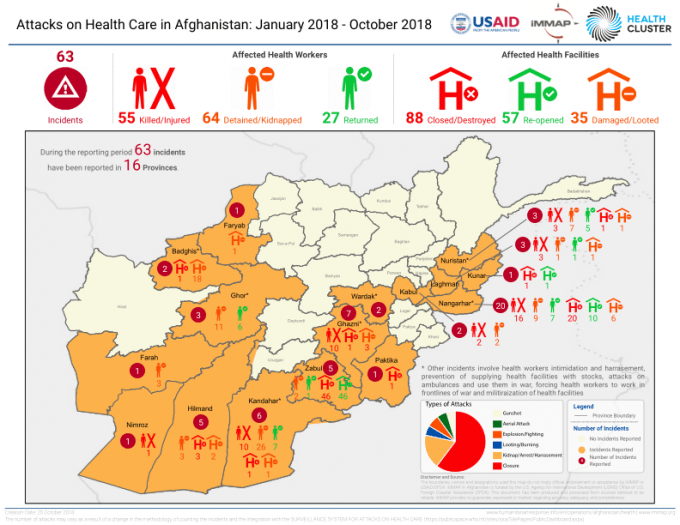
Attacks on Health Care in Afghanistan: January 2018 – October 2018

We are sharing this article/data to represent an example of healthcare targets of collective or political violence. Violence and lack of healthcare access significantly traumatizes our neonatal womb/preterm birth community globally, increasing preterm birth rates and infant and maternal mortality.

Map from World Health Organization, US Agency for International Development, Health Cluster Published on 20 Oct 2018
war.map.png

SOURCE: https://reliefweb.int/map/afghanistan/attacks-health-care-afghanistan-january-2018-october-2018

stairs.jpg

Taking steps to prevent violence in health care workplace

We are sharing this article as an example of healthcare targets perpetrated by patients and visitors.

06/14/16  amy    Amy Farouk

A new report by the AMA Council on Science and Public Health responds to increasingly common violence directed at physicians and other health care professionals where they work, looking at the trends in violence, solutions that have been tested and barriers to addressing the problem. The AMA adopted policy to help prevent violent acts in the health care setting.

An unacceptable hazard of the job

The U.S. Bureau of Labor Statistics reports that workplace assaults from 2011 to 2013 were 23,540-25,630 annually, with upwards of 70 percent occurring in health care and social service settings. Health care workers are three to four times more likely than other private sector employees to sustain injuries that involve days of work missed.

“Emergency department, mental health and long-term care providers are among the most frequent victims of patient and visitor attacks,” the report said. “A nationwide survey of emergency medicine residents and attending physicians found that 78 percent of respondents had reported at least on workplace violence act in the previous year, and 21 percent had reported more than one type of violent act.”

Addressing violence: Barriers and steps

One of the biggest obstacles to fully understanding the scope of the problem and taking corrective action is the fact that many incidents go unreported. “Reasons for not reporting can be as simple as health care workers not knowing what constitutes an act of workplace violence or a reporting process that is too cumbersome and time consuming,” the report said. “Other reasons for not reporting include a perception that workplace violence is ‘normal’ or a part of the job, fearing the response they may receive when reporting these events (blaming the victim), and lacking support from leadership to encourage reporting.” Some hospitals and health systems are taking steps to prevent violence, according to the report. They range from more traditional facility safety to more clinical approaches. Henry Ford Hospital in Detroit, for instance, has installed metal detectors at its entrances to prevent people from bringing weapons into the buildings. In the first six months of screening, the hospital confiscated 33 handguns, 1,324 knives and 97 chemical sprays.

The Veterans Health Administration, meanwhile, flags patient records to help clinicians and others identify patients who may pose a threat to themselves or others. Patients are flagged in tiers, one for those who are high risk for violent or disruptive behavior based on a history of violence and credible threats, and another for patients with other high-risk factors, such as drug-seeking behavior, a history of wandering or spinal cord injuries.

Physicians call for enforced standards

Delegates at the 2016 AMA Annual Meeting adopted policy that calls on all parties to take an active approach to increase the safety of health care workers:

  • New policy calls on the Occupational Safety and Health Administration to develop and enforce a standard addressing workplace violence prevention in health care and social service industries.
  • The AMA will encourage Congress to provide additional funding to the National Institute for Occupational Safety and Health to further evaluate programs and policies to prevent violence against health care workers, and asks the National Institute for Occupational Safety and Health to adapt the content of their online continuing education course on workplace violence for nurses into a continuing medical education course for physicians.
  • The AMA is urging all health care facilities to adopt policies to reduce all forms of workplace violence and abuse; develop reporting tools that are easy for workers to find and complete; make prevention training courses available; and include physicians in safety and health committees.
  • Updated policy also encourages physicians to take an active role in their safety by participating in training to prevent and respond to workplace violence threats, report all incidents of workplace violence and promote a culture of safety within their places of work.

“As violent incidents continue to plague hospitals, emergency departments, residential care settings and treatment centers, we must do everything we can to protect the health and well-being of our health care workers,” AMA Board Member William E. Kobler, MD, said in a news release. “We urge the federal government to develop and enforce a federal standard for health care employers to help shield health care workers from workplace violence.”

SOURCE: https://www.ama-assn.org/practice-management/digital/taking-steps-prevent-violence-health-care-workplace


Why Physicians Are More Burned Out Than Ever

liz.pngElizabeth Métraux -Dec 7, 2018

I sat knee to knee with a nurse practitioner at a school-based clinic in rural Ohio. Choking back tears, she described a patient she couldn’t get out of her head: a middle-school girl, accompanied by her mother and a social worker. Just days prior, the girl was dropped off at her father’s home for the weekend. Before the promised Friday night football game, she discovered him unconscious on the bathroom floor. Within the hour, paramedics were laying a sheet over his body. Another victim of an opioid overdose in a region of the country that has been devastated by the epidemic.

That was only part of the story.

As I spoke with the NP, she described the girl entering the exam room, listless and distant. Mom was shouting at the social worker and insisting it was a “good thing” the girl’s father was “finally” out of the picture. Her daughter would get over it, she said.

The NP noticed the girl furiously scratching the back of her head. She lifted the girl’s hair to examine her scalp.

Lice. Hundreds of nits covered the girl’s head, with spots rubbed raw and scabbed over. She had likely had them for weeks, maybe longer. The girl looked down at her feet in shame. Her mother, picking up on the encounter, eyed her daughter with disgust.

“And just like that,” the NP said, “the mother left. She just left. She couldn’t stand to look at her own daughter.” She began to cry.

“How do you process that?” I asked.

What we’re witnessing isn’t a failure to thrive in America’s clinics; it’s a failure to act in America’s communities.

Through sobs, she said she doesn’t. It just stays with her. For herself and colleagues like her — soldiers in the trenches of our nation’s health care system — she says, “It hardens us all. It’s the poverty and the brokenness and the addiction and the inequity and the hate. But what can we do? The public won’t act, so we have to.”

Her story is no different than hundreds I’ve listened to over the course of the year — along the southern border, in community health centers, in prisons, on Native American reservations, in the hallways and exam rooms of some of the most esteemed academic medical centers in our country.

I listened to these stories as part of my work with Primary Care Progress, a national nonprofit working to strengthen primary care teams and clinicians. As I spoke with several health care providers about the realities of their work, I expected to hear the usual concerns: the rise of the electronic medical record, cumbersome administrative burdens, the frenetic pace and long hoursThese pain points certainly came up.

What I didn’t expect to discover, however, was our own central role — my role as a patient and member of the public — in so much of their professional trauma. Burnout is a real issue, and we’re contributing to it.

It’s easy for those of us on the outside the burnout epidemic to wonder why professionals so skilled at healing seem unable to heal themselves. Indeed, who among us doesn’t feel overworked and undervalued?

But there’s something deeply disturbing about this growing crisis in medicine. What we’re witnessing isn’t a failure to thrive in America’s clinics; it’s a failure to act in America’s communities.

Take, for example, the brutal shooting in Thousand Oaks, California, this past November. In a hospital waiting room, a trauma surgeon changed her bloodied scrubs. She stood in front of a bathroom mirror to rehearse the name of a victim so she didn’t accidentally say the name of the one she worked on an hour earlier. Then, donning her starched white coat and well-trained detachment, she met with the family to notify them that their 22-year-old son was dead. Her team had done all they could. She was sorry. Later that day, she mourned the deaths. Alone.

Days later, a row between the National Rifle Association and health care professionals ensued over the NRA’s remarks that doctors should “stay in their lane” when it comes to gun violence. Providers hit back with a powerful, viral social media campaign to draw attention to their critical role in treating victims of gun violence.

While the NRA and clinicians nationwide debated the issue, an important point was missing from the dialogue: Gun violence shouldn’t have to be physicians’ responsibility; preventing it should be in the public’s responsibility.

Yet there are countless ways in which we — the public — abdicate that responsibility, instead putting the onus on clinicians to treat victims of our hate, our neglect, and our bigotry. Community health workers offer care in homeless encampments and outpatient drug treatment facilities nationwide. Nurses treat thousands of children in detention facilities on America’s southern border. Health care providers work with millions of incarcerated men and women in our country’s overcrowded prisons.

At a recent visit to a community health center in suburban Seattle, I asked a group of doctors to share the best part of their week. One clinician noted that after days of negotiating with a local power company, she was able to get her patient’s electricity turned back on. “It was important,” she said, “because she’s on medication that requires refrigeration.” Another glowed when talking about the clinic’s new food pantry that had opened to serve its food-insecure patients.

All that is laudable — and an absolute travesty. It’s a sobering testament to the fact that America is content to neglect social and structural determinants of health.

William Osler famously remarked, “Listen to your patients; they’re telling you their diagnosis.” We also need to listen to our clinicians. Story by story, they’re telling us that our nation is in crisis.

Those of us who aren’t in clinics or emergency rooms every day can look away when we see injustice. Health care professionals don’t have that luxury. While they’re checking their clothes to make sure there’s no visible blood before they break the news to a family, the rest of us listen to so-called experts tell us it’s “too soon” to address gun reform in the wake of another mass shooting. While an oncologist tries to figure out how to treat a mother’s cancer when she can’t afford her medications, policymakers explain why it would be imprudent to tackle health care coverage or rising prescription costs.

Our health care providers don’t get to turn a blind eye to symptoms of America’s divisions and inactions. They also don’t get to decide who deserves treatment. The victim or the shooter. The immigrant or native born. The nationalist or the progressive. For clinicians, they’re all patients. But health care professionals do suffer the consequences of inaction.

William Osler famously remarked, “Listen to your patients; they’re telling you their diagnosis.” We lso need to listen to our clinicians. Story by story, they’re telling us that our nation is in crisis. Too many people are dying too unnecessarily from too many treatable conditions by too many factors that we can control.

Sure, no one likes the electronic medical record. But that’s not at the heart of burnout. Inaction is driving our collective burnout — not just in health care, but in all care. Again and again, providers across the country are put in a position of saying, “We did all we could.”

They may have done all they could, but the rest of us haven’t.

Why should the public care about the well-being of a well-heeled workforce? Because when the problem is on us, so is the solution. Instead of asking physicians if they’re burned out, let’s start asking: Did we do all we could to heal our nation? Maybe then we can be a part of healing the healers.

A special thanks to Dr. Krisda Chaiyachati for your important contribution to this piece.

SOURCE: https://medium.com/s/story/we-cant-fix-the-problem-of-physician-burnout-until-we-address-the-problem-of-american-neglect-65744b9d7d03

prevention.jpg

Reducing Health Care Burnout: Preventive Tips for Organizations & Caregivers

Working in the healthcare industry can be both gratifying and challenging. The unrelenting chronic stress of being exposed to life and death issues, long hours and loads of work can progressively evolve into burnout. If fact, the odds are pretty high that burnout will affect every healthcare professional at some point in their career. Burnout is defined as the consequence of mental and physical exhaustion that is caused by stress resulting in depersonalization and a profound decrease in personal accomplishment.

Working in this high-stress industry can become emotionally draining, especially when hospitals are understaffed; the caregiver can begin to experience emotional exhaustion, and fatigue. All of this can lead caregivers to an emotional detachment from their work and to begin to see patients as objects, thereby reducing the safety and quality of care provided.

According to a study by NSI Nursing Solutions, the average national turnover rate among all hospital healthcare workers is 16.5%. And the costs are high:

  • Each additional percentage point increase in turnover can cost the average hospital another $359,650
  • It takes hospitals between 36 to 97 days to hire a replacement for an experienced RN
  • The average cost of turnover for a bedside RN ranges between $44,380 and $63,400To prevent burnout, employers should create a culture that sustains resilience and supports employee wellbeing. It’s important to take the time to identify the signs and symptoms of burnout, some of which may include:
  • Chronic emotional and physical fatigue
  • Reduced feelings of sympathy or empathy
  • Poor work-life balance
  • Depersonalization
  • Hypersensitivity or complete insensitivity to emotional material
  • Withdrawal from friends, family, and other loved ones
  • Loss of interest in activities previously enjoyed
  • Feeling blue, irritable, hopeless, and helpless
  • Changes in sleep patterns
  • Getting sick more often
  • Irritability3,4

How Organizations Can Prevent Burnout

As a healthcare employer, there are things your organization can do to help your providers stay healthy and succeed:

Take an active role: Know your employees’ concerns – Provide a forum for feedback and address problems before they get to a unrecoverable level.

Encourage breaks: Taking breaks helps employees walk away from stress ensuring that the staff is not overworking themselves to the point of burnout.

  • Support healthy habits: Implementing health and wellness programs can be invaluable and they don’t have to cost a lot money to be effective. Include healthy recipes in your newsletters, sponsor workout classes, create a relaxation room, or offer meditation classes.5

How Caregivers Can Prevent Burnout

As a caregiver, adopting healthy behaviors can prevent compassion fatigue and burnout:

Take Time to Care for Yourself

Practicing good self-care will significantly help your resilience and reduce your vulnerability to stress.

  • Balanced, healthy diet
  • Regular exercise
  • Routine schedule of restful sleep
  • Balance between work and personal life
  • Drink alcohol in moderation

Adopt Positive Coping Strategies

Positive coping strategies can be used at work or at home to help ease your response to stressful situations.

  • Deep breathing
  • Meditation
  • Taking a walk
  • Talking with a friend
  • Relaxing in a hot bath

If you still feel that you are not getting enough out of mindful techniques, and are still feeling emotionally vulnerable, chronically stressed and overwhelmed, seek help. Seeing a therapist can help you process your feelings and put things in better perspective, which can help you successfully implement the strategic techniques that will help you move toward a healthy work-life balance.

SOURCE: http://www.uspm.com/reducing-health-care-burnout-preventive-tips-for-organizations-caregivers/


premiepartners.jpg

PREEMIE FAMILY PARTNERS

Omega-3 Fatty Acids May Reduce Risk of Premature Birth

11/17/18 – By Traci Pedersen

Expectant women who increase their intake of omega-3 long-chain polyunsaturated fatty acids can reduce the risk of premature birth, according to a new study published in the Cochrane Review.

“We know premature birth is a critical global health issue, with an estimated 15 million babies born too early each year,” said Associate Professor Philippa Middleton from Cochrane Pregnancy and Childbirth and the South Australian Health and Medical Research Institute (SAHMRI).

“While the length of most pregnancies is between 38 and 42 weeks, premature babies are those born before the 37-week mark — and the earlier a baby is born, the greater the risk of death or poor health.”

Infants born prematurely are at greater risk of a range of long-term conditions including visual impairment, developmental delay and learning difficulties.

Middleton and a team of Cochrane researchers have been looking closely at long-chain omega-3 fats and their role in reducing the risk of premature births; particularly docosahexaenoic acid (DHA) and eicosapentaenoic acid (EPA) found in fatty fish and fish oil supplements.

For the study, they reviewed 70 randomized trials and found that for pregnant women, increasing the daily intake of long-chain omega-3s:

  • lowers the risk of having a premature baby (less than 37 weeks) by 11 percent (from 134 per 1,000 to 119 per 1,000 births);
  • reduces the risk of having an early premature baby (less than 34 weeks) by 42 percent (from 46 per 1,000 to 27 per 1,000 births);
  • lowers the risk of having a small baby (less than 5.5 pounds or 2,500g) by 10 percent.

“There are not many options for preventing premature birth, so these new findings are very important for pregnant women, babies and the health professionals who care for them,” Middleton says.

“We don’t yet fully understand the causes of premature labor, so predicting and preventing early birth has always been a challenge. This is one of the reasons omega-3 supplementation in pregnancy is of such great interest to researchers around the world.”

This review was first undertaken back in 2006. At that time, the researchers had concluded there wasn’t enough evidence to support the routine use of omega-3 fatty acid supplements during pregnancy. Over a decade later, however, this updated review concludes that there’s high quality evidence for omega-3 supplementation to be used as an effective strategy for preventing preterm birth.

“Many pregnant women in the UK are already taking omega-3 supplements by personal choice rather than as a result of advice from health professionals,” Middleton said.

“It’s worth noting though that many supplements currently on the market don’t contain the optimal dose or type of omega-3 for preventing premature birth. Our review found the optimum dose was a daily supplement containing between 500 and 1000 milligrams (mg) of long-chain omega-3 fats (containing at least 500mg of DHA) starting at 12 weeks of pregnancy.

“Ultimately, we hope this review will make a real contribution to the evidence base we need to reduce premature births, which continue to be one of the most pressing and intractable maternal and child health problems in every country around the world.”

SOURCE: https://psychcentral.com/news/2018/11/17/omega-3-fatty-acids-may-reduce-risk-of-premature-birth/140443.html


hug.jpg

GAPPS – SUPPORTING PARENTS GRIEVING A LOSS

At GAPPS, we want to recognize parents whose lives have been impacted by losing a baby to stillbirth or caring for a premature baby. Preterm birth and stillbirth impact the lives of parents, families, and infants all over the world, regardless of geography or socioeconomic status, and it is our goal to better understand the causes of preterm birth and stillbirth and ways to prevent them. This work is dedicated to parents dealing with the loss of a baby through stillbirth, and to those struggling to care for premature infants.

We recognize the profound pain and loneliness of grieving parents and extend our sincerest sympathy. There are many organizations available to help parents navigate loss, connect with others and move forward with their lives, as well as support for parents of premature babies. Explore these resources for more information.

Below are some additional links to organizations with information that may be useful for those caring for preterm newborns or dealing with the loss of a baby.

First Candle

First Candle is one of the nation’s leading nonprofit organizations dedicated to safe pregnancies and the survival of babies through the first years of life. Their current priority is to eliminate stillbirth, Sudden Infant Death Syndrome and other Sudden Unexpected Infant Deaths through research, education, and advocacy programs.

International Stillbirth Alliance

The International Stillbirth Alliance is a nonprofit coalition of organizations dedicated to understanding the causes of and working on the prevention of stillbirth. Their mission is to raise stillbirth awareness, promote global collaboration in the prevention of stillbirth, and to provide appropriate care for parents who have lost a baby to stillbirth.

SANDS: Stillbirth & Neonatal Death Society (UK)

SANDS supports anyone affected by the death of a baby, works in partnership with health professionals to improve the quality of care and services offered to bereaved families, and promotes research and changes in practice that could help to reduce the loss of babies’ lives.

The Tears Foundation

The TEARS Foundation is a non-profit organization that seeks to compassionately assist bereaved parents with the financial expenses they face in making final arrangements for their baby who has died.

March of Dimes

March of Dimes helps moms have full-term pregnancies and focuses on researching problems that threaten babies’ health.

Hayden’s Helping Hands

Hayden’s Helping Hands is a non-profit foundation that assists Oregon and Washington families after the birth of a stillborn baby by paying for a portion or all of their hospital delivery medical expenses.

SOURCE: https://www.gapps.org/Home/ParentSupport


INNOVATIONS

inno

Psychologist Sue Makarchuk with Alberta Health Services interacts with Anna Strachan, 2, who needed a dose of caffeine as a preemie to help her breathe. Photos by Riley Brandt, University of Calgary

New study shows premature babies’ developing brains benefit from caffeine therapy

December 12, 2018 – By Pauline Zulueta, Cumming School of Medicine

UCalgary’s Abhay Lodha shows early caffeine treatment of premature babies born less than 29 weeks’ gestation has no long-term negative effects on brain development. Calgary mom Avril Strachan says she’s pleased to learn the results of the study as her daughter, Anna, was treated with caffeine.

For many, starting the day off with caffeine from a cup of coffee is a must. In neonatal intensive care units, or NICUs, premature babies born under 29 weeks are given a daily dose of caffeine to ensure the best possible start to life. A new study by University of Calgary researchers shows the earlier the dose of caffeine can be given, the better.

“Caffeine is the most commonly used drug in the NICU after antibiotics,” says Dr. Abhay Lodha, MD, associate professor in the departments of paediatrics and community health sciences at the Cumming School of Medicine and staff neonatologist with Alberta Health Services (AHS). “It’s important that we understand the long-term effects of caffeine as a treatment and ensure these babies are not only surviving, but have quality of life down the road.”

Born prematurely at 27 weeks at the Foothills Medical Centre, Kyle and Avril Strachan’s baby, Anna, was given caffeine to help her breathe and to boost lung function.

“The doctors told us, with premature babies, their brain hasn’t developed quite enough to let them do all the things their bodies should be doing on its own, like breathing,” says mom Avril. “In the first few weeks, when Anna was feeding, she would slow down or even forget to breathe. This would cause her heart to slow and for her to not get enough oxygen.”

To help her breathe more easily, Anna needed a continuous positive airway pressure, or CPAP, machine to deliver constant airflow to her lungs.

A 2014 study by Lodha showed starting caffeine therapy within two days after birth shortened the amount of time babies needed to use ventilators. It also reduced the risk of bronchopulmonary dysplasia (BPD), a form of chronic lung disease caused by damage to the lungs from use of a ventilator. What was not known was how that dose of caffeine affected brain development.

Lodha collaborated with researchers from the Universities of British Columbia, Montreal, Toronto and Mount Sinai Hospital in Toronto to analyze data from 26 NICUs across Canada. They found early caffeine treatment has no long-term negative effects on neurodevelopment, and is actually associated with better cognitive scores, and reduced odds of cerebral palsy and hearing impairment. The findings are published in Pediatrics.

The team examined data from followup assessments conducted at age 18 to 24 months. During these followups, children were assessed for their cognitive, language and motor development using the Bayley Scales of Infant and Toddler Development, a standardized scoring system to assess developmental functioning in infants and toddlers.

“We look at how children are constructing their understanding, such as solving simple problems or figuring out three-dimensional objects and toys,” says Dr. Dianne Creighton, PhD, research assistant professor in the Department of Paediatrics and retired psychologist with AHS. “We also assess how the little ones are able to understand simple words, or recognize the name of a picture, as well as their motor skills like climbing, crawling, balance and co-ordination.”

Lodha says it’s believed that caffeine may increase the growth of dendrites, the small branches of a neuron that receive signals from other neurons. “Caffeine may also improve better lung stretch and expansion, cardiac output and blood pressure in premature infants, which improves oxygen supply throughout the body and brain, reducing the duration of mechanical ventilation and the risk of chronic lung disease and injury on the developing brain.”

Now two years old, Anna has completed multiple followup assessments and is participating in dance classes, gymnastics lessons and swimming like a fish, says her mom.

“She’s very mechanical. She likes to build things, take it apart and figure out how it works,” Avril says. “It’s wonderful to know that the caffeine treatment has no adverse effects and that if researchers are getting positive findings, it should continue to be the standard of care for premature babies. In that case, I think parents would have no hesitation in having caffeine as part of their child’s treatment.”

This study was conducted with data from the Canadian Neonatal Network and the Canadian Neonatal Follow-up Network, which is supported by the Maternal-Infant Care Research Centre at Mount Sinai Hospital. Abhay Lodha and Dianne Creighton are associate members of the Alberta Children’s Hospital Research Institute.

SOURCE: https://ucalgary.ca/utoday/issue/2018-12-12/new-study-shows-premature-babies-developing-brains-benefit-caffeine-therapy


WARRIORS:

mom

As the New Year approaches and we create our lives with vitality and curiosity one of the most important things we can choose to do daily is to connect with Source and engage in peaceful connections within and throughout. May Peace be with us as we journey.

brath.jpg


YOUTUBE -CLICK ON PHOTO/VIDEO ABOVE-

GUIDED MEDITATION: 4 MINUTE STRESS BUSTER

The Honest Guys – Meditations – Relaxation


Afghani Pro Surfer Afridun Amu

surfer

Afridun Amu was the first Afghan athlete to internationally represent Afghanistan in surfing. He participated in the International Surfing Association World Surfing Games in Biarritz, France in May 2017. Amu also won the first official Afghan surfing championship (men) in 2015 in Ericeira, Portugal. He is the reigning Afghan surf champion.

Amu was born in Kabul, Afghanistan on June 23, 1987. He spent his childhood in Moscow, Russia, where his father worked as a diplomate. His family moved to Germany as political refugees in 1992. He graduated in law, cultural science and design thinking. He works as an expert in Constitutional law at the Max Planck Foundation for International Peace and the Rule of Law and is a lecturer on Design thinking at the Hasso Plattner Institute.

YOUTUBE -CLICK ON PHOTO/VIDEO ABOVE-

Published on May 23, 2017

At 29, surfer Afridun Amu is thrilled to be participating in his sport’s world championships in Biarritz, and even more so to be representing his native country: land-locked Afghanistan. A political refugee, Amu grew up in Germany, and hopes his performance this week might help people to see his country differently.

Antenatal Counseling, Dental Health, Nurse Notes

Poland.Blog

POLAND


Poland, officially the Republic of Poland, is a country located in Central Europe. It is divided into 16 administrative subdivisions, covering an area of 312,696 square kilometres (120,733 sq mi), and has a largely temperate seasonal climate. With a population of approximately 38.5 million people, Poland is the sixth most populous member state of the European Union. Poland’s capital and largest metropolis is Warsaw.

Poland’s healthcare system is based on an all-inclusive insurance system. State subsidised healthcare is available to all Polish citizens who are covered by this general health insurance program. However, it is not compulsory to be treated in a state-run hospital as a number of private medical complexes exist nationwide.

All medical service providers and hospitals in Poland are subordinate to the Polish Ministry of Health, which provides oversight and scrutiny of general medical practice as well as being responsible for the day-to-day administration of the healthcare system. In addition to these roles, the ministry is tasked with the maintenance of standards of hygiene and patient-care.

SOURCE: https://en.wikipedia.org/wiki/Poland


Born Too Soon – Preterm Birth Rates

Rate: 6.7%     Rank: 157

(USA Rate: 12.0%     Rank: 54

SOURCE: https://www.marchofdimes.org/mission/global-preterm.aspx#tabs-3

Poland.people

COMMUNITY

Preemies often face dental complications related to their premature birth and related treatment. Enamel defects and palette formation (in older preemie survivors) are issues we address in our blog this month. We wonder how we as a Family may be able to reduce preterm birth globally (including countries like the USA where maternal morbidity and preterm birth rates are high) through the effective use of group preterm birth care.

Newborn & Infant Nursing Reviews
Kat.Poland.jpg

Dental Outcomes of Preterm Infants

Diane L. Eastman, MA, RN, CPNP Enamel Defects NAINR. 2003;3(3)

Enamel defects are a well-studied complication of prematurity. Enamel is a hard tissue that once formed, unlike bone, does not remodel. For that reason, insults during enamel development are permanent on the tooth surface. Dental enamel formation begins during the second trimester of pregnancy and is complete by about 18 years of age. The major portion of the newborn’s stores of calcium and phosphorus are accumulated in the third trimester of pregnancy. Therefore, an ELBW infant will not have accumulated these stores. Enamel hypoplasia is defined as “deficient quantity of enamel resulting from developmental aberrations, and may occur in the form of pits, grooves, or larger areas of missing enamel.” Enamel opacity is defined as a qualitative change in the translucency of the enamel.

The common medical complications of premature infants including surfactant-deficiency respiratory distress syndrome, asphyxia and hypoxia, hypocalcemia, renal immaturity, feeding difficulties, and infection are just some of the problems that may affect enamel formation. The biochemical cause of enamel hypoplasia is not fully understood, but growing evidence indicates it is strongly linked to calcium homeostasis. There are several studies that suggest a direct relationship between enamel hypoplasia in primary teeth and neonatal hypocalcemia. There are numerous pre- and postnatal problems that cause hypocalcemia in the newborn. The more premature and the lower the birth weight, the more problems with calcium homeostasis. Maternal diabetes mellitus, placental insufficiency, often related to preeclampsia, and maternal deficiency of dietary calcium and vitamin D are all in utero factors. Traumatic delivery, asphyxia, cerebral injury, and prematurity itself with deranged calcium metabolism are perinatal factors that contribute to hypocalcemia. Additional contributors to hypocalcemia include hypoxia, sepsis, and hyperbilirubinemia.

The prevalence of enamel defects ranges from 43% to 96% of VLBW infants. Seow et al reported a direct relationship between birth weight and gestational age with the greatest prevalence of enamel defects occurring in the lowest birth weight group. The clinical significance of enamel defects is not only esthetic, although these teeth can appear cream colored, yellow, or brown. Enamel hypoplasia is linked to plaque accumulation, dental caries, and in more severe cases, with space loss and malocclusion. In a longitudinal study by Lai et al[5] there was a significant association with enamel defects and dental caries in the VLBW group that was noted on exams of the children at 44 and 52 months of age. The most dental caries were observed in those children who had both enamel hypoplasia and opacity.

Enamel defects have also been identified in the permanent dentition of children born prematurely. Pimlott et al[4] found enamel hypocalcification in at least one maxillary permanent incisor in 58% of the 106 VLBW infants examined; however, the other permanent teeth were not examined. Seow matched 55 VLBW and 55 normal birth weight (NBW) controls at a mean age of 7.7 years for defects in enamel of permanent incisors and molars. The VLBW group had a higher percentage of enamel defects in the permanent molars (21% v 11%) and permanent lateral incisors (12% v 0%) compared with controls. Most of the defects were enamel opacities. Aine et al matched 32 preterm to 64 control children. The prevalence of enamel defects in preterm compared with control children was higher in both primary (78% v20%) and permanent (83% v 36%) dentitions. Because the permanent teeth are believed to begin mineralization a few months after the preterm birth, it is hypothesized that persistent metabolic disturbances affect the mineralization and calcium homeostasis of the first few permanent teeth.

Enamel defects can be both generalized or localized. Generalized defects are symmetrically distributed and likely caused by systemic illnesses associated with prematurity. As mineral stores in the preterm infant are depleted, calcium and phosphorus entering the developing tooth is insufficient for enamel formation. This theory is supported by a study of preterm children who had neonatal rickets secondary to severe osteopenia. In the study, every child with rickets also had severe enamel hypoplasia. A later study by the same investigators[14] demonstrated that all preterm children with enamel hypoplasia also had decreased cortical mineralization of the humerus. This study demonstrated a direct relationship between enamel hypoplasia and diminished bone mineral stores.

Trauma may also cause some enamel defects. Controlled studies by Seow et al demonstrated that children who had been orally intubated and required mechanical ventilation had more enamel defects on the left maxillary teeth (63% v 40%) compared with nonintubated children. A Swedish study of full-term infants who were intubated in the neonatal period demonstrated similar results of more defects on the left side. The process of laryngoscopy would account for this primarily left side defect. Inadvertent force is often placed on the left side as the laryngoscope is pushed more to that side to allow room to insert the orotracheal tube along a groove in the right side. Although the tube itself has been considered to be the cause of the trauma, the tube would likely cause more even distribution of force to both right and left sides.

Source: https://www.medscape.com/viewarticle/461574_3

tech.poland    Moms.poland

Group prenatal care reduces preterm birth and low birth weight

Posted October 12, 2018

Researchers at Yale School of Public Health have found that group prenatal care for expecting mothers reduces the risks for preterm birth and low birth weight. The findings are published in the Journal of Women’s Health.

This study, conducted in collaboration with Vanderbilt University Medical Center, examined over 9,000 women and found that women who received either Centering Pregnancy or Expect With Me group prenatal care compared to traditional one-on-one care.

Researchers found that group prenatal care patients had a 37 percent lower risk of having a preterm birth and a 38 percent lower risk of having a low birth weight baby than women receiving traditional one-on-one care. Better attendance at the group visits also resulted in more pronounced benefits. Women with five or more group prenatal care visits had a 68 percent lower risk of having a preterm birth and a 66 percent lower risk of having a low birth weight baby than their peers receiving traditional care.

These findings come from the largest study comparing group prenatal care to traditional one-on-one care, to date.

“The health benefits of group prenatal care are enormous,” said Jessica Lewis, deputy director of pregnancy research at Yale School of Public Health and a co-author of the study. “Preterm birth and low birth weight are the second leading causes of infant mortality in the US, and cost more than $38 billion dollars per year.”

Group prenatal care typically brings together 8 to 12 women for 2-hour long sessions on the same schedule as traditional prenatal care. Each patient gets a brief one-on-one check-up and then most of the time is spent in a facilitated discussion on the topics of pregnancy and childbirth. Women receive 20 hours of care over the course of a pregnancy, compared to 2 hours in traditional care.

Groups are led by prenatal care providers, who offer education and support, while working to increase patient engagement. Expect With Me includes a social media platform, where women can continue to access resources, track their health metrics and connect with other moms and providers between visits.

Previous studies of group prenatal care have primarily focused on young, low-income, minority women. The study provides evidence that group prenatal care sharply reduces adverse birth outcomes for a diversity of women, said lead author Shayna Cunningham, Ph.D., research scientist at Yale School of Public Health. “We need to expand access to group prenatal care for all women to improve outcomes and eliminate health disparities.” “Future analyses will aim to understand the mechanisms by which group prenatal care results in better outcomes,” Cunningham said.

SOURCE: https://www.technology.org/2018/10/12/group-prenatal-care-reduces-preterm-birth-and-low-birth-weight/


Poland.Health

HEALTH CARE PARTNERS

Antibiotic use in preemies and premature brain development are important issues that are currently the focus of significant scientific research. In the article about antenatal counseling John Lantos MD drew us in with this proposal “Three factors suggest that it may be time to revisit the norms that govern conversations between doctors and parents who are facing the anticipate birth of a baby who is extremely premature”.

What are the risks of antibiotics in premature babies?

By Preeti Paul – June 16, 2018

A recent article in Science evaluated the risks of overusing antibiotics in premature babies and provided insight into their safe and effective use.

Premature babies, also known as preemies, enter the world many weeks before full-term babies. Preemies need special care and are kept in neonatal intensive care units (NICUs) in hospitals. Infection is a threat to a premature baby’s life and doctors usually prescribe antibiotics to prevent or treat infections. In fact, antibiotics are the most common medicines used in the NICUs. It is customary to use antibiotics for preemies, sometimes even when there is no evidence of an infection.

In recent years, some doctors and researchers are becoming more conscious of using antibiotics for newborns. Many studies suggest that using antibiotics in preemies is associated with health problems such as asthma, obesity, and autoimmune disorders later in life.

A recent article in the Science magazine brings our attention to the seriousness of the risks associated with the use of antibiotics in preemies. The article discusses the work done by neonatologist Josef Neu and microbiologist Gautam Dantas, who have been working to understand the dangers of antibiotic overuse. Neu and Dantas advocate for the intelligent use of antibiotics, especially in premature babies.

The dangers of antibiotics –

Premature babies are at risk of infections such as sepsis and strep B. Undoubtedly, antibiotics help keep them alive. However, a blanketed prescription of antibiotics for all preemies is not the correct approach.

Many studies show that antibiotics wipe out a baby’s developing gut microbiome. The gut bacteria influence the health of an individual in many ways. An unhealthy balance of the gut microbiome is related to certain diseases, nutritional status, and immune function.

The researchers found that preemies who were given antibiotics had ten-fold fewer species of bacteria in the gut, compared to babies born at full-term. A less diverse microbiome means a higher likelihood that bad bacteria will over colonize in the gut. In addition, antibiotics kill the good bacteria in the gut resulting in an imbalance in the microbiome makeup.

Antibiotic use leads to resistant bacteria –

Researchers conducted DNA sequencing studies on all the bacteria present in the stool of preemies. The results showed that most of the bacteria found in the babies’ gut were very close to the ones found in hospitals. These bacteria were resistant to all the commonly used antibiotics because when antibiotics are used for someone who does not need them, there is a risk of developing bacteria that grow resistant to these antibiotics. Therefore, the gut of the preemies on antibiotics becomes the breeding ground of antibiotic-resistant microorganisms.

Scientists also found that over time, the use of antibiotics can increase a baby’s risk of getting fungal infections, late-onset sepsis, and necrotizing enterocolitis, a deadly intestinal disorder.

Can antibiotics for babies be avoided? –

Preventing the vulnerable preemies from life-threatening infections is the main responsibility of the doctors. However, the effect of antibiotics on the gut microbiome of babies is a cause for concern. The scientists have put forward some suggestions to change the trend of antibiotic overuse.

Neonatologist Karen Puopolo recently developed an algorithm based on gestational age, infant’s clinical exam, and maternal risk factors to screen for serious infections in a newborn. This tool has helped reduce the percentage of full-term babies given antibiotics.

In preemies, however, the method of delivery, whether vaginal or C-section, may help to distinguish a high risk or a low risk of infection in the baby because C-section does not expose the baby to bacteria in the birth canal. Another way to reduce antibiotic overuse is developing better tests for infection diagnosis that, unlike blood culture, are quick and sensitive to indicate an infection.

Preemies in the years to come –

A healthy gut microbiome plays a vital role in diverse functions such as synthesizing vitamins and strengthening immune systems. Microbiologist Dantas traced the gut microbiome of preemies long after they left the hospital. He found that babies who left with poor gut microbial ecosystem are able to develop diverse gut microbiome in the years to come, but he suggests that these babies are not able to catch up to have the same healthy microbiome as that of full-term babies.

This difference might explain why early use of antibiotics is associated with certain health conditions such as obesity, asthma, and autoimmune disorders. Moreover, the antibiotic-resistant bacteria stay in the gut of the preemies long after they leave the NICU, putting themselves and others around them at risk.

Future research should focus on developing safer antibiotics for preemies –

Antibiotics can help save babies’ lives but antibiotics also give them a lifetime of poor health. The gut microbiome is an important part of a healthy body and plays a critical role in many important functions. The make-up of the gut microbiome is affected by many genetic and environmental factors, such as the use of antibiotics.

Awareness and understanding of the impact of antibiotics, especially on premature babies, may change the trend of customary use of antibiotics.  Additionally, developing antibiotics that are safe and effective for the little patients should be considered as the next steps for future research.

Written by Preeti Paul, MS Biochemistry Reference: Broadfoot, Marla. Too many antibiotics can give preemies a lifetime of ill health, Science Apr 5, 2018.

SOURCE: www.sciencemag.org/news/2018/04/too-many-antibiotics-can-give-preemies-lifetime-ill-health


candle.poland

Antenatal – definition:Antenatal care is a form of health service provided to a woman throughout pregnancy to ensure a safe gestation and childbirth, and prevent complications to the mother and the baby.

holly.poland

What is the Purpose of Antenatal Counseling?

John D. Lantos, MD-PlumX Metrics     Children’s Mercy Kansas City, Missouri

In this volume of The Journal, Kharrat et al report the results of a systematic review designed to explore parental expectations and preferences regarding communication and decision-making for infants born extremely premature.  I’d like to highlight 2 important points from their paper. The first focuses on the main findings of their review. In 19 published articles that met their inclusion criteria, they found, unsurprisingly, that parents want information about anticipated chances of survival and about long-term prognosis. More surprisingly, unlike many doctors, parents did not usually think of these conversations as ones about whether or not to provide neonatal intensive care unit care and life support. Instead, parents wanted this information to help them prepare to participate in the care of their babies. They were dissatisfied when information was exclusively negatively framed. They did not want to be reminded repeatedly of the potential for neurodevelopmental disability. Emphasizing such information made parents distrust physicians.

Parents want healthcare professionals to be sensitive, compassionate, and attentive to their goals.

These findings should come as no surprise to any health professional who has worked with parents facing the birth of a baby who is extremely premature. Parents in this situation want what patients and family members want in any similar situation—compassion, sensitivity, honesty, and hope. We know from studies of communication in other situations that physicians who are more optimistic and patient-centered care are perceived as trustworthy and compassionate.

Often, however, antenatal counseling (ANC) does not give parents what they say they want. Instead, for doctors, the goal of ANC is to offer the parents the opportunity to make an informed choice about foregoing intensive care. To achieve that goal, doctors try hard to honestly communicate pessimistic information. Thus, doctors’ goals for ANC may be fundamentally at odds with parents’ goals.

The roots of this mismatch can be understood by examining the history of our current approach to ANC. Kharrat et al refer, indirectly, to that history by limiting their analysis to articles published after 1990 because, as they say, “Our publication date cut off was guided by the 1990 seminal publication on family centered neonatal care by Harrison.” They thus rightly highlight the outsized role that Harrison’s critiques of neonatology played in reshaping the norms of communication about outcomes and complications for babies born premature.

Harrison wrote a guidebook for parents of preemies. In writing that book, she had many conversations and correspondences with parents of preemies. She came to the conclusion that doctors often withheld information from parents about infants’ poor prognosis. She wrote, “In medical situations involving very high mortality and morbidity, great suffering, and/or significant medical controversy, fully informed parents should have the right to make decisions regarding aggressive treatment for their infants.” For parents to be fully informed, they “must have available to them the same facts and interpretation of those facts as the professionals.” She believed that, if given this information, many parents would choose to forego intensive care and, instead, allow their babies to die. She further believed that this would spare many families the burdens and suffering that she associated with raising a disabled child.

There is a certain irony in the fact that Ms. Harrison’s own experiences with neonatal intensive care unit care did not seem consistent with her critiques. That history is worth highlighting because, in many ways, her actual experiences may be more typical than the types of experiences she feared and tried to prevent. As a result, her recommended approach to ANC may not reflect what most parents actually want.

In 1975, Ms. Harrison was 28 weeks pregnant with her first baby when she developed fever and back pain. She was diagnosed with listeriosis. Her son Edward weighed 1275 g at birth.  His prognosis was not good. His father recounted that the neonatologist was completely honest and told him, “Don’t even hope. He has seven major conditions, any one of which would be of serious concern.” Mr. and Ms. Harrison tearfully made the decision to turn off the respirator. But Edward did not die. He grew up to be, according to his father, “A major joy to Helen and me…a delightful human being who plays music for himself all day, sings, dances, and reads Dr. Seuss books out loud with heavy intonations.” Edward also had significant disabilities. Over his childhood, he had 20 surgeries.

The groundbreaking paper that Harrison wrote did not seem to reflect her own experiences or those of her family. The Harrison family was given bad news about their baby straightforwardly. They engaged in a process of shared decision-making. As it turned out, the prognosis that they were given was not unduly optimistic. It was unduly pessimistic. When life support was removed, their baby survived. Nevertheless, Harrison’s critiques of neonatologists for withholding information struck a nerve. Her suggested remedies have been widely adopted as the preferred approach to ANC.

But perhaps they are not the best approach. Three factors suggest that it may be time to revisit the norms that govern conversations between doctors and parents who are facing the anticipate birth of a baby who is extremely premature. First, and most importantly, the study by Kharrat et al suggests that current approaches do not reflect the preferences of most parents. Many parents find that negatively framed information undermines trust and interferes with compassionate care. Instead, they prefer optimistic or hopeful messages, ones that acknowledge and even anticipate the possibility of good outcomes as well as bad ones. Such messages can be given without being dishonest. They only require that doctors discuss the range of possibilities and outcomes for babies who are premature.

A second important factor that might lead us to re-evaluate the purpose of ANC is that it is often undertaken in contexts in which parents do not really have choices. The studies reviewed by Kharrat et al focus on counseling for parents whose babies were expected to be born between 22 and 26 weeks of gestation. Today, in most centers in the US, there is no choice for babies born at 24-26 weeks. The American Academy of Pediatrics strongly recommends treatment for babies born at 25 weeks and greater.7 Recently published data from the Eunice Kennedy Shriver National Institute of Child Health and Human Development Neonatal Research Network show that neonatologists follow these recommendations. At 24 weeks and greater, virtually every baby receives active treatment. Parental preferences, then, guide treatment decisions only at only at 22 and 23 weeks. Treatment for more mature babies is guided by the principle of the child’s best interest. Nevertheless, it is likely that parents of all babies whose birth is expected to be between 22 and 26 weeks routinely receive ANC. If there are no choices to be made, it is unclear what the purpose of such counseling should be.

Even when there are choices to be made, there are problems with antenatal discussions that focus on giving quantitative information about the probabilities of different outcomes. One problem is that the prognosis changes with each passing day, and it is difficult to predict when any woman will deliver. Most women who receive ANC because they are at risk of giving birth prematurely do not, in fact, go on to give birth between 22 and 26 weeks of gestation. In 1 study, about 75% of the pregnant women who were counseled antenatally did not deliver their baby in this gestational age window.  Even for those who did, the information given when they were at 22 or 23 weeks would no longer be accurate or relevant if they delivered at 25 weeks.

Finally, we also know now that doctors do not all give parents the same information. Stokes et al studied ANC and found that, for a specific baby, 12 different neonatologists gave 13 unique numeric estimates of the probability of survival. The estimates ranged from 3% to 50%. There is even more variation in prognostic estimates by doctors of different specialties.

The goal of ANC, as proposed by Harrison and as implemented by many doctors, is for doctors and parents to decide together whether to provide intensive care treatment or, instead, to provide palliative care only with the goal of keeping the baby comfortable during the dying process. Two implicit assumptions in this approach are that a decision must be made before birth and that that decision will be irreversible. But neither of these assumptions is true. Perhaps a better approach would be to counsel with a goal of conveying the uncertainties inherent in the situation and to prepare parents for the idea that they may face a series of decisions after their baby is born and doctors have a chance to assess the baby. As shown in the studies reviewed by Kharrat et al, this approach seems to be what most parents want.

In implementing this approach, doctors should strive to understand what parents want. To do that, they would need to do less talking and more listening. Given a chance, parents will tell us a lot about their hopes, fears, values, and preferences. They will ask questions that will reveal what they want to learn and need to know. By such careful, active listening, doctors will be in a better position to individualize their discussions and respond to each family’s needs. That would be a truly family-centered approach to ANC.

SOURCE: https://www.jpeds.com/article/S0022-3476(17)31755-9/fulltext

Poland.lab         science.poland

Premature brains develop differently in boys and girls

September 19, 2018     Summary: Brains of baby boys born prematurely are affected differently and more severely than premature infant girls’ brains.

Brains of baby boys born prematurely are affected differently and more severely than premature infant girls’ brains. This is according to a study published in the Springer Nature-branded journal Pediatric Research. Lead authors Amanda Benavides and Peg Nopoulos of the University of Iowa in the US used magnetic resonance imaging (MRI) scans as part of an ongoing study on premature babies to examine how the brains of baby boys and girls changed and developed.

The researchers took high-quality MRI scans of the brains of 33 infants whose ages were corrected to that of one year. The sample included babies who were carried to full term (at least 38 weeks) and preterm (less than 37 weeks). The scans were analyzed in conjunction with information gathered from questionnaires completed by the infants’ mothers and other data collected when they were born.

“The window between birth and one year of age is the most important time in terms of brain development. Therefore studying the brain during this period is important to better understand how the premature brain develops,” explains Benavides.

Brain measurements taken from the MRIs showed that even at this very young age, there are major sex differences in the structure of the brain, and these are independent of the effects of prematurity. Brain tissue is divided into cerebral gray matter which includes regions of the brain that influence muscle control, the senses, memory, speech and emotion, and cerebral white matter which helps to link different parts of grey matter to each other. While boys’ brains were overall larger in terms of volume, girls had proportionately larger volumes of gray matter and boys had proportionately larger volumes of white matter. These same sex differences are seen in children and adults, and therefore document how early in life these differences are seen.

In regard to the effects of prematurity, the researchers found that the earlier a baby was born, the smaller the overall cerebral volume. However, the effect of prematurity on the specific tissues was different depending on a baby’s gestation age in conjunction with its sex. The earlier a baby boy was born, the lower the researchers found his cortex volume (gray matter) to be. The earlier a baby girl was born, the lower was the volume of white matter in her brain. Overall, although the effects of prematurity were seen in both boys and girls, these effects were more severe for boys.

According to the research team, it is well known that male fetuses are more vulnerable to developmental aberration, and that this could lead to other unfavorable outcomes. Findings from the current study now add to this by showing how the brains of baby boys born too early are affected differently to that of baby girls.

“Given this background, it seems likely and even expected that the effects of prematurity on brain development would be more severe in males. The insults to the premature brain incurred within the first few weeks and months of life set the stage for an altered developmental trajectory that plays out throughout the remainder of development and maturation,” says Nopoulos.

SOURCE: https://www.sciencedaily.com/releases/2018/09/180919100958.htm

owl.poland

PREEMIE FAMILY PARTNERS

Breast feeding and brain development, nurses sharing…

10 Notes from NICU Nurses to

Parents of Premature Babies

“Never underestimate the strength and resiliency of babies.”

nurse.poland                                       music.npte.png

Every year 15 million babies around the world are born preterm, before 37 weeks of gestation. Premature birth is the leading cause of infant death in the U.S. and even if a woman does ‘everything right’ during pregnancy, there’s still a risk. However, technological advancements and growing expertise about prematurity are increasing preterm babies’ chances of survival. Over the last 10 years, the smallest baby saved has improved from 550 to 350 grams, and the youngest baby saved has improved from 26 to 22 weeks.

Every year 15 million babies around the world are born preterm, before 37 weeks of gestation. Premature birth is the leading cause of infant death in the U.S. and even if a woman does ‘everything right’ during pregnancy, there’s still a risk. However, technological advancements and growing expertise about prematurity are increasing preterm babies’ chances of survival. Over the last 10 years, the smallest baby saved has improved from 550 to 350 grams, and the youngest baby saved has improved from 26 to 22 weeks.

The Pulse asked Neonatal Intensive Care Unit (NICU) Nurses for notes that they would share with parents who are currently in the NICU. Here are their words of wisdom and encouragement.

1. “Don’t ever be afraid to ask questions. There is no such thing as a stupid question. You know your baby the best.”-Cheryl Cavallaro, NICU Nurse

2. “It’s important to include the extended family members for the health of your baby and extended family. Try Facetime or Skyping with family members from the unit. Post updates and photos on social media or through the clinical blog, CaringBridge.                   – Joyce Abrames, NICU Nurse

3.“Don’t try to compare your experience (or your baby’s) to anyone else’s. Take each new milestone or victory and celebrate it with all you have. Those little victories will get you through. Spend all the time you can with your baby – bond, learn and love. Finally, be kind to yourself, and practice self-care whenever you can. You can do this.”-Morgana Jokiel, NICU Nurse

4. “There are good days and bad days. It will feel like a roller coaster, and you’ll have to be patient. Ask a lot of questions. If you don’t understand something, ask.”                    -Mary Jane Stover, NICU Nurse

5. “Once you have a premature baby, you enter a world you never knew existed. The surprising result is that you will meet a group of people you will never forget for the rest of your life. We will always be there to get you through. You are not alone.”              -Rebecca LaClair, NICU Nurse

6. “Remember that your love for your baby (or babies!) is the most important things you can bring 100% of the time, and don’t forget its incredible power. Your infant can feel that, even in the smallest touch.”-Alissa Ray, Clinical Nurse

7. “You will never be alone on this journey. Your family is surrounded by caring and dedicated professionals who will listen to your concerns, cry with you during difficult times, hold your hand, and make you understand that whatever it takes, we are in this journey together to make sure that your precious one will get the best care ever.”    -Liberty Abelido, Nurse Manager

8. “Parents need to take time to care for themselves so that they are better able to provide care for their baby. Talk to your baby. Touch them. They relax and are better able to cope with the environment because they will hear a familiar voice and that provides a sense of security.”-Tarisai Zivira, NICU Nurse

9. “Every day may be so different from the next. Keep your eye on the goal–your baby’s safety, health, and happiness. Babies are so much smarter, stronger and braver than we can imagine. They let us know when they are ready to go home with you. ”                   -Clara Song, Faculty Neonatologist

10. “Never underestimate the strength and resiliency of babies. Preterm, ill, congenital anomalies or whatever condition brings them into the NICU, they are still sweet babies that ENDURE and give something to their parents and families, no matter how small…HOPE! Take that hope and bring good energy to your baby every time you visit.”       -Donna Dichirico, Nurse

SOURCE: http://newsroom.gehealthcare.com/10-notes-from-nicu-nurses-to-parents-premature-babies/

phone.poland

news.poland      

Breast milk helps in brain development in premature babies

Published on Sep 22, 2018: New Delhi, Sep 23 (ANI): Breast milk sure has a lot of health benefits for babies. According to a new research, babies born before their due date show better brain development when fed breast milk rather than formula milk. Premature birth has been linked to an increased possibility of problems with learning and thinking skills in later life, which are thought to be linked to alterations in brain development. Experts say that helping mothers to provide breast milk in the weeks after giving birth could improve long-term outcomes for children born pre-term. Studies have shown that pre-term birth is associated with changes in the part of the brain’s structure that helps brain cells to communicate with one another, known as white matter. Researchers at the University of Edinburgh studied MRI brain scans from 47 babies from a study group known as the Their world Edinburgh Birth Cohort. The babies had been born before 33 weeks gestation and scans took place when they reached a term-equivalent age, an average of 40 weeks from conception. The team also collected information about how the infants had been fed while in intensive care – either formula milk or breast milk from either the mother or a donor. Babies who exclusively received breast milk for at least three-quarters of the days they spent in the hospital showed improved brain connectivity compared with others. The effects were greatest in babies who were fed breast milk for a greater proportion of their time spent in intensive care. The study appeared in the Journal of NeuroImage.

SOURCE: https://youtu.be/SKjbpwDXI_U

light

Our Neonatal Womb family needs innovation and a scientific effort to identify and treat hearing deficits in preterm birth survivors. We are excited to learn that EFCNI is unique and progressive within the Neonatal Womb community in efforts to research and provide support to preterm birth survivors into their adulthood.

INNOVATION

plos  Published: September 14, 2017

Hearing impairment in premature newborns—Analysis based on the national hearing screening database in Poland

Katarzyna Wroblewska-Seniuk , Grazyna Greczka, Piotr Dabrowski, Joanna Szyfter-Harris, Jan Mazela

Abstract – Objectives

The incidence of sensorineural hearing loss is between 1 and 3 per 1000 in healthy neonates and 2–4 per 100 in high-risk infants. The national universal neonatal hearing screening carried out in Poland since 2002 enables selection of infants with suspicion and/or risk factors of hearing loss. In this study, we assessed the incidence and risk factors of hearing impairment in infants ≤33 weeks’ gestational age (wga).

Methods

We analyzed the database of the Polish Universal Newborns Hearing Screening Program from 2010 to 2013. The study group involved 11438 infants born before 33 wga, the control group—1487730 infants. Screening was performed by means of transient evoked otoacoustic emissions. The risk factors of hearing loss were recorded. Infants who failed the screening test and/or had risk factors were referred for further audiological evaluation.

Results

Hearing deficit was diagnosed in 11% of infants ≤25 wga, 5% at 26–27 wga, 3.46% at 28 wga and 2–3% at 29–32 wga. In the control group the incidence of hearing deficit was 0.2% (2.87% with risk factors). The most important risk factors were craniofacial malformations, very low birth weight, low Apgar score and mechanical ventilation. Hearing screening was positive in 22.42% newborns ≤28 wga and 10% at 29–32 wga and in the control group.

Conclusions

Hearing impairment is a severe consequence of prematurity. Its prevalence is inversely related to the maturity of the baby. Premature infants have many concomitant risk factors which influence the occurrence of hearing deficit.

SOURCE: https://journals.plos.org/plosone/article?id=10.1371/journal.pone.0184359

EFONI

The European Foundation for the Care of Newborn Infants (EFCNI) is the first pan-European organisation and network to represent the interests of preterm and newborn infants and their families.

We bring together parents, healthcare experts from different disciplines, and scientists with the common goal of improving long-term health of preterm and newborn children. Our vision is to ensure the best start in life for every baby. With our activities we want to reduce preterm birth rates, ensure the best possible treatment, care, and support and to improve the long-term health of preterm infants and newborns with illnesses.

europa.jpg

Research on European Children and Adults born Preterm (RECAP preterm)

Background: from data collection to data sharing

The overall aim of the EU-funded research project RECAP preterm is to improve health, development, and quality of life of children and adults born very preterm (VP) or with a very low birth weight (VLBW):

  • VP: less than 32 weeks of gestation
  • VLBW: less than 1500 g
  • Core steps – RECAP preterm will…
  • The innovative element of RECAP preterm is to provide the bridge from data collection to data sharing: the members aim to establish a digital platform for harmonizing and exploiting data of European cohort studies with babies, children, and adults born preterm as well as Nordic registry data. This broadened data basis shall ensure improved understanding, diagnosis and evidence-based, personalized prevention of mental and somatic disorders that are associated with preterm birth. Long term effects of different treatments, especially the use of (off-label) medication applied for these patients are meant to be analyzed by combining adult cohorts with available data from preterm babies. By developing mHealth applications, the cohort participants shall be encouraged to sustainably collect follow-up data (mHealth/mobile health = the use of information and  communication technology for collecting health data, delivery of healthcare information, monitoring of patient vital signs, and telemedicine).
  1. create a sustainable data platform of national and European cohorts of VP/VLBW children and adults to optimise the use of population data for research and innovation in healthcare and policy (view more)
  2. develop hypothesis-driven research on health status and medical care of VP/VLBW children and adults that builds on the unique opportunities provided by the larger sample sizes of combined cohorts and the added value of their geographic and temporal diversity
  3. integrate exchange with various stakeholders to disseminate results and to translate them into evidence-based care and policy (e.g. obstetricians, neonatologists, paediatricians, psychologists, psychiatrists, other healthcare providers, educators, scientists, economists, policy planners, health insurance companies, and patient and parent groups).
  4. emphasise patient and public involvement in order to reflect real-world needs

Next steps for 2018-

  • Finalise first version of stakeholder map
  • Start planning of winter school 2020
  • Verbalise the upcoming research findings in order to make them easier to understand for non-expert target groups like the general public or parents and patients
  • Conceptualise a meeting bringing together RECAP preterm researchers and representatives of national parent organisations to exchange on the project.

The RECAP preterm consortium-

RECAP preterm brings together European child to adult cohorts and a group of highly experienced organisations. The expertise of the partners covers a wide and complementary range of fields, including life course epidemiology, methodology, neonatology, paediatrics, early-life stressors, non-communicable disease research, epigenomics, economics, psychology, and mental health as well as e-learning technologies, eHealth/mHealth applications, communication, dissemination and project management.

SOURCE: https://recap-preterm.eu/

SOURCE: https://www.efcni.org/activities/projects/recap/


YOUTUBE: Image video of the European Standards of Care for Newborn Health Project by EFCNI –Published on May 22, 2017

European Standards of Care for Newborn Health is an interdisciplinary European collaboration to develop standards of care for key topics in newborn health. The project brings together more than 220 healthcare professionals of different professions, parent representatives and selected industry specialists, from more than 35 countries. The focus of the project is the treatment and care of preterm and ill newborn babies in hospital and as they grow up. The project was initiated by the European Foundation for the Care of Newborn Infants. View more about the project at http://www.newborn-health-standards.org


WARRIORS:

cat

KAT’S CORNER

Growing up as a young child I experienced bullying likely as a result of my (much) smaller than average stature and jack-o-lantern smile. Due to my intubation as a preemie my oral cavity and jaw developed differently, creating a deeply indented palate and a very cute but wildly crooked smile.

Between 1st and 2nd grade I was consistently taunted by kids on the playground for my pearly whites. One particular boy physically assaulted me daily and organized a group of boys to chase me. When I came from school with gravel and bark embedded in my skin my Mom told me to fight back. Permission given, I took matters into my own hands (literally).   Eventually though, due to lack of  school support (bullying was allowed back in the day),  I choose to transfer to an alternative elementary school.

I began wearing  braces at age 8,  complete with a stellar set of head-gear to reset my jaw and to support the big smile I have today.  Like most kids with braces the comments of having a metal mouth quickly became a background noise norm. It wasn’t until I was 16 years old that I got my braces off, although I wore a retainer until last year. In reflection, I realize I was very fortunate that my mom was able to provide me with dental care and braces.  Having my teeth straightened has impacted my daily life in a very positive way. I can enjoy eating without the anxiety of being awkward in my eating habits due to the large unorderly spaces between my teeth and silent fear of rude commenters. Braces helped my confidence in smiling at/with others and in conversing comfortably in social situations.

Learning about how life as a preterm birth survivor may impact dental and oral health outcomes of patients is fascinating  to me. Dental health is a critical component of experiencing health in life. My hope is that with current dental health research families of preterm birth babies and preterm birth survivors themselves may become aware of the ways their dental development may be impacted. I also hope that attention to dental outcomes in preterm birth patients may aid in bridging the gaps that may exist between the dental and medical fields so that collaborative measures may be taken to aid in the research, understanding, innovation, and collaboration of pediatric related medical and dental care of preemies. Furthermore, as our current healthcare system does not offer adequate dental coverage as a critical component of healthcare I hope that current research findings may aid our healthcare community in pushing for better oral care coverage and acknowledging that dental care is a critical part of overall health,  not just for preemies but for people in general.

kite

         Kitesurfing Jastarnia, Poland 2017

Marcin Bachrynowski Published on Sep 13, 2017-Summer holiday in Jastarnia with a lots of kiresurfing. Letnie wakacje w Jastarnii z pływaniem na kitesurfingu


sunset


ZAKY, INTEGRATED FAMILY CARE, RESILIENCE


blog.isreal.main.

ISRAEL 

  • Preterm birth rate – 6.5 births <37 weeks per 100 live births)
  • (Preterm birth rate – USA – 12 per 100 births)
  • Ranking: 166

Source: https://www.marchofdimes.org/mission/global-preterm.aspx#tabs-3

Israel, officially the State of Israel, is a country in the Middle East, on the southeastern shore of the Mediterranean Sea and the northern shore of the Red Sea. It has land borders with Lebanon to the north, Syria to the northeast, Jordan on the east, the Palestinian territories of the West Bank and Gaza Strip to the east and west, respectively, and Egypt to the southwest. Health care in Israel is universal and participation in a medical insurance plan is compulsory. All Israeli citizens are entitled to basic health care as a fundamental right.

Source: https://en.wikipedia.org/wiki/Israel

isreali.nurse

Hadassah nursing students, 1948

Healthcare in Israel is universal and participation in a medical insurance plan is compulsory. All Israeli residents are entitled to basic health care as a fundamental right. The Israeli healthcare system is based on the National Health Insurance Law of 1995, which mandates all citizens resident in the country to join one of four official health insurance organizations, known as Kupat Holim (קופת חולים – “Sick Funds“) which are run as not-for-profit organizations and are prohibited by law from denying any Israeli resident membership. Israelis can increase their medical coverage and improve their options by purchasing private health insurance.[1] In a survey of 48 countries in 2013, Israel’s health system was ranked fourth in the world in terms of efficiency, and in 2014 it ranked seventh out of 51.[2] In 2015, Israel was ranked sixth-healthiest country in the world by Bloomberg rankings[3] and ranked eighth in terms of life expectancy.

Source: https://en.m.wikipedia.org/wiki/Healthcare_in_Israel

Isreali.baby

NEW NICU AT HADASSAH: FIRST OF ITS KIND IN ISRAEL

7 November, 2017

Tiny patients with big problems are now being treated in the new Neonatal Intensive Care Unit (NICU) at Hadassah Hospital Ein Kerem—the first of its kind in Israel.

The newest addition to Hadassah’s Neonatology Department, located in the Charlotte R. Bloomberg Mother and Child Center, the innovative NICU combines advanced technology with private rooms and dedicated multidisciplinary health care professionals, including a nutritionist and physical therapist. Most babies admitted to the NICU are premature, have low birth rates, and/or special conditions that need immediate specialized care. Typically, they are so small you could hold each one in your palm–if they weren’t attached to so many tubes and life-saving devices.

Let’s meet a few:

In Baby Room One, there is a baby boy that has no name yet; he is too sick to undergo a circumcision ceremony where he will finally get his name. His parents, in their forties, waited a long time to get the news that his mother was pregnant. And with twins! His brother is home from the hospital, but this other twin has a faulty connection between his esophagus and trachea. Air flows into his stomach instead of his lungs. This baby needs surgery, and a consultation for his heart and skeletal problems that are often linked to this esophageal problem. His distraught parents are counting on Hadassah’s team of experts to bring him through.

In Baby Room Two, there is a baby girl–the fourth child of a young religious family. Everything seemed fine during the pregnancy, but the nurses in the hospital where she was born noticed a blue tinge. She was rushed to Hadassah Ein Kerem where she was stabilized and will undergo heart surgery. Her parents are counting on Hadassah to bring her through.

In Baby Room Three, there is a baby girl from the Palestinian Authority, who was born with a vascular problem called “Vein of Galen Malformation.” Misshapen arteries in her brain are connected directly with veins, instead of capillaries, which help slow blood flow. This causes a rush of high-pressure blood towards her little heart and lungs. She has already had three brain catheterizations by Hadassah experts. Her parents are counting on Hadassah to bring her through.

The new eight-bed NICU doesn’t just provide space and protection from infection to these at-risk newborns. It also allows parents to be integral parts of their care, explains NICU Director Prof. Smadar Eventov-Friedman. “Bonding with a sick infant is crucial,” says Prof. Eventov-Friedman. “Parents need to be close at hand for feeding and bathing and to become part of the baby’s care from the beginning.” Therefore, in addition to the complex machinery, such as mechanical ventilators and monitors for every life function, there’s an easy chair for mom and dad plus a small refrigerator to store supplements for the baby.

When Prof. Eventov-Friedman was a medical student, she relates, few of these babies would have had a chance of surviving. But the huge leaps in neonatal care have enabled sophisticated interventions that save babies’ lives and give them quality of life. “A child born with low weight or the need for surgical or subspecialist intervention has as good a chance of survival at Hadassah as in any top medical center in the world,” she says.

Hadassah’s Neonatology Department includes well-baby care and two intensive care units—the other, at Hadassah Hospital Mount Scopus. Close to 13,000 babies were born at Hadassah last year. While the vast majority are healthy and go home in two days, because Hadassah is a referral center for high-risk pregnancy, there is a spiraling need for intensive care, explains Dr. Benjamin Bar-Oz, head of the Neonatology Department.

Source: http://hadassahinternational.org/new-nicu-hadassah-first-kind-israel

isreali.world.

COMMUNITY

Yom Kippur fast doubles risk of early birth, study finds.

By ANDREW TOBIN, 30 September 2014 – Research gives backing for recommendation against fasting while pregnant, despite stricter Orthodox Jewish guidelines

Fasting on Yom Kippur while pregnant may trigger early birth, according to a new Israeli study — providing the first clear evidence against doing so.

In the retrospective cohort study of 725 deliveries in Israel on Yom Kippur over 23 years, Jewish women were twice as likely as others to have their babies early, the study found. Premature babies are at elevated risk for various health problems and for death.

Jews are religiously obligated to fast on Yom Kippur, which falls this year on Friday night and Saturday, considered the holiest day on the Jewish calendar. Pregnant women are included in this, but if a doctor gives them a pass, they can eat and drink a bit.

Still, many pregnant Jewish women at least partially refrain from eating or drinking during the 25 hour period, according to their religious beliefs.

Although doctors often advise their patients not to fast while pregnant, the recommendation is not supported by clear evidence or by official medical guidelines. The large cross-sectional study, published in The Journal of Maternal-Fetal & Neonatal Medicine this month, adds empirical weight to recommending leniency on the matter.

“We found that during the Day of Atonement, Jews had twice as many preterm deliveries. And I’m not talking about one year, I’m speaking about the whole study period,” said Prof. Eyal Sheiner, an obstetrician and gynecologist at Ben-Gurion University of the Negev and at Soroka Medical Center in Beersheba, who led the study. “This is the first evidence based study to support our recommendation (to pregnant women) not to fast on Yom Kippur.”

Sheiner’s post-doctoral students Dr. Natalie Shalit and Dr. Roy Shalit co-authored the study.

Soroka Medical Center is the largest hospital in southern Israel. About half of the patients who give birth at the hospital are Jewish, and about half are Bedouin. Sheiner noticed a boost in deliveries every year on Yom Kippur in the obstetrics and gynecology department he heads.

To investigate why, he matched data on deliveries at the hospital from 1988 to 2012 with the Jewish calendar. Of the mothers, 388 were Jewish and 357 were Bedouin. Forty-seven, or 6.3 percent, of the births were premature, or earlier than 37 weeks after conception. Data analysis revealed that the Jewish mothers were twice as likely as their Bedouin counterparts to give birth early on Yom Kippur.

The difference remained significant after controlling for other factors that could explain early birth — the mother’s age, previous early delivery, and problems with fetal development. Significantly — looking at the day exactly a week before Yom Kippur each year, Sheiner found no significant difference in early births between the two groups of mothers.

Several previous studies showed an increase in labor and in deliveries on Yom Kippur and on the following day, but none of them specifically addressed early birth. Sheiner said that since many pregnant Jewish women do not fast completely or at all on Yom Kippur, the risk of a 25 hour fast may be even greater than is reflected in the study.

Babies born prematurely are at increased risk of complications at birth, and the risks rise according to how early a baby is born. Seventy-five to 80 percent of babies who die at birth are born early. They are also more likely to develop cerebral palsy, impaired cognitive skills, sensory, dental, behavioral and psychological problems, and chronic health issues later in life.

“The best incubator for the first 37 weeks is the uterus,” said Sheiner.

The relationship between early delivery and fasting is not well understood. The leading theory is that fasting increases the thickness of the blood, which promotes the secretion of a hormone shown to induce contractions of the uterus.

Sheiner said dehydration and stress are both risk factors for early delivery. The first thing he says doctors at his hospital do when a woman comes in with preterm contractions is to hydrate her. He said he will continue advising women to take a break from the Yom Kippur fast when they are pregnant, especially now that he’s armed with the numbers to support his recommendation.

Source: http://www.timesofisrael.com/?p=1071109

uganda.isreali

COMMUNITY HEALTH VOLUNTEERS IN ZAMBIA SHOW THE WAY TO IMPROVE SURVIVAL OF MOTHERS AND BABIES- Published September 26, 2018

Authors Paula Quigley Submitted by HNN Admin Partners – London School of Hygiene & Tropical Medicine (LSHTM) MARCH Centre for Maternal, Adolescent, Reproductive and Child HealthInternational Stillbirth AllianceHealth Partners International

Pregnant women in rural communities across Africa face enormous challenges in accessing appropriate health care. Often there are few healthcare providers available locally with the appropriate skills needed for managing complications that may arise during the pregnancy or birth.i But there are also other barriers at community level, including a lack of household funds, limited transport options to reach the health facility, lack of social support for the family or limited knowledge and awareness of danger signs in pregnancy. These barriers combine to result in higher rates of maternal and neonatal mortality and stillbirths among these populations and health systems are struggling to cope.

However, in Zambia some communities are rising to the challenge. Building on an existing government initiative of community volunteers – the Safe Motherhood Action Groups (SMAGs) and supported initially with funding from UK aid and subsequently from Comic Relief – a UK-based charity, communities established their own response systems to address their many barriers. These were identified locally by ordinary community members and volunteers, in collaboration with traditional leaders, the district health teams, local health facility staff and community facilitators. The design process ended with a bespoke action plan for each community, led by the community volunteers. The two programmes, Mobilising Access to Maternal Health Services in Zambia or MAMaZ and MORE MAMaZ, operated between 2010 and 2016. An empowerment approach mobilised the communities around a maternal and newborn health (MNH) agenda and built local capacity to act. Figure 1 outlines the elements of the approach.

isreali.stats

The Volunteer Training uses a simple and effective methodology:

  • The training content is based on issues and challenges defined by the community
    • Innovative teaching methods are used to train community volunteers (SMAGs)
    • Training methods are appropriate in low literacy setting (body tools and songs)
    • Training methods empower and encourage sharing of problems and action planning
    • Volunteers are given time to practice and internalise the training (no need for training manuals)
    • Training is followed up with coaching and mentoring support

Volunteers (SMAGs) then facilitate the establishment of the community-owned responses – figure 2 shows the range of community responses and figure 3 indicates the effectiveness of the training approach:

isreali.stats.2isreali.stats.3

Community volunteers infographic-

The results achieved by the programme provide robust evidence of the effectiveness of the approach. Critical MNH indicators improved significantly more in the intervention sites compared to control sites – see figure 4.iv Although the programme did not measure mortality or stillbirth rates, it is highly likely that the improved access to essential services also had an impact on health outcomes. In all the intervention communities there was a strong perception that fewer mothers and babies were dying than before. In addition, the approach is sustainable (as shown by the high volunteer retention rates), builds community capacity and agency, particularly for women, and is socially inclusive. Such approaches can contribute to developing strong people-focused health systems that build upwards from the community.

About the Author-Paula Quigley is a medical doctor with an MPH focused on maternal and child health and over 27 years of international experience in health programme design, management, implementation and evaluation. She works with DAI Global Health (now incorporating Health Partners International) as the technical lead for reproductive, maternal, newborn, child and adolescent Health. She is also a member of the Stillbirth Advocacy Working Group (SAWG) co-chaired by the International Stillbirth Alliance and London School of Hygiene & Tropical Medicine. MAMaZ and MORE MAMaZ were implemented by a consortium comprising Development Data, Disacare, Transaid and Health Partners International (now part of DAI Global Health).

Source: https://www.healthynewbornnetwork.org/blog/community-health-volunteers-in-zambia-show-the-way-to-improve-survival-of-mothers-and-babies/

healthcare.workers.isreal

HEALTH CARE PARTNERS

We were researching best apps for Preterm Birth/Maternal/ NICU nurses and discovered this interesting Abstract regarding an IFDC Mobile App.

Elsevier – Article history: Available online 7 December 2017 abstract – Journal of Neonatal Nursing 24 (2018) 48e54

Innovations: Supporting family integrated care J. Banerjee* , A. Aloysius, K. Platonos, A. Deierl IFDC Core Group, Neonatal Unit, Imperial College Healthcare NHS Trust, Du Cane Road, London, W12 0HS, United Kingdom

Integrated family delivered care mobile app: The IFDC mobile app is freely available for both mobiles and tablets from both Apple Appstore for iOS * Corresponding author. E-mail address: ifdc@nhs.net (J. Banerjee). Contents lists available at ScienceDirect Journal of Neonatal Nursing journal homepage: http://www.elsevier.com/jneo https://doi.org/10.1016/j.jnn.2017.11.012 1355-1841/© 2017 Neonatal Nurses Association. Published by Elsevier Ltd. All rights reserved. Journal of Neonatal Nursing 24 (2018) 48e54 devices and Google Playstore for Android devices for any parents around the world who are in need of information around neonatal care of their sick preterm infant. The App was funded by the Imperial Health Charity

Family integrated care is delivered in a supportive environment where parents are supported with education and competency based training and the neonatal unit policies and guidelines are conducive to providing such care and nurturing such approach. Use of digital technology has revolutionised and shaped the modern world. Use of mobile-based application can help parents to develop their knowledge and confidence; cameras and videos can help parents to stay in touch with the vulnerable infants even when they are not next to their loved ones. In this article we glance through the innovative ways of breaking through the barrier of staff and parent education, communication and access of the parents to the cotside using innovative ideas and digital technologies. © 2017 Neonatal Nurses Association.

Conclusion: There is growing evidence that FIC is the most efficient way of providing high quality care to the parent-baby-unit across neonatal services. But initiating FIC in neonatal units requires parental and staff training and a neonatal environment conducive in providing FIC. Current lack of resources within NHS and stretch in the capacity of the services requires innovative approaches to make this a reality. The Imperial IFDC mobile application can help to provide parental education and training as a basis of the competency based training programme for FIC. The parents gain confidence and knowledge empowering them to be an integral part of their infant’s care giving team. Simple modification of the neonatal unit environment is one of the key elements to successful FIC in the neonatal units. Use of 24/7 seamless parental access to the cotside reduces anxiety and stress and increase parental satisfaction. This may require some adjustments such as providing parents with fingerprint entry or access cards; and use of headphones could be an innovative way to allow parents to be at the cotside without impairing patient confidentiality. Bite size teaching enables the staff to be trained at bedside without taking them out of their clinical duties. We strongly believe that even when the neonatal service is stretched to its limits, the use of innovative approaches to parent and staff education and perhaps making some minor modifications to allow parental access will help FIC flourish in the neonatal units across the UK.

Source: https://www.journalofneonatalnursing.com/article/S1355-1841(17)30191-6/pdf

heart.isreali

LIFE: Neonatal Resuscitation Training (ETAT+ NR)

Nuffield Department of MedicineEducational

Learn the ETAT+ guidelines on how to resuscitate a newborn baby who is born not breathing in this exciting 3D simulation training app. Navigate around a virtual reality hospital, find the equipment you need and quiz yourself with interactive quizzes, multiple-choice questions (MCQs) and perform simulated procedures. Example and APP Link below-

App Link- https://appagg.com/android-games/educational/life-neonatal-resuscitation-training-etat-nr-29493695.html

Neonatal Intensive Care Unit for Self Learning

Knowledge Revolution INC.Education

With this app you can learn on the Go, Anytime & Everywhere. The learning & understanding process never been so easy like with our 5 study modes embedded in this app.
This app is a combination of sets, containing practice questions, study cards, terms & concepts for self learning & exam preparation on the topic of Neonatal Intensive Care Unit. This app is also suitable for students, researchers, resident, doctors, Anatomy & physiology specialists, nurses and medical professionals and of course Medical lecturers, teachers and professors.

App Link: https://play.google.com/store/apps/details?id=com.softech.allbright.Neonatal_Intensive_Care_Unit_Pro


robs.isrealNeonatal Intensive Care Unit for Self Learning

Knowledge Revolution INC.Education

With this app you can learn on the Go, Anytime & Everywhere. The learning & understanding process never been so easy like with our 5 study modes embedded in this app.
This app is a combination of sets, containing practice questions, study cards, terms & concepts for self learning & exam preparation on the topic of Neonatal Intensive Care Unit. This app is also suitable for students, researchers, resident, doctors, Anatomy & physiology specialists, nurses and medical professionals and of course Medical lecturers, teachers and professors.

App Link: https://play.google.com/store/apps/details?id=com.softech.allbright.Neonatal_Intensive_Care_Unit_Pro


penguin.isreali

PREEMIE FAMILY PARTNERS

LATE PRETERM BIRTH: Born preterm but not treated in the NICU? Even if preterm birth babies don’t require neonatal intensive critical care, they may face health challenges. Those challenges can extend through childhood into adulthood. Kat and I have had many conversations with late term preemie parents regarding their individual challenges caring for and identifying and gaining medical support and information that they understand, trust and find empowering.

NCGIH.Isreal

The National Coalition for Infant Health is a collaborative of more than 180 professional, clinical, community health, and family support organizations focused on improving the lives of premature infants through age two and their families. NCfIH’s mission is to promote lifelong clinical, health, education, and supportive services needed by premature infants and their families. NCfIH prioritizes safety of this vulnerable population and access to approved therapies

Born between 34 and 36 weeks’ gestation? Just like preemies born much earlier, these “late preterm” infants can face: Jaundice – Feeding issues – Respiratory problems

And their parents, like all parents of preemies, are at risk for postpartum depression and PTSD.

Born preterm at a “normal” weight? Though these babies look healthy, they can still have complications and require NICU care. But because some health plans determine coverage based on a preemie’s weight, families of babies that weigh more may face access barriers and unmanageable medical bills.

ARTICLE: NEONATOLOGY TODAYtwww.NeonatologyToday.nett September 2018

Dear Colleagues, We have all heard it. “But, she is so big, how can she be a preemie?” Premature babies are not just those that are admitted to the NICU. About 4 million babies are born each year in the United States. Of these, roughly half a million babies are born prematurely (<37 weeks) each year. Today, close to 1,500 babies in the United States (over 1 in 10) will be born prematurely (1-2). Some babies are very small or sick and are admitted to the NICU. However, a lot more preemies are admitted to couplet care with mom in her room. Family and friends expect that the baby will come home with the mom. The baby starts to have feeding problems in the hospital. Then, the bilirubin goes up and phototherapy is started. Despite never entering the NICU, this late premature baby may not go home for a week or more. The mom and dad are frantic. Mom wants to breastfeed, but she has to go to the hospital each and every time she wants to feed her baby. She was given a breast pump prior to discharge, but the pump is not the same hospital grade pump that she used in the hospital. Her friends reassure her that it is okay to just give the baby formula. Meanwhile, without mom’s breastmilk, the baby receives formula feeds, spits up more frequently, and is having trouble gaining weight. Mom is distraught. She has not been able to bond with this baby the way she did with her first child. She is frequently sad. Her family does not understand. “What is there to be upset about? It is not like your baby is really sick?” The obstetrician wants to help. Mom is not going to breastfeed. So she gives her an anti-depressant.

By day three, the insurers are calling. One calls the clinician and asks why this 2500 gram baby is still not discharged home. Another in utilization review calls the father at work and explains how the policy will not cover a well baby hospital stay past three days. “The family will be responsible for all of the costs from now on.”

The parents speak with the clinician and an agreement is made to take the baby home with close follow up. The baby was started on a fortified infant formula to improve weight gain in the hospital. On the way home, the parents stop at the store to pick up the new formula. The supermarket doesn’t have it, nor the drugstore neither the large wholesale store. One of their friends suggests goat’s milk, another had good results with hemp milk. Two weeks later, the parents finally have an appointment with the pediatrician. Unfortunately, the pediatrician is not doing well baby checks that day, and instead, the baby is seen by someone who does not know the baby’s history. He re-assures the parents and explains that there should be no differences between this baby and their first child. Five minutes later, the parents are checking out.

Across from them, another mom is bringing in her baby for an emergent visit. The baby is coughing and looks sick. Mom is worried, but she remembers what the doctor said. The parents go home. Although their baby has not regained birthweight, they are satisfied. Mom cannot remember discussing her concerns about prematurity or whether hemp milk should be used exclusively. Two days later, the baby is stick with a cold. Mom is concerned. The baby’s chest seems to be bouncing off the bed. Dad and mom go to the urgent care at 3 AM. The ER doctor starts an IV and broad spectrum antibiotics. Mom is crying; dad is stoic. They admit the baby to the general pediatrics ward. The nurse tells mom that her baby has Respiratory Syncytial Virus or RSV. The insurer is calling again. He wants to know why the baby is re-admitted to the hospital. The parents are despondent. No one seems to understand. “Is this what it is going to be like forever, what went wrong?” The answer is not always obvious. This baby is still a preemie.

Not every premature baby goes to the NICU. Some have feeding problems, jaundice, and respiratory problems. Some spend weeks in the hospital. Some have lifelong health problems. And some are disadvantaged from birth. All preemies face health risks, all deserve appropriate health coverage, and all need access to proper health care. The National Coalition for Infant Health has created a new infographic designed to bring these concerns to light. The full graphic panel is on the facing page. Please download it from our website http://www.infanthealth.org/ and share it with a colleague, friend, or parent of a preemie.

The National Coalition for Infant Health VALUES-

Safety. Premature infants are born vulnerable. Products, treatments and related public policies should prioritize these fragile infants’ safety.

Access. Budget-driven health care policies should not preclude premature infants’ access to preventative or necessary therapies.

Nutrition. Proper nutrition and full access to health care keep premature infants healthy after discharge from the NICU.

Equality. Prematurity and related vulnerabilities disproportionately impact minority and economically disadvantaged families. Restrictions on care and treatment should not worsen inherent disparities.

Mitchell Goldstein, MD Medical Director National Coalition for Infant Health

Source:file:///C:/Users/sacre/AppData/Local/Microsoft/Windows/INetCache/IE/M1ENKME9/nt-sep18%20(1).pdf


                                   miracle.isreal.png

            Miracle Babies

Applified Marketing GroupHealth & Fitness

Download the #1 NICU resource app for FREE!

App Features:

Free printable PDF of “Guide and Journey Through the NICU” book by Sean Daneshmand, MD & Susan Kylee Newman, MSN, RN, NNP-BC-

Miracle Monday inspirational quotes can be delivered to your phone every Monday to help you feel more empowered as a NICU parent.

Kangaroo Care tab provides information and advice on skin-to-skin contact with your baby

Breastfeeding tab gives you information and advice on breastfeeding your NICU baby during your hospital stay and after you bring them home

NICU Glossary provides definitions of the most used terms in the NICU (With a search bar for ease of access)

Read inspirational family stories about miracle babies just like yours! There is also a questionnaire you may fill out if you would like your miracle to be in the spotlight. It is a great way to help lift other mothers up.

MBMD is a resource center built by professionals who know and understand your NICU struggles and would like to help you by providing articles, blog posts, podcasts, and more!

Free relaxing music player

So Much More!!!

Source: https://play.google.com/store/apps/details?id=com.app_miraclebabies.layout

flowers.isreal

IFDC Integrated Family Delivered Neonatal Care project video

YOUTUBE-Published on Jan 12, 2017

Integrated Family Delivered Care – This video was created by the Neonatal team (Imperial College NHS Healthcare Trust, London, UK) for our quality improvement program. Our Integrated Family Delivered Care project aim to help families with babies treated in our NICU via parent engagement and education. Along thins program an App was developed for IOS and Android which can be downloaded and used for free. The project is funded by Imperial Healthcare Charity.


“Imagination is more important than knowledge.” Albert Einstein “The only real valuable thing is intuition.”


INNOVATIONS

sinai.isreal

The Lancet publishes important new study showing success of model of care in our NICU                                                By Corporate Communications | Feb 8, 2018 |

A new study by Mount Sinai neonatologist Dr. Karel O’Brien, and principal investigator, Dr. Shoo Lee, Chief of Pediatrics, published in the prestigious journal The Lancet Child & Adolescent Health shows that the Family Integrated Care (FICare) model of treating the tiniest and most fragile babies in Mount Sinai’s Newton Glassman Charitable Foundation Neonatal Intensive Care Unit helps improve the well-being of both children and parents. Family Integrated Care actively involves parents in the care of their newborns, including giving oral medicine, feeding, taking their temperatures and taking part in ward rounds.

The study, which involved 26 NICU units in Canada, Australia and New Zealand which had adopted the model of care developed at Mount Sinai Hospital by Dr. Lee, showed improved weight gain among preterm infants, better breastfeeding and reduced parental stress and anxiety compared to standard care.

“How care is provided to the family, not just the infant, has a positive effect on the wellbeing of both infant and family,” says Dr Karel O’Brien, who leads the Family Integrated Care Program at Mount Sinai. “Weight gain, breastfeeding and reduced parental stress and anxiety are all associated with positive neurodevelopmental outcomes, suggesting that integrating parents into the care of infants at this early stage could potentially have longer-term benefits.”

Mount Sinai supports parents in spending six hours a day, at least five days a week with their babies by providing them with a rest space and sleeping room, comfortable reclining chairs at the bedside and nurses trained in family support.

At 21 days, infants in the FICare group had put on more weight and had higher average daily weight gain (26.7g vs 24.8g), compared to the standard care group. Additionally, parents in the FICare group had lower levels of stress and anxiety, compared to the standard care group. Once discharged, mothers were more likely to breastfeed frequently (more than 6 feeds a day), compared to the standard care group (70% vs 63% ).There were no differences in rates of mortality, duration of oxygen therapy or hospital stay.

“Parents are too often perceived as visitors to the intensive care unit. Our findings challenge this approach and show the benefits to both infants and their families of incorporating parents as key members of the infant’s health care team, and helping parents to assume the role of primary caregiver as soon as possible,” says Dr O’Brien.

“The results of this trial are encouraging indeed. Not only is this an example of innovative care developed here in our hospital, it is an exceptional example of how a good idea can be shared across the country and around the world,” says Dr. Lee. “This was truly a collaborative effort with participating NICUs, parents, and the whole care team.”

When Amy, a new mother of twins found herself in the NICU with babies born at 23 weeks, 5 days, she felt scared and overwhelmed by how fragile the babies were. Today, still in the NICU for almost three months, she has found comfort in being part of the Ficare model of care. “It really allowed me to feel like a mother.  Being with my babies all day, I know instinctively if something is wrong or what they need, and can report that to the doctors and nurses.  They are getting stronger and stronger every day, and this model of care has made me believe that when I bring them home, I’ll be able to confidently care for them.”

Source: http://www.sinaihealthsystem.ca/news/news-release-the-lancet-publishes-important-new-study-showing-success-of-model-of-care-in-our-nicu/

See the Study     arrow.isreal.png   https://www.thelancet.com/journals/lanchi/article/PIIS2352-4642(18)30039-7/fulltext

baby.isreal.jpg

Positioning NICU Patients with The Zaky

butterfly.isreal

NurturedByDesign


WARRIORS:

failure.isreali

What Trauma Taught Me About Resilience Charles Hunt

ted.isrealTEDx Talks    Published on Nov 18, 2016

That resilience is one of the most important traits to have, is critical to their happiness and success, & can be learned.

KAT’S CORNER 

kat.isreal

Second Step – Session 2 – Regression Therapy

The abyss of repressed feelings and visceral knowing is not as dark as it once was.  I would like to say that in one session my repression and anxiety were enlightened and released and my healing is complete, but that is not the case, nor did I anticipate it would be….

My next session with Lillian was booked about three weeks after the first appointment. During the two hour session Lillian used multiple modalities (past life regression, birthing therapy preparation, hypnotherapy, etc.) to identify closed and to carefully open new doors within the inner realms of my being. There were moments during treatment I experienced strong fear and anxiety, a desire to run, excruciating pain on my left side, sadness, grief and guilt. Lillian moved slowly and expertly directed me back into my body when my soul stood a little too far outside. Trust in my therapist was my anchor. Lillian’s use of hypnotherapy to conclude the session provided me with a process that brought me fully into the present feeling exhausted but safe. I agreed to a journaling process on a daily basis (a few minutes per day is all my busy work and school schedule can handle at this time) until our next session as we approach the rebirthing process more fully.

Therapy for me is a journey of surrender and trust. I do not know where I am going in therapy but I trust it will lead me to increased freedom and wholeness. My experience of heightened anxiety may be due in part to how my birthing experience and the loss of my twin brother at birth traumatically impacted my life journey. It seems to me that sub-consciously a part of my cellular, visceral and physiological body has been aware of the trauma. As an adult pursuing full vitality I am seeking greater self-awareness so that I may better heal myself and increase my ability to connect with others.

What I want most to share with you today in my journey is this: go forward on your journey with faith in your heart, curiosity in your eyes, resilience in your spirit, warmth in your voice, and an out-stretched hand to our Warrior family.


Tribe without Borders: Israel | EP 1

Matador Network Loading…Published on Mar 16, 2018

The first in a two-part series, Tribe without Borders: Israel follows 5 young women from 5 different backgrounds on a journey through the Middle East. Here in Tel Aviv they connect with the next generation of surfers to promote peace and stoke.

Courage, WhatsAPP, Cord Milking


SOUTH AFRICA

South.Africa.Title.jpg

  • Home of Christiaan Barnard, Nelson Mandela, Dave Matthews, Desmond Tutu
  • Preterm birth rate – 8 (births <37 weeks per 100 live births)
  • Preterm birth rate – USA – 12 per 100 births

Source: https://www.healthynewbornnetwork.org/country/south-africa/

South Africa, officially the Republic of South Africa (RSA), is the southernmost country in Africa. South Africa is the largest country in Southern Africa and the 25th-largest country in the world by land area and, with close to 56 million people, is the world’s 24th-most populous nation. South Africa is a multiethnic society encompassing a wide variety of cultures, languages, and religions. Its pluralistic makeup is reflected in the constitution‘s recognition of 11 official languages, which is the fourth highest number in the world. Since 1994, all ethnic and linguistic groups have held political representation in the country’s democracy, which comprises a parliamentary republic and nine provinces. South Africa is often referred to as the “rainbow nation” to describe the country’s multicultural diversity, especially in the wake of apartheid. The World Bank classifies South Africa as an upper-middle-income economy, and a newly industrialised country. South Africa is still burdened by a relatively high rate of poverty and unemployment, and is also ranked in the top 10 countries in the world for income inequality. In South Africa, private and public health systems exist in parallel. The public system serves the vast majority of the population, but is chronically underfunded and understaffed. The wealthiest 20% of the population use the private system and are far better served. About 79% of doctors work in the private sector.

Source: https://en.wikipedia.org/wiki/South_Africa

INNOVATIONS

We note and appreciate the efforts of many Nations World-Wide working together to bring universal healthcare to our global population and our Neonatal Womb community members!

applause

High Aspirations for Universal Healthcare in South Africa

On 21 June 2018, the Minister of Health published the draft National Health Insurance Bill, 2018 (NHI Bill) for public comment. The NHI Bill aims to enable access to free, universal, high-quality healthcare for all, by creating a single national health insurance fund; and would centralise procurement of medical supplies by the State.

Source: http://www.polity.org.za/article/high-aspirations-for-universal-healthcare-in-south-africa-2018-06-29

cell.phone.SAfrica

Mobilizing Tech for Moms: MomConnect in South Africa

Published on Jun 11, 2018- Through programs like MomConnect in South Africa, Johnson & Johnson uses mobile technology to reach 6 million moms in 10 countries with health information provided by BabyCenter.

s.africa.ribbon

MomConnect: Fostering a long-term, supportive dialogue with mothers in South Africa

As patient groups go, pregnant women and new mothers are among the most motivated. They’re eager for information on how to care for themselves and their children, and quick to take action to ensure their children have the best start in life. But in some low-income countries around the world, accessing high-quality health information at exactly the right time is not always easy. Recognizing the role a mobile phone could play in reaching expectant and new mothers, Johnson & Johnson made a commitment to Every Woman Every Child in 2010 to work with partners to reach women in six countries with evidence-based messages to motivate behavior change, and increase the likelihood that women would seek out antenatal health services.

Eight years after the initial Johnson & Johnson commitment, three of the six country programmes (Bangladesh, India, and South Africa) have reached more than a million mothers each.

How did this happen?

MomConnect, South Africa’s national mobile messaging service, is a useful case study. It has had a true commitment to universal coverage right from the start, and currently reaches over 60% of all eligible pregnant women in the country through over 95% of public clinics – the highest population coverage of any program of its kind in the world. The program is managed by the South African National Department of Health, with a diverse range of funding, technology, health and research organizations at the table.

To encourage uptake, BabyCenter collaborated with local partners to create messages that were carefully targeted to be relevant to the mother’s pregnancy stage or baby’s age. Messages were designed to have a warm, culturally-sensitive and relatable tone, and to provide parenting support and content to promote bonding, alongside more technical health promotion messages.

There have been several key elements to MomConnect that have made scale possible:

  1. It is accessible through all mobile phones. It uses the most simple USSD and SMS mobile technologies – despite their high costs at scale – to ensure that no mother is excluded because of the kind of phone she has. But as user habits have changed, MomConnect has also recently expanded to include WhatsApp as a richer and more affordable messaging platform.
  2. The messaging engages and empowers users, fostering a relationship of trust with the service and the health system. In a sample of 2000 women, 98% found the messages helpful, 77% felt better prepared for delivery, 81% shared their messages with family and friends, and 70% wanted more messages per week.
  3. It has had critical public-sector ownership. Private funders, with a larger appetite for risk, have contributed upfront investment and technical know-how to get MomConnect started, but only in the context of strong public leadership and an enabling policy environment.
  4. It can be adapted over time. The platform has been built with open architecture and open standards so that new features and functionality of increasing complexity can be added to engage new partners and users over time.
  5. It integrates supply and demand. The service doesn’t just push out messaging, but enables two-way interaction between the pregnant mother and the health system through phone-based surveys and a helpdesk. This enables real-time data collection on user knowledge, attitudes, practices, and experiences of service delivery to inform health care improvements.

With a technology platform now reaching over a million active users, MomConnect made it possible to bring direct messaging to mothers across the country with a flip of a switch during South Africa’s recent Listeriosis outbreak. MomConnect’s critical challenge remains long-term sustainability. Beyond maintaining its existing digital infrastructure, it needs to be agile to evolve in line with the technology landscape and the habits and needs of its users.

It will always need some degree of private funding for innovation, and it is critical that an ecosystem of funders and partners stay the course to collectively refine and augment this important public good for collective impact.

You can learn more about MomConnect in South Africa by reading this commentary  and this article in the British Medical Journal.

  • Download PDF
  • Full Text

Source: https://www.healthynewbornnetwork.org/blog/momconnect-fostering-a-long-term-supportive-dialogue-with-mothers-in-south-africa/

s.africa.notes

MomConnect & WhatsApp

Published on Jan 22, 2018-Animation shared at CES 2018 on the innovation behind the South African Department of Health’s MomConnect and NurseConnect platforms.

s.africa.headJama.jpg

Association of Gestational Age at Birth With Symptoms of Attention-Deficit/Hyperactivity multimedia icon

JAMA NETWORK ORIGINAL INVESTIGATIONMultimedia-August 2018

KEY POINTS

Questions  Is the association between gestational age at birth and symptoms of attention-deficit/hyperactivity disorder the same at 5 and 8 years of age, and are there possible sex differences in the associations?

Findings  In this population-based cohort study of 113 227 children that used a sibling comparison approach to adjust for confounding, an association was found between early preterm birth (gestational age <34 weeks) and symptoms of attention-deficit/hyperactivity disorder in preschool and school-age children.

Meaning  The findings illustrate potential gains of reducing preterm birth and the importance of providing custom support to children born preterm to prevent neurodevelopmental problems.

Abstract-

Importance  Preterm birth is associated with an increased risk of attention-deficit/hyperactivity disorder (ADHD); however, it is unclear to what extent this association can be explained by shared genetic and environmental risk factors and whether gestational age at birth is similarly related to inattention and hyperactivity/impulsivity and to the same extent in boys and girls.

Objectives  To investigate the association between gestational age at birth and symptoms of ADHD in preschool and school-age children after adjusting for unmeasured genetic and environmental risk factors.

Design, Setting, and Participants  In this prospective, population-based cohort study, pregnant women were recruited from across Norway from January 1, 1999, through December 31, 2008. Results of a conventional cohort design were compared with results from a sibling-comparison design (adjusting for genetic and environmental factors shared within families) using data from the Norwegian Mother and Child Cohort Study. Data analysis was performed from October 1, 2017, through March 16, 2018.

Exposures  Analyses compared children and siblings discordant for gestational age group: early preterm (delivery at gestational weeks 22-33), late preterm (delivery at gestational weeks 34-36), early term (delivery at gestational weeks 37-38), delivery at gestational week 39, reference group (delivery at gestational week 40), delivery at gestational week 41, and late term (delivery after gestational week 41).

Main Outcomes and Measures  Maternally reported symptoms of ADHD in children at 5 years of age and symptoms of inattention and hyperactivity/impulsivity at 8 years of age. Covariates included child and pregnancy characteristics associated with the week of delivery and the outcomes.

Results  A total of 113 227 children (55 187 [48.7%] female; 31 708 [28.0%] born at gestational week 40), including 33 081 siblings (16 014 female [48.4%]; 9705 [29.3%] born at gestational week 40), were included in the study. Children born early preterm were rated with more symptoms of ADHD, inattention, and hyperactivity/impulsivity than term-born children. After adjusting for unmeasured genetic and environmental factors, children born early preterm had a mean score that was 0.24 SD (95% CI, 0.14-0.34) higher on ADHD symptom tests, 0.33 SD (95% CI, 0.24-0.42) higher on inattention tests, and 0.23 SD (95% CI, 0.14-0.32) higher on hyperactivity/impulsivity tests compared with children born at gestational week 40. Sex moderated the association of gestational age with preschool ADHD symptoms, and the association appeared to be strongest among girls. Early preterm girls scored a mean of 0.8 SD (95% CI, 0.12-1.46; P = .02) higher compared with their term-born sisters.

Conclusions and Relevance  After accounting for unmeasured genetic and environmental factors, early preterm birth was associated with a higher level of ADHD symptoms in preschool children. Early premature birth was associated with inattentive but not hyperactive symptoms in 8-year-old children. This study demonstrates the importance of differentiating between inattention and hyperactivity/impulsivity and stratifying on sex in the study of childhood ADHD.

Helga Ask, PhD1; Kristin Gustavson, PhD1,2; Eivind Ystrom, PhD1,2; et al Karoline Alexandra Havdahl, PhD1,3; Martin Tesli, MD, PhD1,4; Ragna Bugge Askeland, MSc1; Ted Reichborn-Kjennerud, MD, PhD1,5

Author Affiliations Article Information

  • 1Norwegian Institute of Public Health, Oslo, Norway
  • 2Department of Psychology, University of Oslo, Oslo, Norway
  • 3MRC Integrative Epidemiology Unit, Bristol Medical School (Population Health Sciences), University of Bristol, Bristol, United Kingdom
  • 4NORMENT, KG Jebsen Centre for Psychosis Research, Division of Mental Health and Addiction, Oslo University Hospital, Oslo, Norway
  • 5Institute of Clinical Medicine, University of Oslo, Oslo, Norway

JAMA Pediatr. 2018;172(8):749-756. doi:10.1001/jamapediatrics.2018.1315

Source: https://jamanetwork.com/journals/jamapediatrics/article-abstract/2685909


s.africa.providers

HEALTH CARE PARTNERS

Delayed cord clamping and cord-blood milking are proactive medical procedures offering hope for more effective preterm delivery methodology. If shown to be effective over time, these procedures could impact preterm birth babies in a positive way world-wide.   😊

we.s.africaNeonatal Research Institute at Sharp Mary Birch Hospital for Women & Newborns  WebsEdgeHealth Published on Apr 24, 2018
Experts at Sharp Mary Birch Hospital for Women and Newborns established the Neonatal Research Institute (NRI) to identify and disseminate the latest evidence-based best practices for newborn care. Sharp Mary Birch is the busiest maternity hospital in California, with a baby born every hour on average. That volume provides doctors and researchers with a unique opportunity to create a strong research infrastructure that will yield meaningful breakthroughs. Already, breakthroughs related to cord-blood milking and delayed cord clamping have shown improvements in brain, lung, and heart function for newborns. Now the NRI is building for the future with a clinic that will track the health outcomes of its patients through childhood, demonstrating the long-term benefits of interventions which can be initiated in the first moments of life.

s.africa.med.clinic

BLOG:   Born Too Soon in a Country at War. Their Only Hope? This Clinic.

This baby girl has stopped breathing. She was born prematurely and is only 3 weeks old. Her mother, Restina Boniface, took her to the only public neonatal clinic in South Sudan. The country is one of the toughest places in the world for newborns with health problems to survive.

Ten feet away sits a donated respiratory machine that could save the baby. But lacking a critical part, it goes unused.

The doctor tries to resuscitate the baby for several minutes. Finally, she begins breathing on her own.

One in 10 babies brought to this clinic will die, most from treatable conditions. But many mothers have nowhere else to go.

South Sudan, the world’s youngest nation, is in the midst of a humanitarian crisis. A brutal civil war has drained the economy. As hospitals closed, doctors were forced to flee. Inside the clinic, many babies remain nameless. Their mothers know they may not make it. “Our mothers here, they come for help,” said Rose Tongan, a pediatrician. “And you pity them. You can’t do anything.”

Electricity cuts out for days at a time.

There is no formula for the premature babies, no lab for blood tests, no facility for X-rays.

There are no beds for breast-feeding mothers. They must sleep outside, where they are at risk of infection and vulnerable to assault. “I feel like: What can I do?” Dr. Tongan said.

Hellen Sitima’s 3-day-old daughter is sick. “When we get home, then that’s the time to name the baby,” she says.

Dr. Tongan has no access to lab tests, but she determines that Ms. Sitima’s baby has a respiratory infection.

The infection clears, and Ms. Sitima takes her daughter home. She names her Gift.

Ms. Boniface’s baby, who was resuscitated earlier, died in the clinic. She was never named.

Kassie Bracken is a video journalist for The New York Times, and Megan Specia is an editor on the International Desk. They were 2018 fellows with the International Women’s Media Foundation’s African Great Lakes Reporting Initiative.

Source: https://www.healthynewbornnetwork.org/news-item/born-too-soon-in-a-country-at-war-their-only-hope-this-clinic/

south.africa.pin.jpgHow do we help preterm birth partners in countries at war? Human Security, physician/health care provider access and simple, effective, portable resources are things to consider.

nicu.incub.s.africa

mOm – The Inflatable Incubator CBS News Report

Published on Jun 3, 2016 – James Roberts explain how the mOm incubator came to fruition


cuddler.africa

PREEMIE FAMILY PARTNERS

Consuming fish may reduce premature birth risk

August 3, 2018DayAfter

Eating fish or taking a fish oil supplement may reduce the risk of preterm birth among pregnant women with low level of omega-3 fatty acids, a new study has found.

The findings indicated that pregnant women who had low plasma levels of long chain n-3 fatty acids — found in fish oil — in their first and second trimesters were at a significantly higher risk of preterm birth as compared with women who had higher levels of these fatty acids.

The researchers suggest that low concentrations of certain long chain fatty acids — eicosapentaenoic acid and docosahexaenoic acid (EPA+DHA) — may be a strong risk factor for preterm birth.

“At a time when many pregnant women are hearing messages, encouraging them to avoid intake of fish altogether due to mercury content, our results support the importance of ensuring adequate intake of long chain omega-3 fatty acids in pregnancy,” said lead author Sjurdur F. Olsen from the Harvard T.H. Chan School of Public Health in Boston.

Preterm birth is a leading cause of neonatal death and is associated with cognitive deficiencies and cardiometabolic problems later in life among survivors.

For the study, published in the journal EbioMedicine, the research team examined 96,000 children in Denmark through questionnaires and registry linkages.

They also analysed blood samples from 376 women who gave premature birth (prior to 34 weeks of gestation) between 1996 and 2003 and 348 women who had a full-term birth.

All of the women gave blood samples during their first and second trimesters of pregnancy.

The analysis of the blood samples showed that women who were in the lowest quintile of EPA+DHA serum levels — with EPA+DHA levels of 1.6 per cent or less of total plasma fatty acids — had a 10 times higher risk of early preterm birth when compared with women in the three highest quintiles, whose EPA+DHA levels were 1.8 per cent or higher.

Women in the second lowest quintile had a 2.7 times higher risk compared with women in the three highest quintiles.

Source: https://www.dayafterindia.com/2018/08/03/consuming-fish-may-reduce-premature-birth-risk/

It is often difficult to know how to interact with a preemie parent or family member. Congratulating the preemie parents/family on the birth of their child, acknowledging their losses, concerns and the courage their journey requires, listening, helping out at their home, sitting in silence with them are actions preemie parents may truly appreciate. The preterm birth journey is unpredictable, often leaving friends and family feeling awkward and without behavioral guidelines.

baby.s.africa

Funny Things People Say To Mums Of Premature Babies

YouTube  · 6/9/2015 by Channel Mum


s.africa.community

COMMUNITY

Our environment has a significant impact on preterm birth, offering us the opportunity to invest in preterm birth prevention in many innovative and financially beneficial ways.

Closing coal, oil power plants leads to healthier babies

Mind & body, Research, Science & environment By Robert Sanders, Media relations| May 22, 2018/May 23, 2018

Shuttering coal- and oil-fired power plants lowers the rate of preterm births in neighboring communities and improves fertility, according to two new University of California, Berkeley, studies.

The researchers compared preterm births and fertility before and after eight power plants in California closed between 2001 and 2011, including San Francisco’s Hunters Point plant in 2006.

Overall, the percentage of preterm births – babies born before 37 weeks of gestation – dropped from 7 percent in a year-long period before plant closure to 5.1 percent for the year after shutdown. Rates for non-Hispanic African-American and Asian women dropped even more: from 14.4 percent to 11.3 percent.

Preterm births, which can often result in babies spending time in a neonatal intensive care unit, contributes to infant mortality and can cause health problems later in life. The World Health Organization estimates that the cost of preterm births, defined as births between 32 and 37 weeks of gestation, accounts for some $2 billion in healthcare costs worldwide.

The 20-25 percent drop in preterm birthrates is larger than expected, but consistent with other studies linking birth problems to air pollution around power plants, said UC Berkeley postdoctoral fellow Joan Casey, the lead author of a study to be published May 22 in the American Journal of Epidemiology.

Another paper published May 2 in the journal Environmental Health used similar data and found  that fertility – the number of live births per 1,000 women – increased around coal and oil power plants after closure.

“We were excited to do a good news story in environmental health,” Casey said. “Most people look at air pollution and adverse health outcomes, but this is the flip side: We said, let’s look at what happens when we have this external shock that removes air pollution from a community and see if we can see any improvements in health.”

Retiring fossil fuel power plants

The findings, she said, could help policy makers in states like California more strategically plan the decommissioning of power plants as they build more renewable sources of energy, in order to have the biggest health impact.

“We believe that these papers have important implications for understanding the potential short-term community health benefits of climate and energy policy shifts and provide some very good news on that front,” said co-author Rachel Morello-Frosch, a UC Berkeley professor of environmental science, policy and management and of public health and a leading expert on the differential effects of pollution on communities of color and the poor. “These studies indicate short-term beneficial impacts on preterm birth rates overall and particularly for women of color.”

In a commentary accompanying the AJE article, Pauline Mendola of the Eunice Kennedy Shriver National Institute of Child Health and Human Development said: “Casey and colleagues have shown us that retiring older coal and oil power plants can result in a significant reduction in preterm birth and that these benefits also have the potential to lower what has been one of our most intractable health disparities. Perhaps it’s time for the health of our children to be the impetus behind reducing the common sources of ambient air pollution. Their lives depend on it.”

The researchers compared preterm birth rates in the first year following the closure date of each power plant with the rate during the year starting two years before the plant’s retirement, so as to eliminate seasonal effects on preterm births. They also corrected for the mother’s age, socioeconomic status, education level and race/ethnicity.

Dividing the surrounding region into three concentric rings 5 kilometers (3 miles) wide, Casey delved into state birth records to determine the rate of preterm births in each ring.

Those living in the closest ring, from zero to 5 kilometers from the plant, saw the largest improvement: a drop from 7 to 5.1 percent. Those living in the 5-10 kilometer zone showed less improvement. Those living in the 10-20 km zone were used as a control population. They also considered the effects of winds on preterm birth rates, and though downwind areas seemed to exhibit greater improvements, the differences were not statistically significant.

As a control, they replicated their analysis around eight power plants that had not closed, and found no before-versus-after difference, which supported the results of their main analyses. There did not appear to be any effect on births before 32 weeks, which Casey said may reflect the fact that very early births are a result of problems, genetic or environmental, more serious than air pollution.

Casey noted that the study did not break out the effects of individual pollutants, which can include particulate matter, sulfur dioxide, nitrogen oxides, benzene, lead, mercury and other known health hazards, but took a holistic approach to assess the combined effect of a mix of pollutants.

“It would be good to look at this relationship in other states and see if we can apply a similar rationale to retirement of power plants in other places,” Casey said.

Other co-authors of the AJE paper are Deborah Karasek, Kristina Dang and Paula Braveman of UC San Francisco, Elizabeth Ogburn of the Johns Hopkins University Bloomberg School of Public Health in Baltimore and Dana Goin of UC Berkeley.

This research was supported by the UC San Francisco California Preterm Birth Initiative, which is funded by Marc and Lynne Benioff. Additional support was provided by grants from the National Institute of Environmental Health Sciences (K99ES027023, P01ES022841, R01ES027051) and the U.S. Environmental Protection Agency (RD-83543301).

Source:http://news.berkeley.edu/2018/05/22/closing-coal-oil-power-plants-leads-to-healthier-babies/

Domestic Violence is a factor that increases preterm birth rates, and is a preterm birth factor we can change together. Investment in the prevention of preterm birth should always be a primary objective.

Domestic Violence Statistics (USA-2017)

  • Every 9 seconds in the US a woman is assaulted or beaten.
  • Around the world, at least one in every three women has been beaten, coerced into sex or otherwise abused during her lifetime. Most often, the abuser is a member of her own family.
  • Domestic violence is the leading cause of injury to women—more than car accidents, muggings, and rapes combined.
  • Every day in the US, more than three women are murdered by their husbands or boyfriends.

butterfly

Domestic Violence Can Double Risk of Preterm Birth

Physical injuries and inadequate maternal care lead to serious complications-

  • January 13, 2017   By domesticshelters.org
  • A study out of the University of Iowa revealed what most of us could have already guessed—domestic violence during pregnancy puts both mom and baby at increased risk for serious health problems. Published this past March in BJOG: An International Journal of Obstetrics and Gynaecology, the results show intimate partner violence during pregnancy is “significantly associated with” preterm birth (before 38 weeks) and low birth weight, finding that women who endured abuse while pregnant were almost twice as likely to deliver their babies preterm.
  • Trauma to a woman’s abdomen, as well as sexual abuse, may increase the risk of spontaneous abortion, preterm delivery, low birth weight or neonatal death, say researchers, but the risks aren’t limited just to those abused physically. Adverse birth outcomes are also linked to increased stress, inadequate nutrition and prenatal care, and negative maternal behavior. This could include smoking, drinking or not sleeping, says family practice doctor and American Academy of Family Physicians Board Chair, Wanda Filer, MD.
  • “Different people cope differently with stress,” says Filer. Being stressed, drinking, smoking and not staying active can cause high blood pressure, which can have negative implications on the health of the placenta, she says. After 20 weeks, high blood pressure could lead to a condition called preeclampsia, which can cause serious damage to the mother-to-be’s organs, such as the brain and kidneys. While this condition is rare, roughly affecting only about 5 percent of pregnant women, it can lead to more serious complications such as seizures. This is classified as eclampsia, a condition which can be fatal.
  • Other complications of high blood pressure during pregnancy include placental abruption—an emergency condition in which the placenta detaches from the uterus prematurely—as well as low birth weight and an increased risk of C-section birth.
  • The National Institutes of Health (NIH) estimates abusers target more than 300,000 pregnant women in the U.S. each year, adding that the number may be even higher than that given the reluctance of survivors to disclose abuse, especially during pregnancy.
  • This, combined with the fact that the NIH also lists homicide as one of the leading causes of death of pregnant women (Filer says she believes it is the leading cause of death, though research varies), means women with abusive partners who become pregnant should be aware that their lives are in danger in more ways than one.
  • “When a woman is pregnant, she is developing a relationship with, and focusing on, this new baby. And as we know, the abuser wants the focus on him,” says Filer. “My suspicion is the abuse escalates to turn the focus back on the abuser. It’s a way to exert control.”
  • Filer has been an outspoken advocate for more domestic violence training among medical professionals for the last 25 years. Luckily, she believes there have been significant improvements in the screening process of pregnant women by their medical staff to ask about domestic violence in the home.
  • “Twenty-five years ago, it [screening] was non-existent. Now, it’s routine. I have seen a better interface between domestic violence shelters and the medical community.” In Pennsylvania, where Filer practices, she says it’s not uncommon for domestic violence shelters to come into medical practices and do hour-long presentations on the victim services they offer.
  • What You Can Do
  • It is always your call whether or not to reach out for help, and when, as a survivor of abuse. Only you know when it’s safe to do so. However, if you’re looking for a window to reach out to an advocate, consider doing it during one of your prenatal appointments when your partner is either not with you, or not in the room, suggests The National Domestic Violence Hotline. You can ask your doctor or nurse if you can call a local shelter or national crisis hotline from the safety of their office.
  • Also make sure to inform your doctor of any injuries or health concerns you have as a result of the abuse. This includes physical injuries, high stress levels or a lack of access to proper prenatal care, such as if your abuser is preventing you from eating healthy, sleeping or otherwise taking care of yourself. Full disclosure of any health concerns will give your baby the best chance for proper medical care.  

Source: https://www.domesticshelters.org/domestic-violence-articles-information/domestic-violence-can-double-risk-of-preterm-birth

s.africa.sunset

WARRIORS:

This post discusses the therapeutic treatment of preverbal trauma. Sometimes the most persistent PTSD symptoms are connected to events for which you have no clear memory. This might be the case if you were told that your life is the result of an unwanted pregnancy, if you endured medical complications around your birth, if you grew up neglected, or if you suffered from child abuse.

In addition to these early memories, some people are unable to remember traumatic events that occurred later in life. This is because traumatic stress can impair brain structures involved with memory. I refer to these as nonverbal trauma memories.

Preverbal trauma and nonverbal trauma memories typically do not have associated words or a clear and coherent story. In contrast, they might come in the form of flashes of images, disconnected fragments, or uncomfortable physical sensations with no known cause.

Most importantly, you might ask whether healing is possible if you are unable to remember these traumatic events?

“In my experience, memory retrieval is not always possible. Moreover, many therapists do clients a disservice when they make memory retrieval the focus of therapy. However, there is hope—you can heal whether or not you remember your preverbal trauma.”
-Dr. Arielle Schwartz
                                                         Regaining Emotional Control

Babette Rothschild, trauma expert and author of The Body Remembers vol. 2 (2017), writes “Loss of control is at the core of PTSD.” This statement is a firm reminder that an essential component in healing trauma involves reclaiming a sense of control in your life, now. The first stage of trauma treatment is stabilization which involves successfully managing symptoms of traumatic stress such as anxiety, panic attacks, dissociation, or somatic distress.

When you are no longer overwhelmed by your trauma memories you can cultivate the freedom to live the life you want now.

Since preverbal memories are often related to very young time in your life, healing involves building resources in the here and now and can help you compassionately attend to the pain from your past. Resources for trauma recovery including reclaiming a sense of safety, grounding, and containment.

Memory Retrieval or Trauma Recovery?

Once you have access to resources, you might choose to work with the sensations, emotions, or memory fragments associated with preverbal trauma and nonverbal memories.  However, it is important to be cautious when working with preverbal and nonverbal memories as these fragments and sensations do not necessarily represent an exact replay of original events.

Traumatic experiences are stored with emotional information disconnected from contextualizing information. When we remember any memory, we are almost always inserting new information related to our present state of mind and environment. This is especially true for preverbal and nonverbal memories because the original experience is lacking essential details. As human beings, we are storytellers and we will fill in missing elements of memories—we have a fundamental need to develop a narrative that is consistent with our current beliefs and sense of self.

The goal of therapy for preverbal trauma and nonverbal memories is not memory retrieval. Sometimes memories arise spontaneously; but, even in such moments we must uphold that memory is vulnerable to influence.

In contrast, the goal of therapy is trauma recovery in which you actively distinguish the past from the present, develop a sense that you are at choice about how to respond to your world now, and experience of yourself as a resilient.

Healing preverbal trauma involves working with any present symptoms of anxiety, panic attacks, dissociation, or somatic distress. It is common to feel nauseous, numb, foggy, fatigued, or disconnected when preverbal or nonverbal trauma memories arise. Therefore, healing requires the careful guidance of a well-trained therapist, using fine-tuned approaches such as EMDR Therapy, somatic psychotherapy, and Parts Work therapy. Throughout the process, you learn to become highly descriptive of your somatic experience, work through “stuck” sensations in your body, and attend to unmet childhood needs from your past as a resourced adult in the present.

Again, and it is worth reiterating, the outcome of successful trauma treatment is to recognize that the trauma is in the past…and that it is over.

Source: https://drarielleschwartz.com/healing-preverbal-trauma-dr-arielle-schwartz/#.W6SIFsHQZeU


KAT CHAT

kat.s.a

I am walking the path of a preterm birth survivor…. At 27 years of age repressed feelings are knocking at my door.

First Step -Regression Therapy

Following months of seeking to identify a therapist to best meet my needs I discovered a hopeful match. And she was great!

I was genuinely afraid of stepping into the dark abyss of repressed feelings and visceral knowing. My love for my preterm brothers and sisters inspired me to move forward with courage and resolve. The therapist offered numerous healing modalities and I choose regression therapy to begin this part of my wellness adventure.

Lillian (not her actual name) welcomed me with a broad smile, bright blue eyes, and open arms directing me into a sacred healing space. Completed patient paperwork in hand, Lillian conducted a comprehensive interview while preparing me to enter the mysteries of my deeper, fuller self. During the long session, we meditated, explored my birth story, loss of my twin, heart surgery and my NICU experiences. At times during the session I experienced strong physical pressure and pain, changing breathing patterns, but I contained my emotions (a clear indication of my defensiveness). At times Lillian expertly changed the course of our journey to compliment my readiness to move further into my past. The session ended with a review of the healer’s prescription (journaling), a plan for our next session, and a discussion of potential side effects of treatment.

One week post-session following periods of head, back, shoulder, lung, and chest pain, unanticipated waves of emotion, fatigue followed by sporadic energy bursts I am feeling a little more free, a bit more aware of triggers, and relief that I choose to confront my fears and to seek wholeness. I remain focused on learning to feel safe in my body and with others. I am learning to recognize my feelings and to “sit with” uncomfortable emotions. This step , the first of many, is filled with compassion for myself and others. I travel, not alone, but with you in my heart.

Love, Kat

surf.africa.jpg

Faces of Africa : Surfers not Street Children

  • This long video is inspirational, educational, heart-warming, raw and well-worth watching.
  • CGTN Africa – Published on Mar 31, 2015

South Africa has hundreds of children living rough on the streets, many spiralling into crime and suffering from the effects of addiction. Eighteen year old Ntando Msibi has gone from street kid to surfing star with many awards to his name. He was helped to this path by the Durban charity, Surfers Not Street Children and credits them with rescuing him from the harshness of life on the streets. Amongst its many programmes aimed at getting street children get back into society, it is surfing that has proven the biggest hit leading to the transformation of lives that many had given up on and has become a new wave of change with young black surfers succeeding in a sport once known for the whites.

***Ntando Msibi became a Pro Surfer in 2016

s.adfrica.beach.jpg

Passion, Focus, Floating Docs

PANAMA


Biodiversity, the Panama Canal, and Birding panama.tucan.jpg … Oh, Panama…………

panama.city.jpg

March of Dimes  

Panama Preterm Birth Rate: 8.1 (Global 11.1, USA 12%)   Country Ranking: 123 (USA 54)

Panama, officially the Republic of Panama is a country in Central America, bordered by Costa Rica to the west, Colombia to the southeast, the Caribbean Sea to the north and the Pacific Ocean to the south. The capital and largest city is Panama City, whose metropolitan area is home to nearly half the country’s 4 million people. Panama’s politics take place in a framework of a presidential representative democratic republic, whereby the President of Panama is both head of state and head of government, and of a multi-party system. Executive power is exercised by the government. Legislative power is vested in both the government and the National Assembly. The judiciary is independent of the executive and the legislature.

Healthcare in Panama is provided through a system through the government and a private sector. The public sector is funded through the Ministry of Health and the social security System. Problems with the public health care system are in the countryside where lack of funding creates a shortage of beds for their number of patients. The majority of doctors prefer to live in Panama City where there are higher patient loads and more economic opportunity.

SOURCE: https://en.wikipedia.org/wiki/Panama  

global community (1)

COMMUNITY

Let’s Get Ready to  celebrate World Prematurity Day on November 17, 2018. World Prematurity Day is observed on November 17th each year to raise awareness of preterm birth and the concerns of preterm babies and their families worldwide. In 2014 world renown photographer Anne Geddes created the video and a striking picture of a premature infant to acknowledge and celebrate World Prematurity Day.

Anne Geddes, Photographer, March of Dimes Volunteer                                         Published on Oct 1, 2014 Anne Geddes, one of the world’s most widely respected photographers, for her tireless efforts on behalf of babies worldwide,” says March of Dimes President Dr. Jennifer Howse. “Her work will help focus attention on the critical work needed to give all babies a healthy start in life.”

Progressive intentions, strong collaboration, access to pertinent data bases, hard work, and focus on maternal and child health and well-being have created amazing medical care advancements in Panama!


panama.river.world.bank.png Remarkable Improvements in Maternal and Child Health Care in Panama’s Rural Areas

December 14, 2015

Since 2008, Panama has delivered basic health services to nearly 180,000 beneficiaries per year from rural non-indigenous areas through mobile health teams. Despite the difficulties, results are remarkable: pregnant women receiving prenatal controls rose from 20% to 86%, children below 1 year with complete vaccination scheme rose from 26% to 96%, and professionally assisted delivery increased from 6% to 92%.

Challenge: Although Panama achieved important health outcomes (under 5 mortality declined from 34 to 20 deaths per 1,000 births between 1990 and 2004) and devoted a substantial amount of its GDP to health expenditures (7.7 percent in 2004), well above the regional average of 6.5 percent, inequality in the health sector persisted. Due to geographical, financial and cultural barriers to access key preventive services for mothers and children, poor rural households experienced lower health outcomes. For instance, immunization rates increased for the non-poor but decreased between 4 and 5 percentage points in poor households (except for the anti-tuberculosis vaccine BCG).

Solution : In 2008, the Minister of Health (MOH), with IBRD’s Project support, decided to introduce the Health Protection for Vulnerable Populations program (PSPV, for its Spanish acronym) to deliver a package of basic health services to poor non-indigenous populations in rural areas. In order to deliver the package of health services, the MOH signed performance agreements with local MOH teams and private sector organizations. These agreements were based on capitated payments and a results-based financing approach, innovative methodologies introduced by the Bank.

Results: According to audited data for the Project, nearly 180,000 beneficiaries per year living in non-indigenous rural areas received regular access to a basic package of health services through the mobile health teams financed by IBRD. The following results were achieved:

  • Percentage of pregnant women with at least 3 prenatal controls increased from 20% (2010) to 86% (2014);
  • Percentage of children below 1 year with a complete vaccination scheme for their age increased from 26% (2010) to 96% (2014);
  • Percentage of women delivering children with the assistance of trained personnel from MOH increased from 6% to 92%.

In addition:

  • 54% and 78% of individuals diagnosed with diabetes and hypertension, respectively, received prescribed drugs according to MOH’s protocols:
  • 100% of Panama’s health regions completed the survey and mapping of human resources, equipment and infrastructure:
  • 100% of Panama’s health regions are using an automated monitoring and information system for assessing achievement of results of primary health care providers.

Bank Group Contribution-

  • IBRD total investment: US$40.00 M.
  • Government of Panama total investment: US$ 16.30 M.

Partners: The Project was implemented with a strong partnership among IBRD, the Financial and Administrative Health Management Unit –UGSAF – from the MOH, MOH Regional Offices, and private sector providers.

Moving Forward : The Inter-American Development Bank stepped up its support to Panama’s effort to reach the remote rural areas following the conclusion of IBRD’s Project in 2014.

There is a new IBRD Project under preparation to continue supporting Panama to address its inequality challenge in the health sector. The new project focuses on the inclusion of indigenous people from the “comarcas”, in line with the World Bank and Panama Country Partnership Framework.

SOURCE: http://www.worldbank.org/en/results/2015/12/14/improvements-in-maternal-and-child-health-care-in-panamas-rural-areas     

baby.panama.jpg

FLOATING DOCTORS: What is a mobile clinic?


Incubator

PREEMIE FAMILY PARTNERS

PsychCentral  By: Traci Pedersen

Parents of Early Preemies More Likely to Worry About Grown Kids

Even after very preterm babies have grown well into adulthood, their parents still tend to worry more about them compared to parents of full-term babies, according to a new analysis conducted by researchers at the University of Warwick and University Hospital Bonn.

According to the World Health Organization, an estimated 15 million babies are born preterm (before 37 week so of gestation) and this figure is rising. Premature birth is the number one cause of death in young children, with most preterm-related deaths occurring in babies who were born very preterm (at 31 weeks or less).

Those who survive may spend weeks or months in the hospital and may face lifelong problems such as cognitive disabilities, respiratory problems, visual and hearing problems, digestive problems, and cerebral palsy.

For the study, the researchers compared the perception of parents whose children were born very preterm with a control group born at term. They also analyzed the opinions of the children.

“Previous work from Canada had suggested that the health-related quality of life of preterm born individuals may decrease as they reach adulthood. However, this study found while quality of life improves for term born adults it remains lower for preterm born participants,” said first author Nicole Baumann, a doctoral student who worked with Professor Dieter Wolke at the University of Warwick’s department of psychology.

The researchers interviewed the parents of 260 individuals born very preterm or with very low birth weight, as well as the parents of 229 individuals born full term. They also interviewed the children themselves at age 13 and then as adults at age 26. The data was gathered as part of the prospective Bavarian Longitudinal Study which began in Germany in 1985.

The researchers looked at health-related issues such as vision, hearing, speech, emotion, dexterity and pain. They asked questions relating to these such as “Are you able to recognize a friend on the other side of the street?” and “Are you happy and interested in life?”

The findings revealed that adult children whose parents were more worried about them having a lower quality of life, did indeed experience more periods of unemployment, were more often the recipients of social benefits, had fewer friends, and were less likely to be with a partner.

There is a positive element to the study, however, in that the findings indicate that preterm participants don’t believe that their health-related quality of life gets worse between age 13 and 26, even though their parents believe the quality does diminish, particularly in pain and emotion.

The study is published in the journal Pediatrics.  Source: University of Warwick

SOURCE: https://psychcentral.com/news/2016/03/27/parents-of-early-preemies-more-likely-to-worry-about-grown-kids/100960.html  


Kathy on Parent Worry and Grown Preterm Birth Survivors-

Kathy: Straight -up: I worry differently about Kat’s health than I do about the health of my  other adult children. At a deep primitive level, my body associates a feeling of helplessness related to Kat’s health even though I have been very proactive in supporting her wellbeing. The preterm birth experience is often traumatic to the infant and their caregivers/family. When a person experiences trauma, anxiety and worry are generated in unique whole-body fashion, where cellular experience and intelligence, not thinking and language, are major players. My anxiety following the death of Kat’s twin, her long term ICU stay and ongoing health issues solidly changed my breathing patterns and level of anxiety for many years. However, once she was weaned off of the steroids (one year of age), I did not hold Kat back from experiencing a full life.

Not letting worry run the show takes action, commitment and faith. Research regarding the medical and psychological challenges and associated treatment strategies for adult preemie survivors is just beginning to develop. With what we know now, heart, lung, pre-verbal  PTSD are just a few of the issues preterm birth survivors may experience. Kat is currently exploring some health care issues that may be preterm birth related. My anxiety is due in part to the fact that foundational resources for information, guidance, prevention, diagnoses and effective treatments are not defined for the preterm birth survivor community.

Now is the time to focus research efforts on evaluating and understanding preterm birth survivor needs specific to the population. As we know, globally an estimated 11% of the population experiences preterm birth. A functional medical platform for adult preterm survivor health is only beginning to be explored and defined. Within this expansive preterm birth community, the need,  research potential, and opportunity to create better health within our community is abundant. As Global community members we do have access to the  foundational concepts of cultural, spiritual and general health and wellness that may support our basic health needs (nutrition, exercise, stress reduction, sleep, etc.). In countries that provide universal health care, we note that preterm birth rates and maternal mortality are generally lower.

 I still worry, so I mediate, and I let go, because I meditate, and my worry becomes curiosity, so I research, which increasingly opens my eyes to the Neonatal Womb community, our Global family, so I can take productive action to counter the worry and hopefully give back to the community that empowered Kat to live. I firmly believe in the scientific principles of quantum physics/mechanics and manifestation (what you see is what you get).  Within this process, our journey, with commitment I choose to see our Neonatal Womb Community experiencing increased support, health, and wellness.

out of box

INNOVATIONS

Healthcare Informatics  February 19, 2018 by the Editors of Healthcare Informatics

Innovator Awards Program 2018: Semifinalists

Duke University School of Medicine (Durham, N.C.)   A NICU discrete event simulation model

Duke’s neonatal clinicians care for more than 800 babies each year in the Duke Neonatal Intensive Care Unit (NICU). Although the majority do well, about 40 babies do not survive. How could they improve outcomes and save lives? Duke’s neonatal research team partnered with analytics company SAS to create an analytics-based model of Duke Children’s Hospital’s Level IV neonatal intensive care unit. The result was the creation of a discrete event simulation model that closely resembled the clinical outcomes of Duke’s training unit, which was validated using data held back from the original model, which also closely tracked actual unit outcomes.

The model uses a vast resource of clinical data to simulate the experience of patients, their conditions and staff responses in a computerized environment. It creates virtual babies experiencing care within a simulated NICU environment, including virtual beds staffed by virtual nurses. The research team attests that they cannot find any evidence of discrete event simulation modeling being used in a NICU setting, making this a first in neonatal care.

SOURCE: https://www.healthcare-informatics.com/article/innovation/innovator-awards-program-2018-semifinalists  


pub.med.panama.jpgAutism spectrum disorder and prematurity: towards a prospective screening program.

By:  Rev Neurol. 2018 Mar 1;66(S01):S25-S29.03/01/18 Hernandez-Fabian A1,2,3, Canal-Bedia R1,3, Magan-Maganto M1,3, de la Fuente G2,3, Ruiz-Ayucar de la Vega I2,3, Bejarano-Martin A4,3, Janicel-Fernandez C1,3, Jenaro-Rio C1,3.Abstract in English, Spanish

INTRODUCTION:

The prevalence of autism spectrum disorders (ASD) reported in current studies in risk groups such as preterm or low birth weight infants is higher than in the normal population. This fact has led to the increase in recent years of screening studies that investigate possible risk factors for ASD in preterm newborns and their developmental trajectory.

AIM:

To present the results of the main screening studies of preterm newborns in order to propose screening recommendations for this population at risk.

DEVELOPMENT:

The results of the studies presented suggest the possibility that the trajectory of socio-communicative and behavioral development of preterm infants differed from what was expected if their birth had occurred at term. This supports the fact that screening programs are carried out based on developmental surveillance and that it is advisable to use screening tools adapted to this population at risk.

CONCLUSION:

Premature children are a risk group that shows differential characteristics for the screening of ASD.

SOURCE: https://www.ncbi.nlm.nih.gov/pubmed/29516449   


pills.panama.pngSuccess of blood test for autism affirmed   

Science Daily – News-from research organizations                                                                  First physiological test for autism proves high accuracy in second trial                          Date: June 19, 2018  Source: Rensselaer Polytechnic Institute

Summary: One year after researchers published their work on a physiological test for autism, a follow-up study confirms its exceptional success in assessing whether a child is on the autism spectrum. A physiological test that supports a clinician’s diagnostic process has the potential to lower the age at which children are diagnosed, leading to earlier treatment. Results of the study, which uses an algorithm to predict if a child has autism spectrum disorder (ASD) based on metabolites in a blood sample, published online today, appear in the June edition of Bioengineering & Translational Medicine.

SOURCE: https://www.sciencedaily.com/releases/2018/06/180619122434.htm   

global partners

HEALTH CARE PARTNERS

The art of focus a crucial ability | Christina Bengtsson | TEDxGöteborg                Published on Feb 9, 2017 -How do you bring out the best in yourself? According to Christina Bengtsson –Swedish world champion in precision shooting – the answer lies in the word “focus”. It is a phenomenon she has spent her whole career exploring and she warns us that part of the next generation may not possess this. (The Art of Focus,2017)

You may wonder why we address healthcare provider wellness in our blog, and the reasons are pretty straight forward. We are experiencing a critical health care provider shortage globally. 11% of newborns are born prematurely. Our community includes Labor and Delivery, NICU specialists/Neonatologists, Nurses, Health Care Technicians, Therapists, Emergency Medicine, Family/General Practice, Community Health Care Workers, Psychologists, and so on. All community members including our health care providers need access to personal and occupational healthcare resources. We must create systems that attract, develop, train, employ, retain and continue to educate our provider family.


The Atlantic   Rena Xu   May 11, 2018

The Burnout Crisis in American Medicine: Are electronic medical records and demanding regulations contributing to a historic doctor shortage?

burnout.panama.jpg

During a recent evening on call in the hospital, I was asked to see an elderly woman with a failing kidney. She’d come in feeling weak and short of breath and had been admitted to the cardiology service because it seemed her heart wasn’t working right. Among other tests, she had been scheduled for a heart-imaging procedure the following morning; her doctors were worried that the vessels in her heart might be dangerously narrowed. But then they discovered that one of her kidneys wasn’t working, either. The ureter, a tube that drains urine from the kidney to the bladder, was blocked, and relieving the blockage would require minor surgery. This presented a dilemma. Her planned heart-imaging test would require contrast dye, which could only be given if her kidney function was restored—but surgery with a damaged heart was risky.

I went to the patient’s room, where I found her sitting alone in a reclining chair by the window, hands folded in her lap under a blanket. She smiled faintly when I walked in, but the creasing of her face was the only movement I detected. She didn’t look like someone who could bounce back from even a small misstep in care. The risks of surgery,

I called the anesthesiologist in charge of the operating room schedule to ask about availability. If the cardiology department cleared her for surgery, he said, he could fit her in the following morning. I then called the on-call cardiologist to ask whether it would be safe to proceed. He hesitated. “I’m just covering,” he said. “I don’t know her well enough to say one way or the other.” He offered to pass on the question to her regular cardiologist.

A while later, he called back: The regular cardiologist had given her blessing. After some more calls, the preparations were made. My work was done, I thought. But then the phone rang: It was the anesthesiologist, apologetic. “The computer system,” he said. “It’s not letting me book the surgery.” Her appointment for heart imaging, which had been made before her kidney problems were discovered, was still slated for the following morning; the system wouldn’t allow another procedure at the same time. So I called the cardiologist yet again, this time asking him to reschedule the heart study. But doctors weren’t allowed to change the schedule, he told me, and the administrators with access to it wouldn’t be reachable until morning.

I felt deflated. For hours, my attention had been consumed by challenges of coordination rather than actual patient care. And still the patient was at risk of experiencing delays for both of the things she needed—not for any medical reason, but simply because of an inflexible computer system and a poor workflow.

Situations like this are not rare, and they are vexing in part because they expose the widening gap between the ideal and reality of medicine. Doctors become doctors because they want to take care of patients. Their decade-long training focuses almost entirely on the substance of medicine—on diagnosing and treating illness. In practice, though, many of their challenges relate to the operations of medicine—managing a growing number of patients, coordinating care across multiple providers, documenting it all. Regulations governing the use of electronic medical records (EMRs), first introduced in the Health Information Technology for Economic and Clinical Health (HITECH) Act in 2009, have gotten more and more demanding, while expanded insurance coverage from the Affordable Care Act may have contributed to an uptrend in patient volume at many health centers. These changes are taking a toll on physicians: There’s some evidence that the administrative burden of medicine—and with it, the proportion of burned-out doctors—is on the rise. A study published last year in Health Affairs reported that from 2011 to 2014, physicians spent progressively more time on “desktop medicine” and less on face-to-face patient care. Another study found that the percentage of physicians reporting burnout increased over the same period; by 2014, more than half said they were affected.

To understand how burnout arises, imagine a young chef. At the restaurant where she works, Bistro Med, older chefs are retiring faster than new ones can be trained, and the customer base is growing, which means she has to cook more food in less time without compromising quality. This tall order is made taller by various ancillary tasks on her plate: bussing tables, washing dishes, coordinating with other chefs so orders aren’t missed, even calling the credit-card company when cards get declined.

Then the owners announce that to get paid for her work, this chef must document everything she cooks in an electronic record. The requirement sounds reasonable at first but proves to be a hassle of bewildering proportions. She can practically make eggs Benedict in her sleep, but enter “egg” into the computer system? Good luck. There are separate entries for white and brown eggs; egg whites, yolks, or both; cage-free and non-cage-free; small, medium, large, and jumbo. To log every ingredient, she ends up spending more time documenting her preparation than actually preparing the dish. And all the while, the owners are pressuring her to produce more and produce faster.

It wouldn’t be surprising if, at some point, the chef decided to quit. Or maybe she doesn’t quit—after all, she spent all those years in training—but her declining morale inevitably affects the quality of her work.

In medicine, burned-out doctors are more likely to make medical errors, work less efficiently, and refer their patients to other providers, increasing the overall complexity (and with it, the cost) of care. They’re also at high risk of attrition: A survey of nearly 7,000 U.S. physicians, published last year in the Mayo Clinic Proceedings, reported that one in 50 planned to leave medicine altogether in the next two years, while one in five planned to reduce clinical hours over the next year. Physicians who self-identified as burned out were more likely to follow through on their plans to quit.

What makes the burnout crisis especially serious is that it is hitting us right as the gap between the supply and demand for health care is widening: A quarter of U.S. physicians are expected to retire over the next decade, while the number of older Americans, who tend to need more health care, is expected to double by 2040. While it might be tempting to point to the historically competitive rates of medical-school admissions as proof that the talent pipeline for physicians won’t run dry, there is no guarantee. Last year, for the first time in at least a decade, the volume of medical school applications dropped—by nearly 14,000, according to data from the Association of American Medical Colleges. By the association’s projections, we may be short 100,000 physicians or more by 2030.

Some are trying to address the projected deficiency by increasing the number of practicing doctors. The Resident Physician Shortage Reduction Act, legislation introduced last year in Congress, would add 15,000 residency spots over a five-year period. Certain medical schools have reduced their duration, and some residency programs are offering opportunities for earlier specialization, effectively putting trainees to work sooner. But these efforts are unlikely to be sufficient. A second strategy becomes vital: namely, improving the workflow of medicine so that physicians are empowered to do their job well and derive satisfaction from it.

Just as chefs are most valuable when cooking, doctors are most valuable when doing what they were trained to do—treating patients. Likewise, non-physicians are better suited to accomplish many of the tasks that currently fall upon physicians. The use of medical scribes during clinic visits, for instance, not only frees doctors to talk with their patients but also potentially yields better documentation. A study published last month in the World Journal of Urology reported that the introduction of scribes in a urology practice significantly increased physician efficiency, work satisfaction, and revenue.

Meanwhile, there’s evidence that patients are more satisfied with their care when nurse practitioners or physician assistants provide some of it. This may be because these non-physicians spend more time than doctors on counseling patients and answering questions. In a perfectly efficient division of labor, physicians might focus on formulating diagnoses and treatment plans, with non-physicians overseeing routine health maintenance, discussing lifestyle changes, and educating patients on their medical conditions and treatment needs. Fortunately, over the next decade, employment of nurse practitioners and physician assistants in the United States is expected to grow by more than 30 percent; that compares with overall expected job growth of just 7 percent.

Yet the solution to health care’s labor problem isn’t simply to hire more staff; if not done right, that could make coordination even more cumbersome. A health-care organization’s success, in the years ahead, will depend on its success at delegating responsibilities among physicians and non-physicians, training the non-physicians to do their work independently, and empowering everyone—not just doctors—to shape a patient’s care and be accountable for the results.

Technology can make doctors’ lives easier, but also a lot harder. Consider the internet: It’s made information infinitely more attainable, but it takes time to find what one needs and to filter the accurate material from the inaccurate. The same goes for medicine. Technologies such as telemedicine, which allows for online doctor visits, can make health care more accessible and effective. But the use of EMRs, which is now federally mandated, is frequently cited as one of the main contributors to burnout. EMRs are often designed with billing rather than patient care in mind, and they can be frustrating and time-consuming to navigate. One attending doctor I know, tired of wading through a morass of irrelevant information, writes notes in the electronic chart but in parallel keeps summaries of his patients’ medical histories on hand-written index cards.

One can imagine a better EMR system, built around what health-care providers need. Today, in the absence of more effective tools, medical colleagues rely on email to coordinate patient care—or phone, as in the case of my kidney patient. But email chains can get buried in an inbox, and phone calls are rarely practical for coordinating between more than two people at a time. Neither mode of communication gets linked to a patient’s record, which means work is at risk of either getting lost or being replicated. But what if we were to integrate a tool into the electronic record that made clear what a patient’s active medical issues were, assigned responsibility to providers for overseeing those issues, and helped them to coordinate with each other? A dynamic EMR that didn’t just give physicians more information, but also helped them to prioritize, share, and act upon that information, would be far more useful than what currently exists.

As the world changes—as populations grow and technology advances—it is becoming essential that the workflow of medicine change alongside it. Fortunately for the patient with the failing kidney, the anesthesiologist was willing to get creative. Despite being unable to book the surgery, he unofficially reserved a slot for her and made the rest of his staff aware. The patient underwent the procedure the next morning, followed by her previously planned heart study. Everything worked out in the end. But I couldn’t help thinking: It shouldn’t be this hard to do the right thing.

SOURCE: https://www.theatlantic.com/health/archive/2018/05/the-burnout-crisis-in-health-care/559880/   

jama.panama.jpg

Charter on Physician Well-being

  • 04/17/18 – Larissa R. Thomas, MD, MPH1; Jonathan A. Ripp, MD, MPH2; Colin P. West, MD, PhD3,4
  • 1Division of Hospital Medicine, Zuckerberg San Francisco General Hospital, and Department of Medicine, University of California, San Francisco School of Medicine, San Francisco
  • 2Departments of Medicine, Geriatrics and Palliative Medicine, and Medical Education, Icahn School of Medicine at Mount Sinai, New York, New York
  • 3Division of General Internal Medicine, Department of Medicine, Mayo Clinic, Rochester, Minnesota
  • 4Division of Biomedical Statistics and Informatics, Department of Health Sciences Research, Mayo Clinic, Rochester, Minnesota
  • 2018;319(15):1541-1542. doi:10.1001/jama.2018.1331

Dedication to serving the interest of the patient is at the heart of medicine’s contract with society. When physicians are well, they are best able to meaningfully connect with and care for patients. However, challenges to physician well-being are widespread, with problems such as dissatisfaction, symptoms of burnout, relatively high rates of depression, and increased suicide risk affecting physicians from premedical training through their professional careers. These problems are associated with suboptimal patient care, lower patient satisfaction, decreased access to care, and increased health care costs.

SOURCE: https://jamanetwork.com/journals/jama/article-abstract/2677478   

nicu.nurse.panama.jpg

We really appreciated the perspective and heart shared by this wonderful NICU Nurse!

NICU Twins Born At Memorial Hospital West Reunite With Nurse Who Took Care Of Them For Five Weeks   Memorial Healthcare System  Publish ed on Jul 28, 2017   Maureen Laighold, RN in the NICU at Memorial Hospital West, reminisces with Jennifer and her daughters about the care they received from the Neonatal ICU team and the lifelong friendship they all now share.

WARRIORS:

Kat’s Corner     IMG_0270

Frustration, anger, insight and guided creativity, an undeniable need to contribute and a passionate love and concern for the Global Neonatal Womb (pre-term birth community) were the dynamics that birthed the Neonatal Womb Warriors blog in February, 2016. Here’s what happened…..

As my volunteer NICU experience progressed a NICU Nurse Manager approached me about joining the NICU Advisory Board as a volunteer and NICU Grad representative. After gaining more information about the purpose of Advisory Boards, I agreed to join the council and felt honored to be a part of this aspect of the NICU. I was informed that I was the  first NICU grad to serve on the Board. Initially, intimidated and awkward in the company of Medical Directors, Nursing, Physician, Resident and Therapist staff and parents who had children born in the NICU, I was mentored to provide appropriate input, to listen, learn and contribute. With the guidance of two important mentors I quickly understood the level of responsibility associated with serving on the Board and gained confidence to become more engaged in our monthly meetings. I also experienced tension from some of the staff and parents whom questioned my ability to contribute valuable input to our initiatives. Over time this dynamic transformed with some Board members, and I felt increasingly supported by the Mom’s serving on the board,  most of whom were also healthcare professionals. As both a NICU grad and child of a NICU parent I was very interested in learning from the mothers and medical providers on our council. There were no NICU fathers present on the Board at that time. The Board focused on the care and needs of the mothers and patients. The trauma experienced by the fathers/other parent, caregivers, and healthcare staff was not generally addressed.  After serving on the Advisory Board for a two-year period the Board underwent significant management changes, and new Federal regulations were being implemented for the management of Medical Advisory Boards nationwide. I was informed that my two year service on the Board was completed and would not be extended. Based on the fact I was neither a NICU parent or provider I was dismissed.

When one door closesclosed.door.panama.jpg , another opens open.door.panama

Have you ever felt agitated, inspired, empowered by a personal perception of injustice or disrespect?  I am the person who suffered the preterm birth trauma, and I am the recipient of the life-saving care provided by broad community efforts that kept me alive.  I am the adult survivor whose life is profoundly affected by the preterm birth experience. I have a Voice and I will be heard. The belief that because a person does not have language means that no experience took place is beyond antiquated and is completely false. The perspective that because the NICU or preterm birth baby survived is good enough in itself, and that the preterm birth experience ends at the conclusion of critical care is at best naïve, and at the worst, incomplete and destructive. My return to the NICU awakened me on a very visceral level to an ongoing need and opportunities for healing. Each patient, family member, disgruntled parent and provider I engaged with revealed that the opportunities for wellness did not end for community members when a baby was discharged.

My Mom and I had worked diligently to identify a platform for a foundation to contribute to the NICU/preterm birth community but found that the resources she had been denied as a NICU parent were increasingly developing and made available to NICU travelers locally. We searched to identify ways we could meaningfully contribute to the Neonatal Womb community despite the fact that we did not have great financial abundance. Shortly following my dismissal from the Board, we discussed the impact we felt the lack of wisdom, education, and common sense leading to the denial of the worth of the preterm birth grad perspective potentially had on the Neonatal Womb community, and how the support, well-being, and availability of healthcare providers also represented a serious exclusion.  We began to see how large the Community was as a whole and how many people worldwide shared the preterm birth journey, and noted that they were often not well connected or adequately supported. We continued to ask for guidance in our creative efforts to contribute. Late one night, my Mom was on her computer working when she was guided to consider starting a blog focused on representing the preterm birth grad community while identifying and including all community members. Although we really didn’t know what a blog was, we agreed to pursue this course of action with curiosity and openness in order to create for ourselves and others new perspectives for experiencing and understanding the preterm birth  journey globally while providing a Voice to the preterm birth survivors whom we call Neonatal Womb Warriors.

11% of the total human population are “Warriors”. Imagine how expansive our global Neonatal Womb community including all of our members is! Warriors,  OUR VOICES MATTER! Research, in the very early stages due to the recent and increasing survival rates of preterm birth babies, tells us that we may have healthcare concerns such as PTSD, heart, lung and other medical issues that may require attention as we age. Our lives are creating the need for more research and we serve as the foundational resource for providing research and for developing treatment.

I experience my fear of speaking-up at times as a call for healing within myself. Rejection, not being seen or valued hurts. Fear challenges us to choose Love. I am motivated to choose Love.  WARRIORS, stand with me! Together we can impact our personal journeys, influence NICU culture, shape the methods of care, push for new frontiers of Neonatal Developmental Research, and expand the healing of NICU Grads and those NICU Grads to come! We all have a unique story of hope that is of value to our Neonatal Community. We – YOU – deserve to be recognized!

Ofer Yakov : GoPro – Wet Dream – Costa Rica & Panama Published on Jun 23, 2016 –    “From the day I started surfing I knew it was a matter of time before I’ll fly for a surfing trip overseas. I met up with some good friends and we planned our first surfing trip together. Magical destinations were suggested and at the end we decided firmly: Costa Rica- Panama!”(Yakov, GoPro-Wet Dream,2016)

panama.boat.jpg

Belarus, Neonatal MRI’s & infant mortality


Belarus.City

Belarus currently has the lowest preterm birthrate of all globally ranked countries.

                           BELARUS 

Rate: 4.1%          Rank: 184

Source: https://www.marchofdimes.org/mission/global-preterm.aspx#tabs-3

Belarus: officially the Republic of Belarus, formerly known by its Russian name Byelorussia or Belorussia is a landlocked country in Eastern Europe bordered by Russia to the northeast, Ukraine to the south, Poland to the west, and Lithuania and Latvia to the northwest. Its capital and most populous city is Minsk. Over 40% of its 207,600 square kilometres (80,200 sq mi) is forested. Its major economic sectors are service industries and manufacturing.

Source: https://en.wikipedia.org/wiki/Belarus

Healthcare- Belarus

Information available regarding healthcare in Belarus indicates that citizens have access to free medical aide and affordable medications. There may be many issues that contribute to preterm birth rates and infant mortality in any given country, or even section of a country. The US is indicated to be the wealthiest country, and yet our infant mortality and preterm birth rates are similar to or worse than many “developing” nations. It is a fact that access to healthcare in a major determinant of infant mortality and preterm birth rates, yet in my research I read articles in US publications that listed off many other potential factors related to infant mortality and preterm birth rates that did not mention access to healthcare. Interesting…..It makes sense to use our access to Global metrics and research to support and guide US research and solution-oriented efforts to reduce the high infant mortality and preterm birth rates in the USA. What can we learn from countries like Belarus to improve our efforts to prevent preterm birth?

Belarus.Research

The healthcare system in the Republic of Belarus is based on the principles of social justice and affordability. (Source: President of The Republic of Belarus)

belarus.doctor A kidney transplant surgery is performed at the Grodno Oblast Clinical Hospital

In line with the Belarusian legislation, all people are guaranteed:

  • free medical aid in state-run healthcare institutions;
  • affordability of medications;
  • informed voluntary consent to medical intervention;
  • the right to choose an attending doctor and a healthcare facility;
  • participation in the choice of treatment methods;
  • availability of information about their own health status, treatment methods, and qualifications of the attending doctor, other personnel directly involved in the treatment process;
  • the right to choose people who can be informed about their health status;
  • the right to deny medical treatment, including medical intervention, with the exception of the cases stipulated by the legislation;
  • in-patient treatment in healthcare facilities meeting hygiene, sanitary, and anti-epidemic requirements; the right to security and protection of personal dignity;
  • respectful and humane attitude of healthcare workers.

The entire healthcare system has been recently modernized in Belarus, from first-aid and obstetric stations to regional hospitals and advanced healthcare facilities.

Sixteen specialized national research centers have been set up in Belarus. These include the Cardiology Center, the Mother and Child Center, the Center for Transplantation of Organs and Tissues, the Neurology and Neurosurgery Center, the Center for Transfusion and Medical Biotechnologies, the Traumatology and Orthopedics Center, etc. Their goal is to bring together research and practice to apply state-of-the-art technologies in treatment and diagnostics.

The government has an unwavering focus on the well-being of women and children.
Belarusian prenatal centers nurse newborns whose weight is below 500g. In 2008 the program of mass screening of children and newborn babies was launched in Belarus in a bid to improve medical aid to pregnant women and newborns.

Recuperation facilities are part of the medical rehabilitation network. There are 475 recuperation centers in Belarus.

It is always better to prevent a disease than to treat it. That is why Belarusian healthcare professionals invest a lot of efforts in preventing health hazards, promoting a healthy lifestyle and creating appropriate conditions for it. Belarus runs a comprehensive educational and awareness-raising system aimed to promote a healthy lifestyle.

National programs Cardiology, Oncology, Tuberculosis, Innovative Technologies and many more are implemented in the country. The National AIDS Prevention Center was established in Belarus to curb the spread of HIV.

The national healthcare system aims to make the population healthier by raising the quality of medical services and ensuring equal healthcare opportunities for all people regardless of their residence.

The Belarusian healthcare system is working to apply more high-tech projects and innovation technologies. There are plans to raise more investments, promote public-private partnership, expand the range of paid medical services, while preserving the opportunity to get free medical treatment. Belarus is also determined to increase the export of medical services fivefold by 2015 in comparison with the year 2010.

Source: http://president.gov.by/en/medicine_en/


COMMUNITY

We are packing for the annual Zumba Instructor’s Convention in Orlando, Florida where 7-8000 Global instructors will gather to learn, share, teach, and collaborate globally to build community through dance, fitness, music and, of course, having FUN! Because the global average for preterm birth is more than one in ten babies, a large portion of our global Zumba buddies are also Neonatal Womb Warriors and/or Neonatal Womb community partners.

belarus.zumba

Love /ZIN 75/OFICIAL CHOREO / ZIN MINSK

Published on Jun 21, 2018


washington.post.belarus

Democracy Dies in Darkness

Our infant mortality rate is a national embarrassmentBy Christopher Ingraham September 29, 2014

belarus.metrics.report

The United States has a higher infant mortality rate than any of the other 27 wealthy countries, according to a new report from the Centers for Disease Control. A baby born in the U.S. is nearly three times as likely to die during her first year of life as one born in Finland or Japan. That same American baby is about twice as likely to die in her first year as a Spanish or Korean one.

Despite healthcare spending levels that are significantly higher than any other country in the world, a baby born in the U.S. is less likely to see his first birthday than one born in Hungary, Poland or Slovakia. Or in Belarus. Or in Cuba, for that matter.

The U.S. rate of 6.1 infant deaths per 1,000 live births masks considerable state-level variation. If Alabama were a country, its rate of 8.7 infant deaths per 1,000 would place it slightly behind Lebanon in the world rankings. Mississippi, with its 9.6 deaths, would be somewhere between Botswana and Bahrain.

We’re the wealthiest nation in the world. How did we end up like this?

New research, in a draft paper from Alice Chen of the University of South California, Emily Oster of the University of Chicago, and Heidi Williams of MIT, offers up some clues. They note that the infant mortality gap between the U.S. and other wealthy nations has been persistent — and is poorly understood.

One factor, according to the paper: “Extremely preterm births recorded in some places may be considered a miscarriage or still birth in other countries. Since survival before 22 weeks or under 500 grams is very rare, categorizing these births as live births will inflate reported infant mortality rates (which are reported as a share of live births).”

Oster and her colleagues found that this reporting difference accounts for up to 40 percent of the U.S. infant mortality disadvantage relative to Austria and Finland. This is somewhat heartening.

But what about that other 60 percent?

“Most striking,” they write, “the US has similar neonatal mortality but a substantial disadvantage in postneonatal mortality” compared to Austria and Finland. In other words, mortality rates among infants in their first days and weeks of life are similar across all three countries. But as infants get older, a mortality gap opens between the U.S. and the other countries, and widens considerably. You can see this clearly in the chart below.

reserach.belarus.metrics2

Digging deeper into these numbers, Oster and her colleagues found that the higher U.S. mortality rates are due “entirely, or almost entirely, to high mortality among less advantaged groups.” To put it bluntly, babies born to poor moms in the U.S. are significantly more likely to die in their first year than babies born to wealthier moms.

                               metrics.3.research.belarus

In fact, infant mortality rates among wealthy Americans are similar to the mortality rates among wealthy Fins and Austrians. The difference is that in Finland and Austria, poor babies are nearly as likely to survive their first years as wealthy ones. In the U.S. – land of opportunity – that is starkly not the case: “there is tremendous inequality in the US, with lower education groups, unmarried and African-American women having much higher infant mortality rates,” the authors conclude.

One way of understanding these numbers is by noting that most American babies, regardless of socio-economic status, are born in hospitals. And while in the hospital, American infants receive exceedingly good care – our neo-natal intensive care units are among the best in the world. This may explain why mortality rates in the first few weeks of life are similar in the U.S., Finland and Austria.

But the differences arise after infants are sent home. Poor American families have considerably less access to quality healthcare as their wealthier counterparts.

One measure of the Affordable Care Act’s success, then, will be whether it leads to improvements in the infant mortality rate. Oster and her colleagues note that Obamacare contains provisions to expand post-natal home nurse visits, which are fairly common in Europe.

Research like this drives home the notion that economic debates in this country – about inequality, poverty, healthcare – aren’t just policy abstractions. There are real lives at stake.

*** Update – Mary Katherine Wildeman – Jan 8, 2018

New data released by the Centers for Disease Control and Prevention shows there was no change in the national rate of infant mortality between 2014 and 2015, the most recent years for which it has published numbers.

Source: https://www.postandcourier.com/features/health-in-brief-cdc-publishes-updated-infant-mortality-data-national/article_ba685ecc-f17c-11e7-b7c4-eb95009f8d46.html

fingerscrossed.belarusKat and I were pleased to read a copy of a recent letter sent by APHA to Washington DC encouraging support of federal research and promoting known interventions and community initiatives related to preterm birth.

APHA.Belarus

About APHA:

“We all deserve access to a culture of health – living as long as you can, as well as you can and having a short but glorious ending. It also means having a system in place that ensures we can all achieve it.” – APHA Executive Director Georges Benjamin, MD

APHA champions the health of all people and all communities. We strengthen the public health profession. We speak out for public health issues and policies backed by science. We are the only organization that influences federal policy, has a nearly 150-year perspective and brings together members from all fields of public health.

Please see the letter below and note all who signed it!

June 25, 2018

The Honorable Lamar Alexander   The Honorable Michael Bennet Chairman, Senate Committee on Health, 261 Russell Senate Office Building   Education, Labor and Pensions   Washington, DC 20510 428 Dirksen Senate Office Building Washington, DC 20510

Dear Chairman Alexander and Senator Bennet,

The undersigned organizations committed to the health and wellbeing of mothers, infants, children and families applaud introduction of S. 3029/H.R. 6085, the PREEMIE Reauthorization Act of 2018, and support its swift passage.

Every day, one in ten infants is born premature in our nation. Preterm delivery can happen to any pregnant woman, and often its cause is unknown. Preterm birth is the leading contributor to infant death, and those babies who survive are more likely to suffer from intellectual and physical disabilities. In addition to its human, emotional, and financial impact on families, preterm birth places a tremendous economic burden on our nation. A 2006 report by the National Academy of Medicine found the cost associated with preterm birth in the United States was $26.2 billion annually, or $51,600 per infant born preterm. Employers, private insurers and individuals bear approximately half of the costs of health care for these infants, and another 40 percent is paid by Medicaid.

The original PREEMIE Act (P.L. 109-450) brought the first-ever national focus to prematurity prevention. For several years after its passage, preterm birth rates dropped by small but significant increments. Unfortunately, for the past three years, preterm birth rates have once again risen. In particular, troubling racial disparities in preterm birth persist, with black women experiencing preterm birth rates more than 50% higher than white women. Clearly, our nation must redouble its efforts to ensuring that every pregnancy and baby is as healthy as possible.

The PREEMIE Reauthorization Act of 2018 demonstrates Congress’s continued commitment to our most vulnerable infants and their families by supporting federal research and promoting known interventions and community initiatives. We applaud your sponsorship of this critically important legislation, and we strongly support its passage. If our organizations may be of further assistance, please contact Cindy Pellegrini at March of Dimes at cpellegrini@marchofdimes.org or 202/659-1800.

1,000 Days American Academy of Pediatrics American College of Nurse-Midwives American College of Obstetricians and Gynecologists American Psychological Association American Public Health Association American Thoracic Society Association of Maternal & Child Health Programs Association of State and Territorial Health Officials Association of Women’s Health, Obstetric and Neonatal Nurses Birth Equity Collaborative California Breastfeeding Coalition Children’s Dental Health Project Children’s Hospital Association Children’s Hospital of Philadelphia Cribs for Kids Every Mother Counts Every Woman CT Family Voices Ferring Pharmaceuticals First Focus March of Dimes Moms Rising National Hispanic Medical Association National WIC Association Nurse-Family Partnership PCOS Challenge: The National Polycystic Ovary Syndrome Association Preeclampsia Foundation Preemie World, LLC Prevent Blindness Rhode Island Chapter American Academy of Pediatrics Society for Maternal-Fetal Medicine Society for Reproductive Investigation Stanford University

Source: https://www.apha.org/search-results?q=preterm birth


HEALTH CARE PARTNERS

Fetal Immune System May Trigger Premature Birth: Study

April 25, 2018, at 2:00 p.m.     Gulf News UK   By Dennis Thompson   HealthDay

medical.notes.Belarus

WEDNESDAY, April 25, 2018 (HealthDay News) — Most potential explanations of premature birth revolve around the mother, and what might cause her body to reject her developing fetus. But what if it’s the other way around?

A new study suggests some preterm births occur because the fetus rejects the mother, after its immune system is triggered too early and senses maternal cells as foreign invaders. Researchers found that umbilical cord blood drawn from preemies contained elevated levels of immune cells generated by the fetus. Subsequent lab tests revealed that this immune response had been activated specifically to attack the mother’s cells.

The flood of inflammatory chemicals released during this fetal immune response can induce contractions in the uterus, causing preterm labor, the study concludes.

“We’re showing that in the context of maternal infection or inflammation — the most common cause of preterm labor — the naive fetal immune system wakes up, gets activated too early, and can actually identify and reject the mother’s cells,” said lead researcher Dr. Tippi MacKenzie.

More than one in 10 pregnancies are affected by preterm labor, in which a baby is born earlier than 37 weeks of gestation, said MacKenzie. She is an associate professor with the University of California, San Francisco pediatric surgery and fetal treatment center.Preterm birth is the leading cause of infant mortality in the United States and the world. Children who survive may go on to face a lifetime of health problems. Despite this, the causes of preterm labor remain “one of the big mysteries in science,” MacKenzie said.

Some recent studies have hinted that one cause might be the mother’s immune system rejecting the fetus. Much like an organ transplant, pregnancy requires the immune system of the mother to tolerate the fetus so it is not rejected. Until now, no one has considered that the fetus might play a role, because the fetal immune system is still developing when preterm birth occurs, MacKenzie said.

In their study, the researchers tested umbilical cord blood and maternal blood taken from 89 women who had healthy pregnancies and 70 who went into early labor. There were no signs of immune response in the mother’s blood. However, researchers found that the cord blood of preterm infants had higher levels of two types of immune cells: T cells, which attack foreign agents and promote immune response; and antigen-presenting cells, which guide the T cells to the foreign bodies under attack.

“Both of those cell types were quite immature in the blood of normal healthy term babies we looked at, but both of those cells were quite activated in the preterm labor blood we looked at,” MacKenzie said.Further tests showed that the fetal immune cells were attacking cells from the mother, and releasing significantly higher levels of inflammatory chemicals as part of their attack. In a laboratory model, the researchers showed these chemicals induced contractions in the uterus.

The scientists suspect the fetal immune system becomes triggered as a result of an infection in the mother, and mistakenly identifies the mother as a threat.Dr. Scott Sullivan, head of maternal-fetal medicine at the Medical University of South Carolina in Charleston, welcomed the report. “I really applaud their work, because one of the glaring holes we have with preterm labor and preterm birth is we don’t have a good understanding of the basic mechanisms and underpinning of the symptoms we see,” said Sullivan. At the same time, Sullivan and MacKenzie agreed that this is probably just one of many different ways in which preterm labor occurs.

High blood pressure, diabetes, improper fetal development, early water breaking or a short cervix are other likely risk factors for premature birth, Sullivan said. “As we understand the basic mechanisms, it helps us think of and develop treatments and preventative strategies,” Sullivan said. “Ultimately, there’s not likely to be one treatment that’s going to work for everybody. Ideally, we’re going to end up with different treatments for different mechanisms.” That said, these results might eventually help doctors detect and head off preterm delivery caused specifically by a fetal immune response, MacKenzie noted.

“We can potentially develop some biomarkers that allow us to diagnose it earlier,” MacKenzie said. “And if we know exactly which cell types and which mechanisms are involved, we can potentially develop specific medicines to treat it.” The study was published April 25 in the journal Science Translational Medicine.

Source: https://gulfnews.com/news/europe/uk/bacteria-in-placenta-responsible-for-preterm-births-study-1.2224282Reporter

flower.belarus

Could Early Birth Hinder Adult Success?

By Alan Mozes     HealthDay Reporter   (HealthDay)

WEDNESDAY, June 6, 2018 (HealthDay News) — Babies born prematurely or very small may not fare as well in life as those born full-term, a new research review suggests.

Adults who were born tiny or early may be more likely to lag behind educationally and professionally. They’re also more likely to use social services, according to the review of 23 prior studies from eight countries.

Preterm birth occurs before the 37th week of pregnancy. The difficulties reported in the new study were greater for those born very prematurely — before 32 weeks.

Despite the findings, study lead author Dieter Wolke stressed that people born early or at a low birth weight are not destined to struggle in adulthood.

“Most preterm-born adults are in employment and live independently. Most do well according to these markers,” said Wolke, a professor of psychology at the University of Warwick in Coventry, England.

The studies involved more than 5.9 million adults in all. They were conducted across the United States, the United Kingdom, Canada, Denmark, Finland, Germany, Norway and Sweden.

Nearly 272,000 participants had been born before 37 weeks or weighed less than 5.5 pounds.

In adulthood, this group was less likely to have gone on to college, less likely to have a job, and more likely to receive social benefits, compared with their full-term peers, the study review found.

These odds tended to rise with the degree of prematurity, especially educationally.

The achievement markers were viewed as stand-ins for overall adult wealth. In other words, preemies were more likely to have financial problems as adults than babies carried to full-term.

Dr. Lisa Waddell, deputy medical officer of the March of Dimes, said these are “important” findings. “They point out a clear association between preterm birth and adverse consequences down the road,” she said. “While we know that there are clinical consequences, this points out the impacts of preterm birth may have a long-term impact on the child into adulthood,” added Waddell, who wasn’t involved with the research.

Globally, about 11 percent of children are born prematurely. And nearly 9 percent of those are born in industrialized nations, according to background notes with the study.

Wolke said prior research suggests “super-sensitive” parenting is critical for helping these early, undersized arrivals to do as well as their average full-term peers.

But he cautioned that more research is needed to pinpoint the best way to foster and maximize resilience among preemies as they develop.

The news wasn’t all troubling: No difference was seen between preemies and full-term births in the ability to live independently as an adult, though Wolke cautioned that this latter finding “requires further investigation.”

What exactly might explain the findings? Wolke said that’s difficult to say, because of differences among the studies.

He noted, for example, that not all the studies analyzed neurological deficits among preemies. That’s one possible driver, among many, behind the findings, he said.

“Neurological deficits and disability will be part of the explanation,” Wolke said. He added such deficits tend to be minor among premature babies born relatively close to full-term.

Waddell said the findings “really reinforce the urgent need to reduce the numbers of preterm births and especially those born very preterm.”

Premature birth and its consequences are the leading contributor to deaths in the first year of life, she said.

“If we are going to give every baby the best possible start in life and the opportunity to grow, live, thrive and change the world, we must support the health of women before, during and after her pregnancy,” said Waddell.

The findings appear in the June 6 online edition of Pediatrics.

Copyright © 2018 HealthDay. All rights reserved.

Source:https://journals.lww.com/advancesinneonatalcare/Fulltext/2018/06000/Noteworthy_Professional_News.2.aspx

reiki.belarusREIKI IN THE NICU FOR OPIOID WITHDRAW?

Noteworthy Professional News

Smith, Heather, E., PhD, RN, NNP-BC, CNS Section Editor(s): Newnam, Katherine M. PhD, RN, CPNP, NNP-BC, IBCLE; ; Smith, Heather E. PhD, RN, NNP-BC, CNS; doi: 10.1097/ANC.0000000000000512

As more Americans are succumbing to opioid abuse, neonates are innocently being affected from those pregnant opioid users. Although this is not a new phenomenan1 in history, it is estimated that today there are over 2 million people with an opioid addiction in the United States.2 Regardless of gestational age beyond viability, many of these neonates end up being cared for in the neonatal intensive care unit (NICU) due to the withdrawal period postdelivery from regular fetal opioid exposure called neonatal abstinence syndrome (NAS).3 , 4 Assessments of neonates with NAS have been measured using several different NAS tools over time, with the Finnegan Neonatal Abstinence Scoring System getting most use.3 , 5 NAS symptoms include, but are not limited to, uncoordinated feeding patterns, vomiting, diarrhea, high-pitched crying, and irritability.3 In premature infants born to opioid-addicted mothers, the risk for more frequent intermittent hypoxemia is present compared with the baseline intermittent hypoxemia common among most premature infants.6 NAS admissions have increased significantly over the last decade, which has increased length of stay and medical interventions.7 Neonatal nurses will need to continue expanding their thoughts and tools to assist in caring for this growing patient population.

One nonpharmacologic option recently researched in this patient population is the use of Reiki therapy.8 Reiki therapy is considered complementary or an alternative medicine that uses the person’s own healing energy guided by a Reiki practitioner to restore the body and/or restore balance within the person.9 Thirty opioid-exposed infants underwent a 30-minute Reiki therapy session with vital signs monitored to ensure the neonate was not overstimulated. Analyses showed performing Reiki in a NAS group of neonates did not pose any adverse events and, in fact, may have caused relaxation as noted by a slight decrease in heart rate during the session.8 Although the sample size was small and much more research is needed to determine further benefit, Reiki may be a viable nonpharmacologic intervention to opioid-exposed neonates with NAS.

Source:https://journals.lww.com/advancesinneonatalcare/Fulltext/2018/06000/NoteworthyProfessional_News.2.aspx

PREEMIE FAMILY PARTNERS

Kat and I witness many spectacular men in our World! This article points out a special way men may excel!

einstien.belarus

At last, something men are better at than women!

Posted on 28 May 2018 by keithbarrington Neonatal Research

Following important research in neonatology / newborn medicine from around the world

That is, giving blood for babies, at least maybe.

The introduction to this new publication notes something that I was not aware of, that plasma donated by women is associated with a substantially greater frequency of transfusion related complications than man-plasma. It is thought to be due, perhaps to the leukocyte antibodies in higher concentration in female derived plasma, and the increase in risk is particularly in TRALI (transfusion related lung injury), and was first identified by the UK surveillance program, Serious Hazards of Transfusion, which I guess has the acronym SHAT.

The new article (Murphy T, et al. Impact of Blood Donor Sex on Transfusion-Related Outcomes in Preterm Infants. The Journal of pediatrics. 2018) examined the donor sex of blood given to preterm babies. We use a lot of blood in our tiniest babies, but not that much plasma; platelet transfusions are not uncommon and they contain a lot of plasma. In this study they only included babies who had received blood, and excluded those who had also had high plasma products. They ended up with a cohort of 170 babies under 32 weeks who had received blood, and divided them into groups of female only donors, male only donors and both. Initial comparisons were between the male only and the others, and that showed that babies who were received some female donor blood had more BPD, more composite morbidity and longer hospital stay than those who received exclusively man-blood.

If you think about it, getting out of the NICU having received blood from only male donors, compared to mixed male/female donors is more likely if you only have one or two transfusion donors. So the authors found that the mixed male/female donor group were more likely to have had more transfusions than the male-donor-only group. Perhaps they were therefore were sicker and had more complications. When they corrected for numbers of transfusions there was still a difference, with male-donor-only babies having better outcomes, but with smaller Odds Ratios and confidence intervals that now included no difference.

They then also compared those that had only female donors to the male-donor-only group, to compare recipients who had the same numbers of transfusions; the numbers are now getting smaller, about 60 per group. The odds ratios for BPD and any major morbidity (1.12 and 1.75) remain in the direction of worse outcomes with female-donor blood, but the confidence intervals are now quite wide and include no effect (or even a protective impact).

The data suggest then that it is possible that there is an impact, with man-blood recipients having better outcomes. Certainly a big enough impact to be worth investigating further. Donating blood also increases your life expectancy maybe if more men donated blood we could catch up to women, and provide safer blood to babies also!

Source: https://neonatalresearch.org/2018/05/28/at-last-something-men-are-better-at-than-women/


Books for Preemie Siblings and a Guide for Grandparents

beach.belarus

Information is Power, and we know that the preterm birth experience is a walk in the DARK for most. Here are a few resources that may help light the journeys of preterm birth siblings and Grandparents traveling the Neonatal Womb path….

Books for Siblings

Heaven’s Brightest Star- by Kara M. Glad

star.belarus

Evan Early by Rebecca- by Hogue Wojahn

     kids.belarus

My Baby Sister Is a Preemie (Helping Kids Heal)- by Diana M. Amadeo

(Author), Cheri Bladholm (Illustrator)       baby.sister.book.belarus

The Ultimate Guide for New Preemie Grandparents

What to do, say, and understand when your grandchild is a preemie-By Trish Ringley, RN Updated August 15, 2017

grand.parents.belarus

When Your Grandbaby Is Premature

By Kimberly Tchang

nicu.belarus

When I was pregnant with my twin boys, I had visions of giving birth to two healthy, full-term babies. But things didn’t turn out that way. Instead, my sons were born prematurely, at 28 weeks, and spent two months in the Neonatal Intensive Care Unit, or NICU. During that all-consuming time, when I was at the NICU every day, and my husband joined me there after work, my mother and my in-laws rose to the occasion. They visited regularly, brought us food, and were thrilled when the nurses eventually gave them the okay to hold their tiny grandsons. Premature babies (defined as being born before the 37th week of pregnancy), make up nearly 13 percent of all U.S. births, according to the March of Dimes, so it’s likely you or someone you know could become the grandparent of a preemie. Following are some suggestions on how best to help your family if your grandchild arrives early, based on my firsthand experience, and that of others who’ve been there.

 Prepare for a Bumpy Ride People describe the NICU experience as an emotional roller-coaster ride, and with good reason. Preemies undergo frequent testing and blood transfusions, and typically experience setbacks. Their condition can change on a daily basis.

It can be a traumatic experience, and some grandparents handle the stress better than others. But while you’ll obviously be very worried about your grandchild, falling apart in the NICU is not helpful to anyone. Rebecca Herranen of San Diego knows the stress firsthand. She spent almost three months with her daughter in the NICU after her granddaughter, Ava, was born in 2003. Considered a “micro-preemie,” Ava, now 7, weighed just 1 pound, 15 ounces, when she was born at 26-and-a-half weeks. “When we realized how small Ava was, our greatest fear was that she would not survive,” says Herranen, who now runs a website, AvaBabys.com, specializing in preemie and micro-preemie clothing. “But as grandparents, you have to dig down deep and find the courage to be strong for your kids, because they’re terrified. This is their child.”

Dr. Jennifer Gunter, an OB/GYN from Mill Valley, Calif., found that her parents’ constant questioning only added to her anxiety when she gave birth to premature triplets in 2003; two of her sons survived. “My parents just kept asking me all these questions: When are you coming home? When are they going to get better?” recalls Gunter, author of The Preemie Primer (Da Capo, 2010). “There are so many unknowns — you don’t know if your baby’s coming home soon, or how long he’s going to be on a respirator. And having someone constantly ask you those questions is like reopening a wound.” Gunter recommends that grandparents acknowledge what their children are going through — and then respond proactively. She advises, “Say, This must be so hard for you. How can I help? or, That sounds very stressful. What can I do?”   

Stay Behind the Scenes Sometimes, the best thing grandparents can do is not to visit the NICU each day, but to keep things running smoothly at home. While parents juggle work responsibilities and NICU visits, there might be an older sibling to take care of, groceries to buy, or laundry to do — and that’s where you come in. Long-distance grandparents can also help out by sending gift cards to local restaurants, arranging for meal deliveries, or hiring a cleaning service for the family. “Whatever the mom and dad want, Herranen says, “if it’s in your power to help them do it or get it, then do that.”  

Spread the News Family and friends are often eager for updates on how a preemie is doing. But it can be exhausting, if not impossible, Gunter says, for parents to recount each day’s events by e-mail, much less to return endless, if solicitous, phone messages — Yes, he’s still on a G-tube; Yes, he’s still on a ventilator. Grandparents can help by keeping everyone updated on the baby’s progress. That might mean making calls or sending e-mails, starting a blog, or creating a page about your grandchild on a website like CaringBridge.com, which offers free, easy-to-use templates. Whatever you decide to report, be sure to get the parents’ okay first.
And then look forward to the day when your precious grandbaby arrives home at last!

Source: https://www.grandparents.com/family-and-relationships/family-matters/premature-grandbabies


INNOVATIONS

Embrace Neonatal MRI System – MRI for Neonates In The NICU

Belarus.App

Guernsey’s hospital to launch maternity app to record special moments of premature babies

ITV Report 28 March 2018 at 5:50am

Here at ITV we’re proud to be the most watched, most loved and biggest commercial broadcaster in the UK.

An app which will allow nurses to record special moments missed by parents of premature babies is being launched at Guernsey’s hospital.

vCreate will help reassure parents of their child’s progress when they need to go home to get some much-needed rest, or spend time with older siblings. Nurses at the hospital will be able to record video updates from a hospital-owned tablet, and send them securely to the parent’s own smart device. The application will be free for parents to use and has been set up with the help of the Priaulx Premature Baby Foundation.

Jo Priaulx, co-founder of the PPBF, was keen to support the technology following the premature birth of both of her children. This new technology will give new parents such reassurance as well as an incredible record of how far their baby has come.

– Jo Priaulx, Co-Founder of the PPBD

Heather Renouf, Lead Nurse of the PEH Neonatal Unit has said the app will allow nurses to create video diaries for families to record their child’s development. Nursing staff will be able to record precious moments on camera, like when babies open their eyes for the first time, or comes off ventilation. These milestones are important to parents.

– Heather Renouf, Lead Nurse PEH Neonatal Unit Last updated Wed 28 Mar 2018

Source: https://www.itv.com/news/channel/2018-03-28/guernsey-hospital-to-launch-maternity-app-to-record-special-moments-of-premature-babies/

WARRIORS:

gannon.cat.belarus

KAT CHAT

*** In our March 16, 2018 blog (South Korea) we began to write our Writing For Wellness stories. Kat’s story continues as she becomes a volunteer in the NICU…….

The next day I found myself speaking with the volunteer service managers to set up my schedule for volunteer orientation. Within the next two weeks I was signing the paperwork, getting my volunteer badge, and completing the week of volunteer orientation training. After meeting with the volunteer service manager I was given permission to waive the 6-month entry level program as patient escort and directly start my service in the NICU.

Next came a slew of shots required for the safety of the patients. Finalizing my immunization papers and obtaining my volunteer badge I found myself captured by the heart of the community that kept me alive. As I walked into the NICU for the first time what caught my eye was the private patient rooms adorned with name tags and décor personalizing the space for each family. In the center of the unit was the staff station lined with computers and headboards; its ceiling contained tiny star-like lights.

Touring the unit with the nurse manager I was mesmerized by the tiny humans contained in the glass incubators, metal beds, and wooden cribs. I had no idea what my mom must have gone through in the months I was hospitalized. A turning point in my healing journey came to light when I witnessed my first 24-weeker. Watching her tiny body hooked up to various IV’s, laying in the blue light and ventilation of the incubator, I watched as she reached out her hand touching the glass window next to me. In my heart I felt our connection; I was once where she lay. Struggling daily to survive and thrive this little being was barely “keeping her head above water” until an amazing family came into her life! The effects of the couple’s loving visits were quickly noticed in the improvement of the baby’s vitals, and overtime, in the steady advancement in the baby’s overall health. Eventually, the baby left the NICU in the arms of the loving adoptive father and mother. The baby continued to grow and I have no doubt that the adoptive parent’s touch, attention, and deep love for the baby played a crucial part in the survival and vitality of the precious child. This patient’s story of hope has impacted my life and heart in ways that allow me to embrace our global preterm birth community more fully.

During the first few weeks of volunteering I interacted with various staff members, some of whom cared for me as a patient. I was overwhelmed by the stories, questions, and newfound information presented to me by my past care-providers.

Within my second week at the NICU I was able to reconnect to the respiratory therapist that cared for me daily as a patient. Growing up I heard stories of my respiratory therapist, the man now stood before me. This man was very important in my mom’s and my NICU journey. He had taught my mom our nightly ritual of back-tapping and massage we practiced until I was 12. His smile seemed familiar and I immediate felt at home in his presence. My respiratory therapist himself was born premature. An Eritrean native, he is dedicated to providing loving care to each patient and their family. I admire his ability to connect so well with those he works alongside with each day. I believe we connect at a high capacity thru the heart, for my respiratory therapist has a very expansive and loving heart.

I am grateful for the providers like my respiratory therapist that make significant impacts on our NICU family members. I encourage us to all take a moment to reflect on who has impacted our NICU/preterm birth journey. Consider taking the time to thank them whether it be in your heart, through a note, an email or a social media message! We are powerful Neonatal Womb Community members, and as evolved human beings we know the power of gratitude!

kat.belarus

WARRIORS! Come Journal With Me !!!!!!

TOP 3 JOURNAL APPS OF 2018


Surfing on an artificial wave Flowboarding

Published on Nov 23, 2017

Flowboarding – Surfing simulator, surfing on artificial flow or wave. May 27, young Belarusian Ruslan Sugako brought Belarus a gold medal!

island.belarus.jpg

BRITS, RESILIANCE, NICU HOMECOMING


englandJoin us in England where strategic long term preemie research continues to explore and empower our Global Neonatal Womb community. Enjoy Kat’s journey back into the NICU, and watch a film that takes us through a chilling yet thought-provoking immersion into the NICU infant experience.

ENGLAND 


stats.england


7.0% (48,490) of live births were low birthweight

Source:https://www.ons.gov.uk/peoplepopulationandcommunity/birthsdeathsandmarriages/livebirths/bulletins/birthcharacteristicsinenglandandwales/2016

Rate: 7.8%     Rank: 134 (United Kingdom)

Source: https://www.marchofdimes.org/mission/global-preterm.aspx#tabs-3

England: Birth place of preemies Winston Churchill and Sir Isaac Newton, The Beatles and The Queen queen

pub.england.jpg

COMMUNITY

Epicure is a fascinating endeavor that continues to improve our understanding of the preterm birth experience and a great contributor towards the development of wellness resources for all of our community members!

Epicure creates population based studies of survival and later health status in extremely premature infants. EPICure (UK, Ireland) is a series of studies of survival and later health among babies and young people who were born at extremely low gestations – from 22 to 26 weeks. The first study was published in 1995.

Publications page: http://www.epicure.ac.uk/publications/publications-by-year/

Meet the team : The biggest contributors to the EPICure study are the paediatricians and neonatal nurses from all the maternity units in the UK and Ireland who contributed to the original data collection and made the whole thing possible and of course the parents and children who have taken part in the childhood studies, giving freely of their time, to help us collect this important information.

Premature Babies – a Success Story

One of the success stories in modern medicine has been the increasing survival of very premature babies. Over the past decade survival has improved dramatically for babies born at 26 weeks of gestation and above so that now over 80% survive. Normal pregnancy lasts 40 weeks, but babies may survive from as early as 22 weeks, although at these extremely low gestations (22-24 weeks) most babies are born too immature to survive. As with all advances in care, there is a cost in terms of disability suffered by some children among those that survive. This is the whole point of EPICure, as it allows us to quantify the outcomes and shows us where we need to target our care. For parents faced with the prospect of delivering a child before 26 weeks gestation, there has been little information available which describes outcomes from large numbers of children. Thus, until we carried out the first study it had been difficult to give parents accurate information regarding the chances of survival and the possibility of disability or other long term problems amongst survivors.  Because care improves, and more babies survive, we hope outcomes also improve but we need to show this as well – hence EPICure2.

Why do we need to study extreme prematurity?

We know that disability increases as gestation at birth gets shorter. Births (and surviving children) at gestations below 27 weeks are relatively uncommon – being less than 1% of all births. Babies born this early need to stay in neonatal units for a long time and their care is very intense and costly. Because the number of extremely premature babies born is so small we need large studies to be accurate in describing their outcomes. The decision to admit a preterm baby for intensive care is made by doctors after discussion with the parents but until 2000 there were no national guidelines or data on which to build them. Data from EPICure have informed important national initiatives such as the report from the Nuffield Council on Bioethics describing many of the issues surrounding decision making in the period around birth (www.nuffieldbioethics.org). Some of these new guidelines have been based on the results of the EPICure studies (www.bapm-london.org/publications).The attitude of individual neonatologists and obstetricians may influence the management of different babies. The information on which that management is based needs to be impartial as possible as, on the basis of such decisions, treatments that are thought to be effective may be withheld. Clinicians, healthcare planners and parents need population based data relevant to modern intensive care practices for informed decision making. EPICure has given them this nationally based information, which can be used to help this process.

What are we up to now?

We have several major EPICure projects on the go at present:

Analysis of EPICure2 data – here we are studying the effects that the organisation of neonatal care has on outcomes – size of neonatal services that babies are born in, their staffing and the effects of transfers – all things important to parents and their babies.  In this the premature babies charity Bliss are helping us.  We have the data but need to reanalyse it in new ways.

EPICure@16 – in this project we are writing to all the 16 year olds and asking their permission to contact them personally in a few years to ask if they continue to help us with our studies as they are such an important group.

EPICure@19 – we are currently planning another assessment at 19 years and are currently applying for funding from the Medical Research Council to do this.

Parents and decisions – we are aware that the one area of the family we know little about is the effect that a birth so early has on the family and we are designing some new studies to start to tease out this important area.

SOURCE: http://www.epicure.ac.uk/

movie.england

Experience this Docu-fiction feature that allows us to experience a preterm birth infant’s point of view.

MOVIE PREEMIE PERSPECTIVE:

SOURCE:http://sales.arte.tv/fiche/6377/LA_VIE_A_VENIR_360___VR____Dans_la_peau_d_un_premature


PREEMIE FAMILY PARTNERS

flower.england.jpg

Perhaps the hardest lesson in life is the art of letting go; of control, expectations, patterns and predictability, and of having to know why and what is next. The preterm birth experience provides an opportunity to let go and love at levels we may never have anticipated we could choose. Resilience is strength. Flexibility and an open mind and heart promote growth and well-being. We have choices…

What Makes Us Resilient?

New research explores the psychology of resilience

Posted Apr 10, 2018

Resilience is all about being able to overcome the unexpected. Sustainability is about survival. The goal of resilience is to thrive. —Jamais Cascio

Mental health professionals working with trauma victims have long recognized that many people exposed to horrific experiences often seem able to cope successfully and even thrive afterward. Whether those experiences occur due to an abusive childhood, dealing with the traumatic aftermath of physical or sexual assault, or recovering from a disaster (man-made or natural), many survivors are still able to move on with the lives without developing the mental health problems often faced by others.

This ability to cope with adversity, often referred to as psychological resilience, has been examined in hundreds of research studies though we still have a limited understanding of what makes some people more resilient than others. Even identifying resilient people can be a problem since they often don’t develop the mental health problems that might otherwise bring them to the attention of health professionals. But is there more to resilience than simply not developing mental health problems? What about the people who are able to grow and flourish because of their ability to cope effectively with what they have experienced?

According to the resilience portfolio model proposed by John Grych of Marquette University, resilience has three primary components:

  • Self-regulation, or the ability to control impulses, manage difficult emotions, and being able to carry on despite setbacks. As one example of this, research looking at children with a history of domestic violence has shown better outcomes in children depending on their capacity for emotional self-regulation. Self-regulation also seems related to personality factors such as perseverance or grit.
  • Interpersonal relationships, particularly the supportive relationships that can come from family or friends. This also includes those qualities that help people maintain these relationships, even during times of personal crisis. Social support has long been recognized as an important protective factor for people dealing with traumatic life events or emotional distress. For people without this kind of support, loneliness can often contribute to the emotional aftermath of trauma and make recovery that much more difficult. Interpersonal support can also come from being part of a caring community.
  • Meaning-making, or the ability to understand and to explain what someone is experiencing, no matter how traumatic. For people who are spiritual or religious, the meaning they find often reflects their beliefs about religion or a higher power but can also involve finding new purpose or hope as part of the process of recovery.

In the same way that a traumatic event is not going to affect everyone equally, people are going to differ in terms of the qualities that make them resilient. According to the resilience portfolio model, people need a range of different strengths to survive and prosper after adversity. Referred to by researchers as poly-strengths, it is the total number of different strengths in anyone’s resilience portfolio that makes survival possible. This is in contrast to “poly-victimizations” or the number of different adverse experiences a person might have which can make them increasingly vulnerable to psychological problems.

But what are the kind of poly-strengths that can protect against traumatic experiences? And why do similar traumas affect people in different ways? A new research study published in the journal Psychology of Violence explores these questions through a unique test of the resilience portfolio model.

A team of researchers led by Sherry Hamby of the Life Paths Appalachian Research Center in Monteagle, Tennessee recruited 2565 participants from the Appalachian region of three U.S. states to take part in the study. The participants had an average age of 30 (65.3 percent female) and included adolescents aged twelve or older. They were recruited through mass advertising and at local community events such as country fairs. This allowed the researchers to bring in people who might not ordinarily participate in psychological studies. Along with providing demographic information, all participants completed questionnaires asking about their history of adversity, their individual strengths as reflected by the resilience portfolio model, their current psychological functioning, and how effectively they were able to cope with their experiences. Posttraumatic growth, mental health, and psychological endurance were measured using standardized inventories.

Given that the participants were recruited from one of the most poverty-stricken areas of the country, it’s hardly surprising that over 98 percent of the participants in the study reported at least one form of adversity. This included physical intimidation or abuse, exposure to family violence or emotional abuse, neglect, or bullying. Other stressful events that were reported included unemployment, poverty, natural disasters, or the death of a family member. Many participants reported multiple traumatic experiences in their lives. Despite this history of adversity, however, most participants endorsed items such as “I discovered that I am stronger than I thought I was” and “I changed my priorities about what is important in life.” Less than half of the participants in the sample reported mental health problems resulting from what they experienced.

Overall, individuals reporting a strong sense of purpose reported greater subjective well-being, posttraumatic growth, and fewer mental health symptoms. Other protective factors that contributed to positive outcomes included optimism, emotional regulation and awareness, and psychological endurance. As the resilience portfolio model predicted, the more of these individual protective factors an individual had, the more successful they were at coping with adversity. This suggests that it is the total number of poly-strengths that is important in resilience rather than individual factors alone.

So, what can be learned from this research? Even though more research is needed,  these results do highlight the importance of a strengths-based approach in helping people recover from trauma and learn to move on with their lives. While there are already treatment programs aimed at helping trauma victims, they are usually aimed at people already dealing with posttraumatic symptoms rather than helping people become more resilient. Programs teaching conflict negotiation and emotional learning are also available though they tend to ignore other sources of strength such as optimism or meaning-making.

Unfortunately, for most people, the only way to build up resilience is to experience trauma and loss for themselves. To quote Elizabeth Hardwicke, “Adversity is a great teacher, but this teacher makes us pay dearly for its instruction; and often the profit we derive, is not worth the price we paid.”   While it might be possible someday to develop programs that can teach the different strengths which promote resilience, we don’t seem to be there yet.

Still, the lessons learned from people able to grow and prosper following trauma may provide vital clues that can help others do the same.

SOURCE: https://www.psychologytoday.com/us/blog/media-spotlight/201804/what-makes-us-resilient

love.qoute.england

Ted Talk

Psychologist Susan David shares how the way we deal with our emotions shapes everything that matters: our actions, careers, relationships, health and happiness. In this deeply moving, humorous and potentially life-changing talk, she challenges a culture that prizes positivity over emotional truth and discusses the powerful strategies of emotional agility. A talk to share.

Susan David, a Harvard Medical School psychologist, studies emotional agility: the psychology of how we can use emotion to bring forward our best selves in all aspects of how we love, live, parent and lead.

SOURCE:https://www.ted.com/talks/susan_david_the_gift_and_power_of_emotional_courage

INNOVATIONS

Interesting ventilator options from the UK and Tasmania, and the development of blood testing to predict preterm births follow…

Infant news – Draeger launches VentStar Helix heated hose system for high frequency ventilation

baby.england

 May 18, 2018 – The VentStar Helix heated hose system for high frequency ventilation.

The VentStar Helix heated (N) plus has been specifically developed for high frequency ventilation and for interaction with ventilators that have a high frequency ventilation function.It uses hoses that only expand slightly so that the ventilation pressure in the system is maintained, and small volumes of breathing gas can pass through the ventilation hose to the patient.A helical heating wire, which winds around the hose system as a double-helix, is designed to evenly heat the breathing gas from the outside. This means that the inside of the hose is free of heating wires, which allows the breathing gas to flow through the hose into the neonatal patient’s airway with low resistance.

SOURCE:http://www.infantjournal.co.uk/news_detail.html?id=289

vent.england

Infant news – SLE and the University of Tasmania announce license of technology designed to reduce infant mortality

The OxyGenie technology will be incorporated into the SLE6000 ventilator

March 20, 2018

SLE Ltd and the University of Tasmania have announced that they have concluded a commercial licence that will see SLE begin incorporating the university’s patented algorithm (using a closed-loop control for optimised oxygen concentration in the blood circulation of infants) into the SLE6000 neonatal ventilator.

Branded OxyGenie, the technology has been developed over the last nine years by a team of scientists led by Professor Peter Dargaville of the Tasmanian Health Service and Dr Tim Gale of the School of Engineering and ICT at the University of Tasmania and is now being integrated into the SLE6000 in collaboration with the SLE engineering department.

Past multi-centre studies have shown that vulnerable infants are very susceptible to changes in the oxygen in their circulation. Maintenance of this blood oxygen in a narrow but critical band may reduce mortality, retinal damage and other long-term effects. OxyGenie technology, which is currently only licensed to SLE, will keep infants within the target range without the intervention of clinical staff.

Findings of a clinical study of the algorithm that reinforce its capacity to control oxygen delivery in tiny preterm infants under challenging clinical conditions will be presented at the Society for Paediatric Research meeting in Toronto in May this year.

SOURCE: http://www.infantjournal.co.uk/news_detail.html?id=272


test.engandPremature birth test being trialed

08Jun18 – BBC News

Scientists are trialling a blood test that may predict whether a pregnant woman will give birth prematurely.

Preliminary results, published in the journal Science, suggest it is accurate in up to 80% of high-risk women.

The team, at Stanford University, in the US, say it is also as accurate as ultra-sound scans at predicting due dates.

However, there is still far more work to do before it could be used clinically.

  • Every year 15 million babies are born too early (before 37 weeks gestation) around the world
  • Preterm birth is linked to a million deaths a year
  • It is the leading cause of deaths among children under the age of five

The test measures the activity of genetic material, called RNA, coming from the foetus, placenta and mother that ends up in the bloodstream. The researchers started by taking blood samples from pregnant women every week to see how levels of different RNAs changed during pregnancy and which could be used to predict gestational age or a premature birth. The blood test was accurate 45% of the time at predicting gestational age in experiments involving 38 women, compared with 48% for ultrasounds, the researchers say. The test was also used to predict preterm birth up to two months ahead of labour starting. It was used in two separate groups of women – in one it was right six times out of eight, in the other it worked four times out of five. Mira Moufarrej, one of the researchers, told the BBC: “I’m really excited about the potential of all this. “If we can use a mother’s blood to make healthcare more accessible and affordable to people that don’t have access to ultrasounds, then hopefully that means healthier babies and healthier pregnancies.” However, she emphasised this was still only a pilot study and the results needed to be confirmed in much larger trials. Prof Basky Thilaganathan, a Royal College of Obstetricians and Gynaecologists spokesman, said: “Complications from premature birth are a leading cause of infant mortality and affect 7-8% of all births in the UK.

“However, the number of cases in the study were small and the accuracy of prediction was poor for premature birth. More research is needed to confirm the findings before it can be considered in clinical settings.”

SOURCE: https://www.bbc.com/news/health-44386367

tree.england

HEALTH CARE PARTNERS

Enjoy this recent research regarding Reducing Alarm Fatigue in the NICU, Team Coaching/Rounding and the significant and selective effects preterm birth has on the functional networks of a child’s brain.

alarm.england

Reducing Alarm Fatigue in Two Neonatal Intensive Care Units through a Quality Improvement Collaboration

Author information: Johnson KR1,2, Hagadorn JI1,2, Sink DW1,2.

Division of Neonatology, Connecticut Children’s Medical Center, Hartford, Connecticut. Department of Pediatrics, University of Connecticut School of Medicine, Farmington, Connecticut.

Abstract

OBJECTIVE:

To reduce nonactionable oximeter alarms by 80% without increasing time infants were hypoxemic (oxygen saturation [SpO2] ≤ 80%) or hyperoxemic (SpO2 > 95% while on supplemental oxygen).

STUDY DESIGN:

In 2015, a multidisciplinary team at Connecticut Children’s Medical Center initiated a quality improvement project to reduce nonactionable oximeter alarms in two referral neonatal intensive care units (NICUs). Changes made through improvement cycles included reduction of the low oximeter alarm limit for specific populations, increased low alarm delay, development of postmenstrual age-based alarm profiles, and updated bedside visual reminders. Manual alarm tallies and electronic SpO2 data were collected throughout the project.

RESULTS:

Alarm tallies were collected for 158 patient care hours with SpO2 data available for 138 of those hours. Mean number of total nonactionable alarms per patient per hour decreased from 9 to 2 (78% decrease) and the mean number of nonactionable low alarms per patient per hour decreased from 5 to 1 (80% decrease). No change was noted in the balancing measures of percentage time with SpO2 ≤ 80% (mean 4.3%) or SpO2 > 95% (mean 23.7%).

CONCLUSION:

Through small changes in oximeter alarm settings, including revision of alarm limits, alarm delays, and age-specific alarm profiles, our NICUs significantly reduced nonactionable alarms without increasing hypoxemia.

Am J Perinatol. 2018 May 21. doi: 10.1055/s-0038-1653945. [Epub ahead of print]

Thieme Medical Publishers 333 Seventh Avenue, New York, NY 10001, USA.

SOURCE: https://www.ncbi.nlm.nih.gov/pubmed/29783270

journal.neonatal.england

Team coaching and rounding as a framework to enhance organizational wellbeing, & team performance

Becoming an effective front-line nurse manager is a complex and dynamic process, particularly when nurses progress to these roles within their own unit when multifaceted interpersonal factors may feature. This article reports on a project referred to as, ‘Coaching and Rounding’ in the neonatal intensive care unit of the Women’s Hospital in Qatar. This project integrated leadership coaching activities with staff rounding on nurses they supervised using a structured framework. This project was designed to equip front-line nurse leaders with enhanced skills and techniques to promote a framework for developing relational leadership styles. Evaluation involved the charge nurses and staff under their supervision. Results suggested that there was improved supervisor-supervisee relationships, increased motivation and more frequent constructive feedback. The challenges to sustain these initial gains are the focus of ongoing initiatives. Full Article:

SOURCE:https://www.journalofneonatalnursing.com/article/S1355-1841(17)30074-1/fulltext

baby.brain.england

SCIENCE.DAILY.ENGLAND

Preterm birth leaves its mark in the functional networks of the brain

Date: February 26, 2018 Source: University of Helsinki

Summary:

Researchers have demonstrated that premature birth has a significant and, at the same time, a very selective effect on the functional networks of a child’s brain. The effects can primarily be seen in the frontal lobe, which is significant for cognitive functions.

Premature birth is globally the most important risk factor for life-time disorders and defects in neurocognitive functions. However, current methods have not shed much light on how premature birth affects the early activity of neurons in the frontal lobe, significant specifically to cognitive functions.

A study involving 46 infants exposed to very early prematurity and nearly 70 healthy and mature control infants was recently conducted at the University of Helsinki and the Helsinki University Hospital. Brain function in the infants was monitored and measured with the help of an EEG cap, developed earlier at the clinic, revealing new information on the subject.

“In this study, a new ‘source analysis’ method was used for the first time to measure functional networks in the infant brain: with the help of a computer model, the measured EEG signals were interpreted as activity in the infant cortex, which enabled the evaluation of the functional networking of neurons in a very versatile manner on the cortical level,” says Sampsa Vanhatalo, a professor in clinical neurophysiology and the head of the study.

It was found that there are several overlapping functional neural networks in the cortex of a newborn. Another finding was that premature birth has a significant, but also a very selective effect on these networks. The clearest effect can be seen in the functional networks of the frontal lobe, especially significant to cognitive functions.

“We were able to demonstrate how the strength of synapses in the frontal lobe is linked with the neurological abilities of infants. This provides an extremely interesting opportunity to use the functional networking of the brain as an early indicator in, for example, clinical trials that compare the effects of different treatments on brain development. The selective changes found in the study also provide a potential explanation for attention deficit and other cognitive issues often found in children who are prematurely born.”

Vanhatalo points out that functional MRI imaging does not show the functional coupling of an infant’s neurons, even though the method is still widely used all over the world for studying this very phenomenon.

“Therefore, our EEG findings are the first results that actually provide information on cortical functional networks in preterm infants.”

University of Helsinki. “Preterm birth leaves its mark in the functional networks of the brain.” ScienceDaily. ScienceDaily, 26 February 2018. <www.sciencedaily.com/releases/2018/02/180226090303.htm>.

SOURCE: https://www.sciencedaily.com/releases/2018/02/180226090303.htm


WARRIORS:

kat.cat.england

KAT: Returning  to my NICU Home – Day 1

It was a beautiful sunny Spring day in Washington State. The cherry blossoms were beginning to peek through the tree tops, painting the outside entrance of the Medical Center in bursts of soft pinks and deep reds. My stomach felt as if it was going to burst as I put the car in park and gathered myself for the meeting about to transpire. I was a 21 year old woman taking footsteps back into the starting place of my life journey.

I arrived with sweaty palms to the hospital lobby and asked the volunteer at the check-in station directions to the Neonatal ICU Unit. Little did I know this station would soon become a familiar and frequent destination. Rounding the corner of the tiny café, I wound myself around a crowd of crisp lab coats, colorful scrubs, and anxious community members. Pressing the button of the Mountlake elevator I pondered what would take place. The elevator doors opened revealing a bright neon green sign  that read “Neonatal Intensive Care Unit”. As a walked along the hallway, my eyes embraced a collage of beautiful portraits containing the short stories of various NICU Grads.

Enclosed behind sliding glass windows was the receptionist, who greeted me warmly. I told her my name and that I was meeting with the Medical Director. The kind receptionist escorted me to the unit lobby;  a new glass enclosed structure that provided me with an outstanding view of South Lake Union. In nervous anticipation I sat admiring the ducks as I awaited the Director.

Soon, a nurse arrived and  introduced me to a sturdy man with white hair, a perfectly trimmed beard, and twinkly blue eyes. Shaking hands with the physician I felt a wave of emotion come over me. Before me stood a renowned health-care provider who had helped save my life. As we spoke, I watched tears glisten in his eyes as the doctor shared with me that he had never met an adult NICU survivor that he had treated. I was shocked to learn that care providers like him so often never got the opportunity to be personally thanked by the tiny patients they served.  In that moment I realized our meeting was not only meant for my own healing but for his as well.  I realized that a gesture of gratitude may provide validation for the services health care providers contribute to their patients each day. I felt comforted hearing  his condolences for the loss of my brother and he asked me about my mother. I learned about his passion for neonatal care and love for his family. He shared with me some of my medical history including my habit of pulling the oxygen tube out of my throat, setting off alarms. Our shared laughter sent us into a place of radiant joy.  I expressed my interest in volunteering in the NICU and told him of my interest in medicine. With a hug we ended our meeting and I provided my contact information. While parting, he told me he would have the nurse manager contact me regarding volunteering. And so my journey back into the NICU began…..

*** In our March 16, 2018 blog (South Korea) we began to write our Writing For Wellness stories. Kat’s story continues in our next global adventure…….


Tandem Surfing UK

Published on Oct 10, 2016

What these people can do on a surfboard is incredible!


surf.england.png

GENES, DADS, AND CRISIS INTERVENTIONS

brasil.blog

brasil.mapBRASIL/BRAZIL 

the LARGEST country in South America, and fifth largest country in the world…

COMMUNITY

Healthcare in Brazil is a constitutional right. It is provided by both private and government institutions. The Health Minister administers national health policy. Primary healthcare remains the responsibility of the federal government, elements of which (such as the operation of hospitals) are overseen by individual states. Public healthcare is provided to all Brazilian permanent residents and foreigners in Brazilian territory through the National Healthcare System, known as the Unified Health System (Portuguese: Sistema Único de Saúde, SUS). The SUS is universal and free for everyone.

Source: https://en.wikipedia.org/wiki/Healthcare_in_Brazil

Country/Brazil (Global Average – 11.1%  Rate: 9.2%  Rank: 107

Source: http://thepatientfactor.com/canadian-health-care-information/world-health-organizations-ranking-of-the-worlds-health-systems/

Kathy: I recently met a young mother of a late term preemie who shared a NICU experience that was intellectually, emotionally and financially challenging. Resources to guide her through this experience were few and far between.  Current research indicates that even late preterm birth babies experience a variety of significant physical, neurological, medical and related challenges and needs. Although this group of preterm birth survivors may experience less complications than their micro-preemie brothers and sisters, late preterm birth preemies present unique needs/complications that we must continue to explore and understand. One issue that concerns me is the increase in non-emergency C-Section deliveries and the potential associated effects of this medical practice on our preterm birth community at large.

Parrots

Brazil’s Women Are Pushing Back Against Rampant C-Sections

MOTHERBOARD   –    Marina Lopez – 12/07/16

Brazil has become a C-section capital of the world—a lucrative trend for doctors. But women are demanding the right to vaginal births.

Suzana Silva de Sousa was just three months pregnant when her doctor tried to schedule a cesarean section. De Sousa, 29, asked about a natural birth, but he pushed her towards the C-section surgery.

“I had a natural birth in mind, but I had no idea how hard it would be [to find a doctor],” de Sousa told me in Sao Paulo. “The easiest path was surgery, and that’s not normal,” she said.

De Sousa is one of thousands of Brazilian women fighting for greater access to natural births in what has become the C-section capital of the world. Here 80-90 percent of women in private hospitals, and 40 percent of women in public hospitals opt for the surgery, versus 32 percent in the United States and 9 percent in England. Compare that to the World Health Organization recommendation of 15 percent. The WHO warns that unnecessary C-sections can harm both the mother and baby. Not to mention they can rack up unnecessary health bills.

But that trend may finally be starting to change. Doulas and home births are becoming increasingly trendy and the Brazilian government has been pushing hospitals to increase their natural birth rates.

Despite a decreasing mortality rate, Brazil ranks alongside Congo and Nigeria as producing the largest number of premature babies in the world. The number of babies born prematurely in Brazil has nearly doubled over the last decade, to 11 percent of all births, according to a 2012 study by the World Health Organization. Researchers see a link between c-section rate and the rise in premature births.

In a country where women regularly undergo plastic surgery, C-sections have become a commonplace status symbol. Luxury hospitals offer everything from manicures to massages and happy hours following the surgery. But while many mothers have been taught to prefer C-sections, the health system does too. Doctors favor the procedure, which is more profitable and allows them to schedule back to back deliveries. Vaginal births cost on average $300 in Brazil, while C-sections can go for as much as $5,000, according to the Brazilian Medical Association.

Low-income mothers like de Sousa have even fewer options when it comes to delivery without surgery. In public hospitals, queues of women waiting to give birth can drive doctors to medically speed up deliveries and rush the process. The popularity of C-sections has also meant that fewer doctors have experience delivering children in any other way. Meanwhile, home births and doulas, increasingly popular options, are expensive and not covered by insurance.

So when de Sousa came across Casa Angela, a natural birth clinic on the outskirts of a favela in Sao Paulo, she knew it was the right place for her. The non-profit clinic, which caters to low-income women, emphasizes minimal interference from doctors. Each room comes equipped with bathtubs, yoga balls and monkey bars to help speed up delivery. The center also offers workshops on breastfeeding, prenatal yoga and welfare referral services.

“Low-income women going through a natural birth in a Brazilian hospital can be emotionally, culturally and physically isolated,” said Anke Riedel, a coordinator at the center. “They often have less self esteem and don’t know their rights when it comes to births.”

Casa Angela is the only clinic of its kind in Sao Paulo, a city of 20 million people. Its services proved so popular that Brazil’s upper class women showed up at the center a few years ago, asking to deliver their babies there as well. Today, half of the 400 women who deliver at Casa Angela every year are low-income and pay nothing for their deliveries. The rest pay on a sliding rate with prices up to $2000—the full cost of a birth for the clinic. The clinic is funded partially by the government and partially through private donations.

Brazil’s government has now decided to support this shift. It is trying to expand the number of women following de Sousa’s path. In an effort to curb what it called a “C-section epidemic” and prevent premature births, Brazil passed a law in June requiring women to sign consent forms acknowledging the risks of a C-section before going into surgery. The government also launched a partnership with 26 hospitals called to promote vaginal births. Since the start of the project one year ago, vaginal births increased by 76 percent and complications during birth in three of the hospitals fell by half. The project is now expanding to 150 hospitals around the country. But critics say outspoken mothers and government pressure hinder doctors’ abilities to use their expertise to decide what’s best for the patient.

“It puts the doctor in a difficult situation and interferes in the process of delivery,”said Dr. Gutemberg Fialho, president of the Medical Union of Brasilia. “The government wants us to push for natural birth, but what ends up happening is that if you avoid interfering until the last minute, it can lead to complications or even death for the baby.”

Last year a baby died in central Brazil because the mother insisted on a natural birth despite the doctor’s objections. Following the incident, a court ruled that doctors were responsible for deciding on the final birthing plan. “It reinforces a doctor’s autonomy. Even if the parents want a natural birth, the doctor is not bound by their decision,” the Governor Valadares Association, one of the country’s oldest doctor’s unions, said in a statement.

But more Brazilians are still starting to believe that women should have more control over how they give birth, even if it’s inconvenient for their doctors.

“This has really been a movement started by mothers,” said Jose Moacir, a doctor at the clinic. “Women are taking the issue into their own hands and demanding that doctors rethink their practice.”

Source: https://motherboard.vice.com/en_us/article/9a38g8/brazil-c-sections-natural-births

INNOVATIONS

Imaging technology, safer transport for critically ill preemies, modified CPAP/ventilators for Neonatal Rescues are innovations that will positively impact our community!

babyfeet

Early Life Research- Posted on Tuesday 27th June 2017

University of Nottingham

Best paper prize at 12th IEEE Conference on Automatic Face and Gesture Recognition

Researchers from the Division of Child Health, Obstetrics and Gynaecology and the School of Computer Science have won the Best Conference Paper at the prestigious 12th IEEE Conference on Automatic Face and Gesture Recognition (FG2017) in Washington DC.

Submitted papers were reviewed by over 250 experts to decide on the winner. The paper, presented orally by Dr Mercedes Torres-Torres, described the clinical trial, GestATion, undertaken in Nottingham aiming to use machine learning to estimate gestation age in newborn babies using still images of the babies foot, face and ear.  The method could be used in low-middle income countries where antenatal care is poor and many babies are born prematurely with no record of this or unable to decide on the care they require.

Dr Don Sharkey, Associate Professor of Neonatal Medicine and chief investigator, Dr Caz Henry, Carole Ward (all from Academic Child Health) and Dr Michel Valstar (Lecturer in Computer Science) were also authors of the paper.  The study was funded by the Bill and Melinda Gates Foundation.

Source: https://www.nottingham.ac.uk/research/groups/earlyliferesearch/news/2017-best-paper-prize-at-12th-ieee-conference.aspx


BYU

Saving newborns with the NeoLife Ventilator, created by BYU alums and students


 Centre for Healthcare Technologies: World first for premature newborn research-

Although neonatal intensive care has advanced hugely in recent years with many more premature babies surviving, very preterm babies are still at risk of developing disabilities or neurological conditions. Many premature babies need to be taken some distance for specialist treatment within a few hours of birth. In the UK there are currently more than 16,000 neonatal inter-hospital transfers which is on the increase.

In a few years, premature babies could benefit from new safer systems for transporting them between hospitals thanks to pioneering research underway in Nottingham.

baby.car.jpg

Clinicians, scientists and engineers at The University of Nottingham have studied the effects of noise, vibration and stress on premature babies in order to develop a safer, better transport incubator for use during transfers between hospitals for specialist care.

The initial work, led by Associate Professor of Neonatal Medicine Dr Don Sharkey, has recently been published and provides the most detailed assessment of vibration exposure in newborn babies to date.  Very premature babies who need to be transported between hospitals for life saving care are more likely to develop brain injury. This can lead to life-long disabilities and neurological conditions such as cerebral palsy. This type of brain injury is most likely to happen in the first few days of life when many of these babies are transferred. The team speculate that the significant vibration and noise the babies are exposed to could be a major contributing factor in the stress and brain injury observed.

Working with Professor Donal McNally, and others at the Centre for Healthcare Technologies, the team have also crash tested current newborn restraint systems used during the transport and believe they can be significantly improved.

The team are now undertaking a 3 year project to develop the next generation of neonatal transport system that aims to reduce the vibration and noise, whilst improving the comfort and safety, to reduce the stress for the baby and hopefully improve neurological outcomes.

The research is large collaborative effort with Industrial partners including ParAid Medical. The team has been awarded £872,000 by the NIHR to support this project, in addition to over £300,000 already awarded, and hope to have the new system available in 3-4 years that will improve the care of babies for years to come.

Source: http://www.healthcaretechnologies.ac.uk/news.aspx

favela

HEALTH CARE PARTNERS

We are experiencing a global and local health care provider shortage. This shortage will increase over time, We are facing a health care shortage crisis. The Neonatal Womb/Preterm Birth community must support the development, retention, viability, and well-being of our health care partners. Globally, our Warriors themselves represent 11.1% of the global population. Our preterm birth family of parents, scientists, family members, friends, health care providers, scientists, researchers, innovators, financial support investors, teachers, funding sources, etc.  touch the majority of our human population at large. We all need each other in order to survive, thrive, and live fulfilling lives with joy, in health and wellness.

New Research Shows Increasing Physician Shortages in Both Primary and Specialty Care

Wednesday, April 11, 2018

The United States could see a shortage of up to 120,000 physicians by 2030, impacting patient care across the nation, according to new data published today by the AAMC (Association of American Medical Colleges). The report, The Complexities of Physician Supply and Demand: Projections from 2016-2030, updates and aligns with estimates conducted in 2015, 2016, and 2017, and shows a projected shortage of between 42,600 and 121,300 physicians by the end of the next decade.

“This year’s analysis reinforces the serious threat posed by a real and significant doctor shortage,” said AAMC President and CEO Darrell G. Kirch, MD. “With the additional demand from a population that will not only continue to grow but also age considerably over the next 12 years, we must start training more doctors now to meet the needs of our patients in the future.”

The Life Science division of IHS Markit, a global information company, conducted this fourth annual study of physician supply and demand on behalf of the AAMC. The study modeled a wide range of health care and policy scenarios, such as payment and delivery reform, increased use of advanced practice nurses and physician assistants, and delays in physician retirements.

The report aggregates the shortages in four broad categories: primary care, medical specialties, surgical specialties, and other specialties. By 2030, the study estimates a shortfall of between 14,800 and 49,300 primary care physicians. At the same time, there will be a shortage in non-primary care specialties of between 33,800 and 72,700 physicians. These findings are consistent with previous reports and persist despite modeling that takes into account the use of other health professions and changes in care delivery.

As in prior projections, much of the increased demand comes from a growing, aging population. The U.S. population is estimated to grow by nearly 11%, with those over age 65 increasing by 50% by 2030. Additionally, the aging population will affect physician supply, since one-third of all currently active doctors will be older than 65 in the next decade. When these physicians decide to retire could have the greatest impact on supply.

This year’s report also repeated an analysis first conducted in 2017, which examined physician workforce demand if underserved populations had care utilization patterns similar to groups with fewer barriers to health care and physician access. According to the data, if people living in non-metropolitan areas and people without insurance used care the same way as insured individuals in metropolitan areas, the nation would have needed an additional 31,600 physicians in 2016, with nearly half of those needed in the South. If all Americans had utilization patterns similar to non-Hispanic white populations with insurance in metropolitan areas, the U.S. would need an additional 95,100 doctors immediately.

In addition to training more physicians, the AAMC believes that a multi-pronged approach is necessary to ease the physician shortage. Medical schools and teaching hospitals are educating future physicians in team-based, interprofessional care, developing innovative care delivery and payment models, and integrating cutting-edge technology and research into the patient care environment. The AAMC also supports legislation that would increase federal support for an additional 3,000 new residency positions each year over the next five years. These additional slots are crucial since every medical school graduate needs to complete training after medical school to practice independently.

In addition, the AAMC supports federal incentives and programs such as the National Health Service Corps, Public Service Loan Forgiveness, the Conrad 30 Waiver Program, and Title VII/VIII workforce development and diversity pipeline programs, all designed to recruit a diverse workforce and encourage physicians to enter shortage specialties and to practice in underserved communities.

“Medical schools and teaching hospitals are working to ensure that the supply of physicians is sufficient to meet demand and that those physicians are ready to practice in the health care system of future,” Kirch said. “To address the doctor shortage, medical schools have increased class sizes by nearly 30% since 2002. Now it’s time for Congress to do its part. Funding for residency training has been frozen since 1997 and without an increase in federal support, there simply won’t be enough doctors to provide the care Americans need.”

Source: https://news.aamc.org/press releases/article/workforce_report_shortage_04112018/

tired.doc

Limiting Resident Hours Ups Satisfaction, No Effect on Education

Veronica Hackethal, MD March 28, 2018

Residents with limited work hours report more satisfaction with their training and work–life balance than those with flexible hours and longer shifts, according to results from the Individualized Comparative Effectiveness of Models Optimizing Patient Safety and Resident Education (iCOMPARE) trial.

The study, published online March 20 in the New England Journal of Medicine, also shows that limiting residents’ work hours does not appear to affect educational outcomes. “Many educators have worried that the shift work created by limited duty hours will undermine the training and socialization of young physicians,” principal investigator David Asch, MD, from the University of Pennsylvania in Philadelphia, said in a press release. “Educating young physicians is critically important to health care, but it isn’t the only thing that matters. We didn’t find important differences in education outcomes, but we still await results about the sleep interns receive and the safety of patients under their care,” he added.

The issue goes back at least to 2003, when the Accreditation Council of Graduate Medical Education (ACGME) limited resident work hours to 30-hour shifts and 80-hour work weeks. In 2011, the ACGME further limited shifts to 16 hours for first-year residents (interns). Before these changes, resident hours were generally unrestricted. Ninety-plus hour work weeks and 36-hour shifts were often the norm. Program directors often justified these long hours by saying they contributed to continuity of care and helped train physicians to function successfully while sleep-deprived and under pressure.

Early evaluations showed that the restriction in work hours did not significantly affect patient outcomes. Yet program directors still reported that the quality of training and professional development of residents may be suffering. And they continued to voice concerns about the safety and quality of patient care. To find out what is really going on, researchers conducted a randomized trial at 63 internal medicine residency programs across the United States between July 2015 and June 2016.

They assigned 31 programs to standard work hours with limited work hours according to the 2011 ACGME policies: maximum 16-hour shifts for interns, maximum 28-hour shifts for more senior residents, at least 8 hours off between shifts, maximum 80-hour work weeks, and at least 1 day off every 7 days. The other 32 programs were assigned to use flexible work hours, with maximum 80-hour work weeks and 1 day off every 7 days, but no restrictions on shift length or mandatory time off between shifts.

For the current analysis, 23 trained observers followed the daily shifts of 80 interns (44 in flexible programs, 36 in standard programs) to evaluate activities and time spent in patient care vs education. The researchers also assessed medical knowledge by comparing scores on the American College of Physicians second-year in-training exam, and they surveyed trainees and program directors to assess their perceptions about satisfaction, education, burnout, work intensity, and continuity of care.

Results showed no significant differences in time spent on direct patient care for trainees in flexible programs (13.0%) vs standard programs (11.8%; P = .21). Residents in both types of programs also spent the same amount of time on education: 7.3 hours per shift for both (P > .99). Likewise, residents in flexible and standard programs had similar scores on in-training exams, even after adjusting for baseline scores that varied largely across programs (P < .001 for non-inferiority). In 2016, second-year residents in flexible programs had average scores of 68.9%, and those in standard programs had scores of 69.4%.

However, differences emerged when it came to satisfaction with work–life balance and education.Compared with interns in standard programs, those in flexible programs were almost 2.5 times more likely to report dissatisfaction with their overall well-being (odds ratio [OR], 2.47; 95% confidence interval [CI], 1.67 – 3.65) and were more than six times more likely to report dissatisfaction with how the program affects their personal lives with friends and family (OR, 6.11; 95% CI, 3.76 – 9.91). They also reported more than 1.5 times more dissatisfaction with the overall quality of education (OR, 1.67; 95% CI, 1.02 – 2.73). Yet both groups reported similarly high rates of burnout: 79% for flexible programs and 72% for standard programs.

In contrast, program directors of standard programs were more likely than those of flexible programs to report dissatisfaction with various aspects of training. For example, directors of standard programs reported more dissatisfaction with the quality and frequency of patient handoffs and the adequacy of bedside teaching, as well as the ability of interns to manage patients they admit and effectively perform their clinical duties.

“The takeaway is that interns were overall less satisfied with the flexible policies and the program directors were less satisfied with the standard approach,” senior author Judy Shea, PhD, from the University of Pennsylvania said in a press release. Principal investigator Asch added: “The residents are telling us something and program directors should listen carefully.”

Source: https://www.medscape.com/viewarticle/894509


Researchers Find Genes Linked to Preterm Birth

healthdayBy Robert Preidt, HealthDay Reporter

WEDNESDAY, Sept. 6, 2017 (HealthDay News) — Researchers say they’ve pinpointed gene areas linked with preterm birth — and they said this could pave new ways to prevent the leading cause of death among children under age 5 worldwide.

The team looked at DNA and other data from more than 50,000 women from the United States and northern European countries. The researchers identified six gene regions that influence the length of pregnancy and the timing of birth.

“These are exciting findings that could play a key role in reducing newborn deaths and giving every child the chance to grow up smart and strong,” said Trevor Mundel, president of the Global Health Division at the Bill & Melinda Gates Foundation.

Source: https://health.usnews.com/health-care/articles/2017-09-06/researchers-find-genes-linked-to-preterm-birth

doc.team

Taking Care of the NICU Graduate: A Team Approach

Bree Andrews, MD, MPH; Colleen Peyton, PT, DPT, PCS

  • Pediatric Annals. 2018;47(4):e140-e141- Healio – Posted April 18, 2018
  • There are three general types of neonatal intensive care unit (NICU) graduates with overlap in diagnosis and needs in infancy and early childhood: premature infants, infants with congenital malformations or anomalies requiring surgical and subspecialty follow up, and term infants with distress after birth.
  • Most infants who stay in the NICU for more than 2 weeks require extensive follow-up care. These infants are often more medically complex and have increased risk of long-term neurodevelopmental impairments. Although NICU graduates are often medically managed by pediatricians in the community, a multidisciplinary approach can help to optimize neurodevelopmental trajectories. In this issue of Pediatric Annals, we are pleased to present the perspectives of professionals from various backgrounds, reflecting the multifaceted care that is often required in these high-risk NICU graduates.
  • As clinicians, we are obliged to set the tempo throughout the NICU period regarding medical needs and clinical expectations at the time of discharge. We should also be mindful that parents will look to us for guidance about early childhood as well. Introductions to subspecialty teams and the interventions that take place in the NICU are crucial to long-term comfort and ease of the parents facing a different experience from some families after the birth of a child. A methodical approach to discharging an infant from the NICU can aid families and their physicians considerably in the months and years to come.
  • In the case of the preterm infant, a pathway to discharge in the arenas of breathing, temperature control, feeding, and sleep should be explained as the child matures. Parents should be informed that growth and development of NICU graduates are typically “adjusted” back to take account of their prematurity. Parents should be provided with resources to understand medical problems, developmental milestones, feeding guidelines, overall safety, and specialized processes for making sure premature infants thrive after discharge.
  • In the first article, “Follow-Up Care for High-Risk Preterm Infants,” Dr. Stephannie M. B. Voller overviews the medical issues and developmental concerns that a pediatrician should consider when caring for a high-risk preterm infant. In the second article, “Common Queries About Immunizations in Preterm Infants,” Dr. Ansul Asad provides answers to commonly asked questions about immunizations specific to infants born preterm. Next, Taylor Peters and Cecelia Pompeii-Wolfe in their article, “Nutrition Considerations After NICU Discharge,” highlight the nutritional concerns and provide feeding resources for clinicians and families of preterm infants.
  • For children with congenital anomalies, especially where surgical intervention is needed, families can be taught about overarching clinical or genetic conditions while surgical procedures and planning ensue. Many centers have multidisciplinary groups for unique diagnoses such as cleft lip and palate, Prader-Willi syndrome, hyperinsulinism, neural tube defects, and others. Many conditions have support groups online for parents to unite and find novel evaluations or treatments.
  • Infants facing distress after birth are unique and often need tertiary care. The most common reasons for a term infant to need NICU care are infection, respiratory distress, perinatal depression, and seizures. These conditions often require a set of interventions unique to the infant’s presentation. Although many patients will have short treatment courses for these illnesses, some will be protracted after long-term ventilation or extracorporeal membrane oxygenation.
  • As patients in the NICU become more stable and approach graduation, the NICU team should build on the inpatient processes for outpatient care and care coordination. The specialized processes can include the use of durable medical equipment and specialized pharmacies for supplies and medications, respectively.
  • Each medical problem should be detailed with the parents of NICU graduates; the importance of follow-up care should be emphasized, with the intent of having an ongoing discussion that imprints the parents with the education and capacity to seek that follow-up care. NICU graduates, including those with congenital anomalies, who are in distress after term birth or those born preterm are all at risk of having adverse neurodevelopmental outcome. In the article, “General Movements: A Behavioral Biomarker of Later Motor and Cognitive Dysfunction in NICU Graduates,” Drs. Colleen Peyton and Christa Einspieler provide an overview of a clinical tool that can be used in infants younger than age 5 months to predict neurodevelopmental outcome in high-risk infants. In the final article, “NICU Graduates: The Role of the Allied Health Team in Follow-Up,” Dr. Jane L. Orton and colleagues offer a comprehensive overview about the role of the allied health team in the care of infants at-risk or with known developmental issues.
  • This issue is dedicated to exploring mechanisms of enhancing clinician and parent capacity to care for these patients after NICU discharge. Graduations come with hopes and dreams, but also concerns and uncertainties.

Source: https://doi.org/10.3928/19382359-20180320-03


preemie.hold

PREEMIE FAMILY PARTNERS

Dads are more stressed than moms after bringing preemies home

Chicago Tribune Sunday May 06, 2018

Baby Ava weighed 2 pounds, 15 ounces when she was born 10 weeks early after her mother had preeclampsia. When she was born in 2014, she didn’t move or cry initially. Ava’s skin was too sensitive for clothing, her parents couldn’t hold her, and she was connected to all kinds of wires and monitors. After a five-week stay in the neonatal intensive care unit, where each day was a struggle, the Illinois couple got to bring their baby home — but after getting accustomed to having help from monitors, they knew the transition wouldn’t be easy.

“She wouldn’t be connected to monitors to tell us if she’s still breathing; we won’t have nurses constantly monitoring her,” said Ava’s dad, Irwin Obispo, a pharmacist manager at a local retail pharmacy. “The stress of having to take care of a preemie with all the extra monitoring and attention to care is highly overwhelming.”

There also was sleep loss paired with a day job and worries about his wife, plus the knowledge that the family had narrowly slipped through some very dangerous territory at the hospital. “I may have physically endured pain, but the emotional and mental pain of possibly losing his family is equally as hard,” said Michelle Obispo about her husband.

Contrary to popular belief, it’s the fathers whose stress levels rise when bringing premature NICU babies home from the hospital — while the mothers’ stress levels stay constant, according to a new study by researchers at Northwestern Medicine.

They found that before being discharged from the NICU, both parents had high levels of cortisol, the stress hormone. But during the two weeks after being discharged, the mothers’ stress levels returned to normal, while the fathers’ continued to rise. When the babies are in the hospital, they’re cared for by a team of nurses and physicians, said Craig Garfield, lead author of the study, and associate professor of pediatrics and medical social sciences at Northwestern University.

“When the baby comes home, suddenly baby needs care and support, mom needs care and support, and dad may still be trying to juggle work and his growing home responsibilities,” said Garfield, who also is an attending physician at Lurie Children’s Hospital. Mothers also tend to process the situation long before fathers do, which may account for their being able to adjust faster, said AnnaMarie Rodney, owner of Chicago Family Douglas. As soon as a woman gets pregnant, she begins to plan for her baby, while many men might not do as much until the baby is born.

“I talk to five to 10 moms a day, and the things I hear from them are that when they’re pregnant, their husbands don’t think their lives are going to change,” Rodney said. “When dads realize, ‘I’m a dad,’ — this changes everything — but now, if anything isn’t perfect, it’s an additional stress, and they really don’t know what to do with it.”

If the baby goes directly to the NICU, many fathers continue to feel powerless, said Jennifer Howard, a licensed professional counselor in Virginia who specializes in the treatment of perinatal mental health and is the mother of a preemie. In there, the machines, nurses and doctors take over, as the parents watch.

“When your baby is discharged from the NICU, it can feel quite overwhelming to transition to a position where you are now in charge,” Howard said. “This transition likely heightens dad’s feelings of insecurity about their ability to care for their baby.”  The partners also are faced with a unique role, as they’re supposed to be the strong ones in this situation since they didn’t give birth, so they have to care for the mother and the baby. And while postpartum depression is a much-publicized medical problem facing mothers, men’s stress and postpartum issues haven’t been studied much until now.

“It’s largely misunderstood, but fathers also experience perinatal mood and anxiety disorders,” Howard said.About 1 in 7 women will experience postpartum depression, and 1 in 10 men will also experience it. An NICU stay is one of the factors related to postpartum depression, and it could affect men and women, Howard said. Fathers often are the first to see their preemies or sick children in the NICU because the mother is still in the recovery room. Fathers also watch emergency C-sections, and they are there during the crisis, while the mother may be under anesthesia or may not be as aware of what’s happening.

“If the birth was traumatic — for instance, if the baby was resuscitated — then dads may be exposed and more aware of the baby’s health concerns,” Howard said. “This can lead dads to experience symptoms of PTSD, as well.” But postpartum depression and stress symptoms after childbirth typically manifest differently in dads than in moms. Men will often be angry, irritable, will be more likely to abuse alcohol or other substances, and will withdraw and be alone, said Crystal Clancy, executive director of community engagement at Pregnancy & Postpartum Support Minnesota.They should seek professional help immediately, as they need to be healthy to properly care for their infant.

Source:http://www.chicagotribune.com/lifestyles/health/sc-fam-dads-stress-preemie-0213-story.html

sleep.baby

EurekAlert! is an online, global news service operated by AAAS, the science society

Public Release: 5-May-2018 – Pediatric Academic Societies

Majority of late preterm infants suffer from morbidities resulting in hospital stay

Physiological immaturity plays an important role in producing poorer outcomes

TORONTO, May 5, 2018 – A new study found the majority of late preterm infants (LPTs) suffer from morbidities resulting in hospital stay. Although factors that result in LPT births do contribute to morbidity, physiological immaturity plays an important role in producing poorer outcomes. The research will be presented during the Pediatric Academic Societies (PAS) 2018 Meeting in Toronto.

LPTs constitute 70 percent of the preterm population. Common neonatal morbidities are higher in this group compared to term infants. Although this increased risk is attributed to physiological immaturity, recent studies indicate that immaturity itself may not be the sole cause of morbidity as all premature infants experience this risk, but suffer different outcomes. Some studies demonstrate that the risk of morbidities is determined by the causes of preterm delivery with immaturity acting as modulator. The relative contribution of these factors is unclear. The objective of this study was to assess the role of indications of delivery in LPT in determination of common neonatal morbidities that result in hospital stay.

The study was conducted as a retrospective cohort study of LPTs born in a single tertiary care centre between April 2014 and February 2016. Researchers categorized indications of birth as threatened preterm labor (TPTL), preterm premature rupture of membrane (PPROM) and medically indicated deliveries, which included maternal and fetal pathologies. Risk of hypoglycemia, hyperbilirubinemia, use of CPAP, and apnea of prematurity in LPT were estimated by calculating unadjusted and adjusted for gestational age risk ratios using multiple regression analysis with PPROM as a reference category.

PPROM was responsible for 38.4 percent of deliveries, TPTL in 22.8 percent, and 39.1 percent were delivered due to various obstetric and fetal indications with pre-eclampsia and intrauterine growth restriction being the most common reason for medically indicated preterm deliveries. All morbidities were significant across gestational age, with increased risk with decreased gestational age, except hypoglycemia where the incident was highest at 36 weeks (66.7 percent), versus 28.5 percent at 35 weeks, and 22.7 percent at 34 weeks (p value=0.039).

Dr. Melissa Lorenzo will present the abstract, “Morbidity Risk Among Late Term Preterm Infants: Immaturity vs Indication of Delivery,” during the PAS 2018 Meeting on Tuesday, May 8 at 7:30 a.m. EDT.

Source: https://www.eurekalert.org/pub_releases/2018-05/pas-mol042618.php#.Wu600dAn3c0.email

WARRIORS:

As announced child.announce in our last Blog, moving forward I (Kat) will be sharing my preterm birth survivor story through  our Writing-for- Wellness experience. I feel deeply connected to each and every one of you in my heart and soul. I have always considered myself a Global citizen. My genealogy tells me a story about the history of my body – a Global composition of DNA that looks like this:

genes.edit.mapGenealogy of my maternal and paternal strands is pictured above. My brother Seth, sister Ciara and I took our DNA tests and found out our genetic make up is as shown in the photos above. Ethnically we are Western and Eastern European, Scandinavian, North African Berber, Senegalese/Central African, South African, Middle Eastern, South and East Asian, Latin, Indigenous to the Americas, and Polynesian.

Hello World!

HUFFPOST SPORTS 04/30/2018 – By Mary Papenfuss

Cowabunga! Brazilian Rodrigo Koxa Breaks World Record Surfing        80-Foot Wave wave

“I got a present from God,” the gutsy surfer said at a World Surf League ceremony.

Brazilian Rodrigo Koxa has broken a world record by riding the biggest wave ever surfed, according to the World Surf League.

Koxa mastered the monster 80-footer off the coast of Nazaré, Portugal, in November. His record-breaking feat only became official Saturday, when it was recognized with the Quiksilver XXL Biggest Wave Award at a World Surf League ceremony in Los Angeles.

“The award goes to the surfer who, by any means available, catches the biggest wave of the year,” the league said in a statement. “Not only did Koxa win this year’s honor, but he now holds the Guinness World Record for the biggest wave surfed.”

parrot

Nepal, Brain Health, It’s A Wrap!

Nepal.Photo


NEPAL

Nepal, officially the Federal Democratic Republic of Nepal  is a landlocked country in South Asia located in the Himalaya. With an estimated population of 26.4 million, it is 48th largest country by population and 93rd largest country by area. Public health and health care services in Nepal are provided by both the public and private sectors and fare poorly by international standards.
Source:https://en.wikipedia.org/wiki/Nepal
In Nepal, 81,000 babies are born too soon each year and 3,980 children under five die due to direct preterm complications (May 2017)

  • March of Dimes Ranking – 20
  • Preterm birth rate – 14%
  • Global Average (current) – 11.1

Source:https://www.marchofdimes.org/mission/global-preterm.aspx#tabs-3


COMMUNITY

the.himalayan

CHITWAN: The Bharatpur Hospital is set to offer the Neonatal Intensive Care Unit (NICU) service for free of charge from Sunday. The NICU service which is already in operation will be offered free coinciding with 54th anniversary of the hospital, said the chairman of the hospital management committee Raj Kumar Rajbhandari. There are 12 beds in the NICU that started a year ago and eight will be added, he said. Earlier, only the charges for beds were free. Other expenditure cost were borne by the hospital itself, Rajbhandari said. All services in the NICU and infant wards are provided for free, said the hospital medical superintendent Dr. Rudra Prasad Marasini. In general, private hospitals charge the amount of mooney between Rs 5,000 to Rs 7,000 *** per day for using NICU. The free service provided by the hospital has helped poor people visiting the hospital with the need to admit their ailing children to the NICU in many ways.

Full Article: https://thehimalayantimes.com/nepal/neonatal-intensive-care-unit-service-bharatpur-hospital-provided-free/

Kangaroo.Care

New Wrap Is the Future of Care for Low-Birthweight Babies in Nepal

When a mother gives birth to a low-birthweight baby in Nepal, she is advised by the health care provider to use a “wrap” to carry the baby for skin-to-skin care. This practice is a key feature of kangaroo mother care (KMC)—a proven intervention to help small babies survive by increasing the baby’s weight and regulating the baby’s body temperature. However, the traditional cloth that is commonly used to wrap the baby poses challenges, making it difficult for mothers and families to practice KMC.

As one mother stated, “The family member trained in the hospital for tying the traditional wrap is not always available at home, and when we seek help from other untrained relatives or neighbors, they cannot tie the wrap securely.”

Globally, 60%–80% of newborn deaths are low-birthweight babies. In Nepal, there are 81,000 premature/low-birthweight babies born annually, with approximately 10,400 infant deaths due to premature/low-birthweight complications. KMC can prevent many of these deaths, but it is not widely used in Nepal. Nepal has worked to reduce newborn mortality, but knows there is still more to do.

A recent Jhpiego study in Nepal, which aims to increase the use of KMC, offers hope for families to more easily practice this lifesaving intervention for their babies. Funded by Laerdal Global Health, the study trained nurse-midwives in KMC at two Nepalese hospitals using a Jhpiego-developed training package. After nurse-midwives were equipped with the necessary skills, they counseled, trained, supported and provided follow-up to families with stable, low-birthweight babies. Families were offered a choice between taking home a traditional wrap or a new wrap known as CarePlus and designed by Laerdal Global Health.

Over a period of five months, nurse-midwives enrolled 96 women with low-birthweight babies. Of those, 82 women chose the CarePlus wrap and 14 women chose the traditional wrap. Results showed that mothers who selected the CarePlus wrap performed skin-to-skin contact for about 77 hours more than traditional wrap users.

In focus group discussions and in-depth interviews, mothers who selected the CarePlus wrap said it was easy to tie and could be tied without the help of another person. They found the wrap secure for the baby, more comfortable, easy to carry and rest with the baby, and family members preferred the new wrap.

 Mothers who chose the traditional wrap reported challenges, such as having difficulty tying the wrap, being fearful that the baby would fall and be injured, and feeling uncomfortable. Fathers were also more reluctant to practice KMC with the traditional wrap because it is a cloth worn by women.

“My husband … had carried the baby during hospital stay, but as I chose the traditional wrap, he avoided carrying the baby in the traditional wrap at home,” reported one mother who did not practice KMC at home.

All of the mothers who chose the CarePlus wrap performed household chores while practicing KMC with the baby; however, none of the mothers who chose the traditional wrap performed household chores while practicing KMC.

The results of this study offer promise for Nepal to increase utilization of KMC and prevent more newborn deaths. The study found that building capacity of nurse-midwives and providing the CarePlus wrap resulted in increased KMC practice. Scale-up of the intervention, including the preferred CarePlus wrap, by the Ministry of Health could help Nepal advance its efforts to decrease newborn deaths.

Full Article: https://www.jhpiego.org/success-story/new-wrap-future-care-low-birthweight-babies-nepal/


Helping Small Babies Grow: Scaling Up the CarePlus Wrap

Provider Site (Trainers): https://laerdalglobalhealth.com/products/careplus/

provider

HEALTH CARE PARTNERS

science.daily

Complications at birth associated with lasting chemical changes in the brain

Date: November 28, 2017 Source: King’s College London


Summary:

New research shows that adults born prematurely — who also suffered small brain injuries around the time of birth — have lower levels of dopamine in the brain.

New King’s College London research, published today (28 November) in eLife, shows that adults born prematurely — who also suffered small brain injuries around the time of birth — have lower levels of dopamine in the brain.

This chemical change has been linked to lack of motivation and enjoyment in normal life, and changes to attention and concentration, which could all be early signs of more serious mental health issues such as substance dependence and depression.

The study, which is a collaboration between researchers from King’s, Imperial College London and the Icahn School of Medicine at Mount Sinai in New York, also shows that most people born prematurely have completely normal dopamine levels.

Mental health problems often arise from a complex mix of genetic factors which make people more vulnerable, and negative or stressful life-experiences. Difficulties at birth can be among the most dangerous and dramatic of those life experiences.

Around one in 10 people are born prematurely and most experience no major complications around the time of birth. However in 15-20 per cent of babies born before 32 weeks of pregnancy, bleeding happens in the first week of life in fluid-filled spaces called ventricles, which are contained in the brain. If bleeding is significant, it can cause long-term problems.

The biological link between birth complications and greater risk of mental health issues is unclear, but one theory is that the stress of a complicated birth could lead to increased levels of dopamine, which is also increased in people with schizophrenia.

The researchers used a combination of positron emission tomography (PET) scans and magnetic resonance imaging (MRI) scans of the brain with a range of psychological tests in order to identify the precise changes to chemistry and structure of the brain following early brain damage. They compared three groups of people: adults who were born very preterm who sustained early brain damage, adults who were born very preterm who did not sustain brain damage and controls born at term.

Dr Sean Froudist-Walsh, the study’s first author, who carried out the study at King’s College London, said: ‘People have hypothesised for over 100 years that certain mental illnesses could be related to problems in early brain development. Studies using animal models have shown us how early brain damage and mental illness could be linked, but these theories had not been tested in experiments with humans.

‘We found that dopamine, a chemical that’s important for learning and enjoyment, is affected in people who had early brain injury, but not in the way a lot of people would have thought — dopamine levels were actually lower in these individuals. This could be important to how we think about treating people who suffered early brain damage and develop mental illness. I hope this will motivate scientists, doctors and policymakers to pay more attention to problems around birth, and how they can affect the brain in the long-term.’

Dr Chiara Nosarti, the study’s joint senior author from King’s College London, said ‘The discovery of a potential mechanism linking early life risk factors to adult mental illness could one day lead to more targeted and effective treatments of psychiatric problems in people who experienced complications at birth.’

Professor Oliver Howes, the study’s other joint senior author, also from King’s, said: ‘These findings could help develop approaches to prevent the development of problems in people who were born early.’

The study was funded by the March of Dimes and the Medical Research Council, and was supported by the National Institute for Health Research (NIHR) Maudsley Biomedical Research Centre.

Full Article:https://www.sciencedaily.com/releases/2017/11/171128090957.htm

sunlight.beams

Observational study found that even small variations in light can wake up very preterm infants in a neonatal intensive care unit

Abstract

Aim-This prospective observational study evaluated the behavioural responses of very preterm infants to spontaneous light variations.

Methods-We measured spontaneous light variations in the incubators of 27 very preterm infants, with a median gestational age of 28 weeks (range 26–31 weeks), over 10 hours. All of them had been admitted to the neonatal care unit of the Strasbourg University Hospital, France, between April 2008 and July 2009. Two independent raters examined changes in the infants’ behavioural states using video recordings. The percentage of awakenings was recorded when there were light variations and during control periods with no changes.

Results-We analysed 275 periods following light variations and 275 control periods. The overall percentage of awakenings was greater during periods following a change in light than during control periods (16.3% vs 11%, p = 0.03). The extent of light protection affected the percentage of awakenings. In mild light protection, there were more awakenings following changes in light than in control periods (25.6% vs 6.7%, p = 0.01). This difference was not found in high light protection.

Conclusion-Very preterm infants can be woken up by small variations in light, when the light protection in their incubator is insufficient.

Full Article: https://onlinelibrary.wiley.com/doi/abs/10.1111/apa.14261

weaving.colors

Science News

Rapid whole-genome sequencing of neonatal ICU patients is useful and cost-effective

Date: October 19, 2017 Source: American Society of Human Genetics

Rapid whole-genome sequencing (WGS) of acutely ill neonatal intensive care unit (NICU) patients in the first few days of life yields clinically useful diagnoses in many cases, and results in lower aggregate costs than the current standard of care, according to findings presented at the American Society of Human Genetics (ASHG) 2017 Annual Meeting in Orlando, Fla.

Shimul Chowdhury, PhD, FACMG, Clinical Laboratory Director at the Rady Children’s Institute for Genomic Medicine, and his colleagues focused their analysis on a broad swath of NICU patients for whom a genetic diagnosis might help inform treatment decisions and disease management. They studied the clinical utility and cost-effectiveness of sequencing infants and their parents.

“Newborns often don’t fit traditional methods of diagnosis, as they may present with non-specific symptoms or display different signs from older children,” said Dr. Chowdhury. In many such cases, he explained, sequencing can pinpoint the cause of illness, yielding a diagnosis that allows doctors to modify inpatient treatment and resulting in dramatically improved medical outcomes in both the short and long term.

Because of the potential for early intervention and immediate adjustment in care, the researchers used a rapid WGS procedure that took three to seven days from sample collection to delivering results to patients’ families. The process can be further accelerated if medically necessary. In contrast, most clinical diagnostic tests take four to six weeks.

In 34 (35%) of the 98 patients enrolled in the study, WGS yielded a genetic diagnosis, and in 28 (80%) of those patients, that diagnosis led to changes in medical management, such as the use of medications targeted to the underlying disease, avoidance of unnecessary surgery, and guidance about palliative care. Cost-effectiveness analyses are ongoing, but among the first 42 infants sequenced, the researchers calculated a $1.3 million net cost savings for that hospitalization versus the current standard of care.

“The cost savings were especially striking, given that sequencing costs are still high — even with those costs, we found that rapid WGS was not just clinically useful but economically prudent,” Dr. Chowdhury said. “Given these benefits, we’d eventually like to see rapid WGS as a reimbursable first-tier test for a proportion of infants in the NICU.”

Currently, the researchers are looking to expand their study and assess the effectiveness of their approach across health systems and populations. This summer, they launched partnerships with children’s hospitals in California and Minnesota, an effort that will involve scaling up the rapid WGS process to meet demand and yield new insights about its clinical utility, cost-effectiveness, and ease of implementation in different environments.

Dr. Chowdhury noted the important contribution of genetics research to their progress so far. “Translational research leading to improvements in the speed and accuracy of sequencing tests is so important to our work and has a real impact on patients and their families,” he said.

Full Article: https://www.sciencedaily.com/releases/2017/10/171019110855.htm

        lightbulb                                  

INNOVATIONS

innovation.district

Tracking preemies’ blood flow to monitor brain maturation

December 11, 2017Share List

Blood is the conduit through which our cells receive much of what they need to grow and thrive. The nutrients and oxygen that cells require are transported by this liquid messenger. Getting adequate blood flow is especially important during the rapid growth of gestation and early childhood – particularly for the brain, the weight of which roughly triples during the last 13 weeks of a typical pregnancy. Any disruption to blood flow during this time could dramatically affect the development of this critical organ.

Now, a new study by Children’s National Health System researchers finds that blood flow to key regions of very premature infants’ brains is altered, providing an early warning sign of disturbed brain maturation well before such injury is visible on conventional imaging. The prospective, observational study was published online Dec. 4, 2017 by The Journal of Pediatrics.

“During the third trimester of pregnancy, the fetal brain undergoes an unprecedented growth spurt. To power that growth, cerebral blood flow increases and delivers the extra oxygen and nutrients needed to nurture normal brain development,” says Catherine Limperopoulos, Ph.D., director of the Developing Brain Research Laboratory at Children’s National and senior author of the study. “In full-term pregnancies, these critical brain structures mature inside the protective womb where the fetus can hear the mother and her heartbeat, which stimulates additional brain maturation. For infants born preterm, however, this essential maturation process happens in settings often stripped of such stimuli.”

The challenge: How to capture what goes right or wrong in the developing brains of these very fragile newborns? The researchers relied on arterial spin labeling (ASL) magnetic resonance (MR) imaging, a noninvasive technique that labels the water portion of blood to map how blood flows through infants’ brains in order to describe which regions do or do not receive adequate blood supply. The imaging work can be done without a contrast agent since water from arterial blood itself illuminates the path traveled by cerebral blood.

“In our study, very preterm infants had greater absolute cortical cerebral blood flow compared with full-term infants. Within regions, however, the insula (a region critical to experiencing emotion), anterior cingulate cortex (a region involved in cognitive processes) and auditory cortex (a region involved in processing sound) for preterm infants received a significantly decreased volume of blood, compared with full-term infants. For preterm infants, parenchymal brain injury and the need for cardiac vasopressor support both were correlated with decreased regional CBF,” Limperopoulos adds.

The team studied 98 preterm infants who were born June 2012 to December 2015, were younger than 32 gestational weeks at birth and who weighed less than 1,500 grams. They matched those preemies by gestational age with 104 infants who had been carried to term. The brain MRIs were performed as the infants slept.

Blood flows where it is needed most with areas of the brain that are used more heavily commandeering more oxygen and nutrients. Thus, during brain development, CBF is a good indicator of functional brain maturation since brain areas that are the most metabolically active need more blood.

“The ongoing maturation of the newborn’s brain can be seen in the distribution pattern of cerebral blood flow, with the greatest volume of blood traveling to the brainstem and deep grey matter,” says Marine Bouyssi-Kobar, M.S., the study’s lead author. “Because of the sharp resolution provided by ASL-MR images, our study finds that in addition to the brainstem and deep grey matter, the insula and the areas of the brain responsible for sensory and motor functions are also among the most oxygenated regions. This underscores the critical importance of these brain regions in early brain development. In preterm infants, the insula may be particularly vulnerable to the added stresses of life outside the womb.”

Of note, compromised regional brain structures in adults are implicated in multiple neurodevelopmental disorders. “Altered development of the insula and anterior cingulate cortex in newborns may represent early warning signs of preterm infants at greater risk for long-term neurodevelopmental impairments,” Limperopoulos says.

Research reported in this post was supported by the Canadian Institutes of Health Research, MOP-81116; the SickKids Foundation, XG 06-069; and the National Institutes of Health under award number R01 HL116585-01.

water.heartHydrotherapy in the Sharp Mary Birch NICU

Published on Jan 2, 2018  Youtube-Sharp Mary Birch Hospital for Women & Newborns is one of only a few hospitals to offer hydrotherapy, a unique form of developmental care that helps strengthen the bodies of premature babies.


Zero

APP: Zero Mothers Die Application

The Zero Mothers Die App (ZMD App) is a source of essential maternal, newborn and child health information for pregnant women, new mothers and health workers providing care to their community.

As a unique mobile health app, the ZMD App delivers crucial information on healthy pregnancy and taking care of newborns for both the general public (women and their families) as well as frontline health workers, to help bridge the knowledge and skills gap as well as reduce maternal and newborn mortality across the globe.

The ZMD App has been launched for Android devices and is available in English, French, Spanish and Oromo.

Published on Sep 18, 2014-Zero Mothers Die is a global partnership initiative to reduce maternal mortality through the use of mobile technologies and cross-sector partnerships. Our aim is to support pregnant women, new mothers and local health workers to overcome barriers to maternal, newborn and child health using accessible mobile technology.


heart.tree

PREEMIE FAMILY PARTNERS

Premature babies healthier when parents help with hospital care, study shows Babies in trial put on more weight in first three weeks and parents were less stressed

Sarah Boseley – Health editor – 7 Feb 2018

Premature babies do better if their parents are allowed to help care for them in hospital alongside the nurses, rather than being treated as visitors and left on the sidelines, a new study shows.

Many parents feel acutely anxious, stressed and out of control when their child is in a newborn intensive care unit and there seems to be nothing they can do for her. Inspired by the example of a hospital in Estonia that brings in parents to help with basic care of their baby, doctors in Canada organized a major study in three countries – Canada, Australia and New Zealand – to see what the effect is on the baby.

Mothers in early 30s have lowest premature birth risk, study finds.

In their paper in the Lancet Child and Adolescent Health journal, they say that feeling excluded in the premature baby unit could have long-term consequences for the parents. “These feelings of helplessness, anxiety, depression, and fear might contribute to their inability to assume normal parenting roles,” they write.

The study involved 26 hospitals and nearly 1,800 babies, half of whom had basic care from their parents alongside the nursing staff, while the other half did not. Parents had to commit to spending six hours a day, five days a week, in the unit and were trained to help. They bathed, fed and dressed their babies, changed nappies, gave oral medication and took temperatures. They were encouraged to take part in decisions about the baby’s treatment, join ward rounds and chart their infant’s growth and progress.

The babies on what was called FiCare – family integrated care – had put on more weight by 21 days, their parents were less stressed and once the baby went home, the mothers were more likely to breastfeed frequently than mothers who had been less involved in the hospital.

“How care is provided to the family, not just the infant, has a positive effect on the wellbeing of both infant and family,” says Dr. Karel O’Brien, of the department of paediatrics, Sinai Health System, Toronto, Canada. “Weight gain, breastfeeding and reduced parental stress and anxiety are all associated with positive neurodevelopmental outcomes, suggesting that integrating parents into the care of infants at this early stage could potentially have longer-term benefits.”

Full Article:https://www.theguardian.com/society/2018/feb/07/premature-babies-healthier-when-parents-help-with-hospital-care-study-shows

marchofdimes

Can you reduce your risk for preterm labor and premature birth?

Yes, you may be able to reduce your risk for early labor and birth. Some risk factors are things you can’t change, like having a premature birth in a previous pregnancy. Others are things you can do something about, like quitting smoking. Here’s what you can do to reduce your risk for preterm labor and premature birth:

  • Get to a healthy weight before pregnancy and gain the right amount of weight during pregnancy. Talk to your provider about the right amount of weight for you before and during pregnancy.
  • Don’t smoke, drink alcohol use street drugs or abuse prescription drugs. Ask your provider about programs that can help you quit.
  • Go to your first prenatal care checkup as soon as you think you’re pregnant. During pregnancy, go to all your prenatal care checkups, even if you’re feeling fine. Prenatal care helps your provider make sure you and your baby are healthy.
  • Get treated for chronic health conditions, like high blood pressure, diabetes, depression and thyroid problems. Depression is a medical condition in which strong feelings of sadness last for a long time and interfere with your daily life. It needs treatment to get better. The thyroid is a gland in your neck that makes hormones that help your body store and use energy from food.
  • Protect yourself from infections. Talk to your provider about vaccinations that can help protect you from certain infections. Wash your hands with soap and water after using the bathroom or blowing your nose. Don’t eat raw meat, fish or eggs. Have safe sex. Don’t touch cat poop.
  • Reduce your stress. Eat healthy foods and do something active every day. Ask family and friends for help around the house or taking care of other children. Get help if your partner abuses you. Talk to your boss about how to lower your stress at work.
  • Wait at least 18 months between giving birth and getting pregnant again. Use birth control until you’re ready to get pregnant again. If you’re older than 35 or you’ve had a miscarriage or stillbirth, talk to your provider about how long to wait between pregnancies. Miscarriage is the death of a baby in the womb before 20 weeks of pregnancy. Stillbirth is the death of a baby in the womb after 20 weeks of pregnancy.

Full Article: https://www.marchofdimes.org/complications/preterm-labor-and-premature-birth-are-you-at-risk.aspx

 WARRIORS:

Our next blog will begin to integrate Kat’s story as a preterm birth survivor into our Writing-for- Wellness experience. Please share her journey and reflect on your unique life adventures. In doing so, you will empower your-SELF!

Our (Kathy) Story Continues –Writing for Wellness:

After Kathryn’s distance healing at about age one, the ER visits ended and a new-normal developed. I nursed Kat until she was a bit over three years of age, believing with conviction that breast milk was crucial for her survival. I continued to provide Kat with the back and chest massage and tapping that the Respiratory Therapist/healer had empowered me with. In prayer and meditation daily I saw Kathryn and her siblings healthy and happy. Playing biddy sports and taking swimming lessons starting at the age of 3 yrs. Kathryn seemed different from the other kids in that she was so small and so affectionately distracted by her fellow classmates and team members. Playing tee ball, Kat would stop and hug each player as she ran the bases. The deep grove the intubation tube had created in Kathryn’s mouth generated a series of very displaced and disorganized teeth, requiring braces starting at age eight (an eight-year process). Around the time the braces were applied, Kathryn came home from school and announced that she wanted to be called Kat and then she said “I want to be a humanitarian when I grow up”. I stared at her and thought “you have got to be **** kidding me!”, and in that moment my role in her life changed and my parental responsibilities were dramatically redirected.

Entering the pre-teen years Kat’s height surpassed the estimated maximum height of 4’10” the medical professionals had anticipated. At age 17 yrs. Kathryn underwent a hymenectomy, and we were told that it was not uncommon for female preemies to require the surgery. Kat played various school and private league sports, usually in a leadership capacity. She was strong willed and often chose to do things her own way, creating conflict with authority figures. Kathryn determined she wanted to attend the most culturally diverse high school in Washington State at that time in order to globalize her worldview, and Mariner High School in Everett, WA. was the perfect place to accomplish that objective. Over time, Kathryn exhibited unexpected skills such as the ability to Latin dance, Krump and perform dissections in science classes with ease. Attending college in Missouri, Kat made friends with students from all across the globe and in the process developed intermediate Portuguese language skills. I wonder what effects the 60 plus transfusions Kathryn received while in the NICU played in the development of her global attraction and development of unanticipated talents. Did her emergent connection with her heart surgeon transfer to Kathryn, whose current intent is to become a trauma surgeon, influence her path forward?

It is the universal lesson of being present and letting go that our children, no matter how long or short their journey, presents to us. Following Kathryn’s announcement that she wanted to be a humanitarian, I exposed her to many great minds and healers through the process of attending book signings and lectures. Kathryn would carry the books through the lines for a handshake and a signing by the likes of Dr. Larry Dossey, Dr. Bernie Siegal, Bruce Lipton Ph.D., Marianne Williamson, and Dr. Deepak Chopra. I recall Deepak’s surprised look at seeing a child so small asking for her book to be signed. He said to her, “Where is your mother?” Kathryn’s spirituality and healing abilities developed over time. She sought shamanism training through Bastyr University, attended lectures by Dr. Mehmet and Lisa Oz, and participated in a non-traditional volunteer experience and medical shadow with John of God in Brazil. Kathryn nourished a loving connection with our beloved minister and teacher Imam Jamal Rahman (The Three Amigos), his dear friend, Rabbi Falcon, and she shared a hug and prayer with the beautiful and generous Amma. I was gladdened as Kathryn connected with the amazing health care providers and staff, magnificent doctors, NICU babies and family members at the University of Washington and Harborview Medical Centers as her mentoring process was thus enhanced and my responsibilities shared.

At times I think about the lyrics of the song “The Dance” (lyrics by Garth Brooks) and wonder if I would have agreed to this dance with Cruz and Kat knowing the challenges I encountered? In reflection, I so appreciate the surrender that not knowing presents, the richness and power that faith reveals.  Out of such pain and chaos, unimaginable beauty and exquisite love prevail.

One in every 10 babies born in the U.S. is admitted to a neonatal intensive care unit, according to the March of Dimes. Statistically NICU parents encounter a very high level of divorce and often experience the effects of post-traumatic stress disorder. PTSD in NICU parents is socially unrecognized and is often undiagnosed and untreated. The constant exposure to death, the breath by breath effort to sustain life, a myriad of medical complications due to preterm birth, interacting with a womb so different than the natural womb, overwhelming financial challenges, the unexpected and permanent disruption and reorganization of so many lives and immediate need to create balance within chaos produces untold stress for NICU/preterm birth journeyers. As preterm birth parents, we have the longing and potential for healing. So often, the one-foot-in-front-of-the-other rhythm that carries us through the NICU orientation becomes a life pattern, and the needs of our feeling bodies are never heard or healed.

At 27 years of age, Kathryn stands tall at 5 ft. 5 inches. Proudly wearing her surgical scars as her Zumba Instructor shirt whirls around her, Kathryn dances to the music of the global community she embraces. Knowing she has much to experience as a preterm birth survivor Kathryn’s life journey continues to expose itself, seeking to be heard and healed. Despite the common thought that a NICU survivor cannot remember the early trauma of their human beginnings, nothing could be further from the truth. The body and brain are one, and although a preterm infant is without language skills, the body has memory, feeling, and knowledge stored within the vast energetic system that contains the human experience. Epigenetic and super gene sciences continue to expand our understanding of the wildly complex, beautifully sensitive nature of a life journey.

As Kathryn continues to understand, explore, recognize and empower her healing potentials, both self and other oriented, my hope is that she will continue to heal, grow and engage with other NICU/preterm birth survivors. Perhaps through connection they will shed light into the mysteries of life for a preterm being nurtured and supported within the Neonatal Womb, and their companionship will deepen their breathe, open their hearts, inspire them, and carry them forward with courage and resolve.

KAT’S CORNER

kat.corner

May the Gratitude in My Heart Kiss all the Universe – Hafiz

In the writing above we identified some critical events that lead me to my current path in life. Warriors, if you were to list the important events in your life and connect the dots what kind of picture would it create and would it reflect where you are at in your journey?

White Water Surf Racing in Nepal

Published on Aug 16, 2016 – 2017 will ca 4 Event White Water Surfing Race Series in Nepal.Hosted by the Nepal National Surfing Association and organized by Surfing Nepal.

qoute.nepa;

MALI CRISIS, AFRICAN SURFING, HEALING RESOURCES

MALI

mali.people


Exploring our preterm birth community in Mali where the preterm birth rate is one of the highest in the World has been unsettling. The health care provider shortage in Mali is severe. The country remains in political turmoil and according to Daily Mail.com in an article dated 2 March 2018 “Across the country an estimated 4.1 million people are in need of humanitarian assistance.” In this environment, general health care and security issues for the population as a whole are needed in order to provide a basis for caring for the preterm birth community. The need for safe drinking water remains a crisis Mali faces.

Source: http://www.dailymail.co.uk/wires/afp/article-5456863/Mali-insecurity-continues-migrating-countrys-center-UN.html

Preterm birth rate (births <37 weeks per 100 live births) – 12

Leading causes of neonatal deaths in Mali (2015) – 29% Preterm birth complications

Source: https://www.healthynewbornnetwork.org/country/mali/

Mali, officially the Republic of Mali (French: République du Mali), is a landlocked country in West Africa, a region geologically identified with the West African Craton. Mali is the eighth-largest country in Africa, with an area of just over 1,240,000 square kilometres (480,000 sq. mi). The population of Mali is 18 million. Its capital is Bamako. Mali consists of eight regions and its borders on the north reach deep into the middle of the Sahara Desert, while the country’s southern part, where the majority of inhabitants live, features the Niger and Senegal rivers. The country’s economy centers on agriculture and fishing. Some of Mali’s prominent natural resources include gold, being the third largest producer of gold in the African continent, and salt. About half the population lives below the international poverty line of $1.25 (U.S.) a day.

Mali faces numerous health challenges related to poverty, malnutrition, and inadequate hygiene and sanitation. Mali’s health and development indicators rank among the worst in the world.  Life expectancy at birth is estimated to be 53.06 years in 2012. In 2000, 62–65 percent of the population was estimated to have access to safe drinking water and only 69 percent to sanitation services of some kind.

Source: https://en.wikipedia.org/wiki/Mali

COMMUNITY

Born On Time

We have mentioned Born on Time in prior blogs. Several organizations provide humanitarian assistance in Mali. Our challenge is to identify sources that we can research and recommend with some reliability. Born on Time work in Mali is ongoing and focused, and their efforts may profoundly affect our Mali preterm birth community.

Born On Time is a Public-Private Partnership to Prevent Preterm Birth. This bold new initiative brings together expertise and resources from World Vision Canada, Plan Canada, Save the Children, the Government of Canada and Johnson & Johnson. Working closely with local governments and stakeholders, the partners are working to improve newborn survival, with a focus on preventing preterm birth in high-burden areas of Bangladesh, Ethiopia and Mali over five years (2015-20).

 Save the Children’s participation in Born On Time will focus on Mali:                          In Mali men, as the primary decision makers, generally do not see maternal and newborn health and nutrition as their priority and women’s and girl’s voice are often excluded from community-level health services, which can mean decisions around healthcare do not reflect a focus on maternal and child health and needs. As such women are often hindered in their ability to seek healthcare for themselves and their children, and are limited in their ability to adopt preventive health measures such as family planning. Other important factors contributing to the high prevalence of preterm births in Mali include child, early, and forced marriage (CEFM) – in Mali, 55% of women aged 20 – 24 were married by 18 – and the high prevalence of violence against women and girls in the country.

Save the Children will work to conduct capacity-building activities on the gender equality dimensions of MNH to support the delivery of quality, gender-responsive reproductive health services. We will seek to empower girls and women by engaging them in health centre management boards and community health action groups in Mali, encouraging them to play a role as decision-makers in the community and at home. We will work to increase women’s and girls’ access to information and knowledge through a wide range of actions, such as the provision of information on healthy behaviors and care seeking through community awareness sessions. We will also engage the community, including traditional and religious leaders, older female decision-makers and especially men, as active partners of change through awareness-raising and social and behaviour change communication activities.

Source: https://www.savethechildren.ca/what-we-do/health-and-nutrition/born-on-time/

You can give a single gift, become a monthly donor, provide emergency relief, host an event and much more. Join us today in changing children’s lives!

heart.mail

Donate/participate in Mali heath here: https://www.savethechildren.ca/what-you-can-do/donate/

PREEMIE FAMILY PARTNERS

family.adoptive

Kat: My life was deeply enriched when I witnessed the overwhelming changes that adoptable NICU babies experienced on special occasions when a preemie baby and an adoptive family were united. I have no doubt that lives are saved and/or transformed through the love and attention, touch and emotional connection of a family and infant.

heart.triangleAdoptive Families:             February 26, 2018

Adopting a Premature Infant-

If you’re adopting a premature baby, our expert has all of the information you need to understand development, hospital stay, and feeding to better care for your little one. by Dana E. Johnson, M.D., Ph.D. and Judith K. Eckerle, M.D.

In the United States, 8 to 10 percent of infants are born prematurely, and the figure is likely higher in adoptees, due to the prevalence of factors that lead to prematurity, such as lack of prenatal care and poor nutrition. Adoptive parents whose child was born prematurely, or at a low birth weight (LBW), are justifiably concerned about the medical conditions the child may face immediately after delivery, and medical and/or developmental problems in the future. While they appear tiny and fragile, preemies are surprisingly resilient. Most overcome their initial medical problems and enter their adoptive families with few lingering concerns.

Very low birth weight (VLBW) or very preterm infants have the highest risk of adverse outcomes. An analysis of multiple outcome studies, published in Pediatrics, in 2009, concluded that these children were at risk for moderate to severe deficits in academic achievement (math, reading, and spelling), and at a higher risk for attention problems, internalizing behavior problems (depression, anxiety), as well as deficits in executive function. Additional problems can include cerebral palsy or persistent lung problems, such as asthma, as well as hearing or vision loss.

For late preterm infants, which make up the majority of premature births (75 percent), outcomes are usually quite good. However, work published in Child’s Nervous System, in 2010, has identified a slightly increased risk over full-term infants for many of the long-term issues that affect very low birth weight/very preterm infants.

Some correction for prematurity is commonly used up to 24 months, to determine adjusted growth and development. Thus, the younger the baby, the more difficult it is to predict outcome. If a child is making good progress in developmental milestones during the first 12-24 months, growth is normal and hearing and vision unimpaired, we can be fairly optimistic that outcome will be favorable. However, we must often wait until school age to detect more subtle problems in learning, cognition, attention, and behavior. Preemies will be monitored through life for growth (shorter stature as an adult), subtle abnormalities in lung function, and a possibly higher risk of chronic diseases, such as hypertension.

Parenting a Preemie-

The environment in which a preemie develops is enormously important. Studies have found that parent education, child rearing by two parents (regardless of marital status), and stability in geographic residence and family composition over a 10-year-period positively impact school outcome in preemies. The Minnesota International Adoption Project surveyed more than 1,800 families whose children had been living with them for an average of seven years. When asked how the child’s medical and/or behavioral problems affected the family, parents of low birth weight infants were no more likely than parents of other children to report they were struggling to adjust.

While there are risks of ongoing medical, developmental, and behavioral problems, particularly for the smallest preemies, most of them experience normal growth and development during infancy and childhood. If a family sets appropriate expectations, knows their own abilities and the resources available, seeks appropriate consultation, and is cognizant of a premature child’s potential challenges, they can experience all the joys of parenting.

Full Article: https://www.adoptivefamilies.com/adoption-process/adopting-a-premature-baby/

waving.goodbye.kathryn Spirituality, Health and Medicine

Kat’s Survival as a micro-preemie was supported, enabled, empowered by a gifted Neonatal Womb Community of Healers from Western, Eastern, and globally indigenous (originating or occurring naturally in a particular place) backgrounds.  I cannot express the anguish I felt as the mother of a child on the brink of death, moment to moment, hour to hour, day to day, week to week for the first year of Kathryn’s life. I am endlessly grateful for the guidance that led me to all of the healers that kept my daughter alive and created a foundation for her health. This Mali blog was a tough one for me, but there are healers in Mali, and a complex and challenging foundation to approach. We human beings are a tenacious species….

Our (Kathy) Story Continues Writing for Wellness:

The label on the isolette said “Baby B, Kathryn”. My intention was to call the infant by her middle name, Keeley, but by the end of her 4 month stay, the NICU that saved her had formalized her name; Kathryn. Who is this tiny brown being covered in hair fighting to survive, I wondered? Standing in the NICU for the first time, the resounding question for me was “what do I do now, and how can I breathe without screaming”?

Every NICU family arrives with its own particular luggage and life that is left behind, forever transformed by the evolving NICU journey. NICU families have deeply held stories to tell. We too traveled from an origin that was both unique and complex. Our NICU story will focus on the NICU journey itself in order to attempt to connect with the NICU community, which we call The Neonatal Womb, through aspects that may reflect the collective experience.

On March 19, 1991, the day the twins were born, the NICU’s only available information for NICU families was a pamphlet for families whose child had died and while this was useful for entering the dark, it provided no direction towards the light. There were no books, publications, resources or technology available to guide the NICU family journey. My experience was one of navigation without compass or illuminated pathways.

Kathryn’s brain bleeds and declining weight (from 1 lb. 8 oz. to 1 lb. 3 oz.) culminated in a lifesaving heart surgery at a mere 3 and ½ weeks of age. The surgery, performed without anesthesia (due to medical standards at that time) was provided by a pioneer in cardiac surgery, and supported by a staff that trusted the renown and very brave surgeon. My spiritual self kept the rest of me present at a time when so much of me wanted to disconnect. My older twins, Seth and Ciara, played quietly in the designated family waiting room while we waited; me not knowing if I wanted the wait to end. Eventually, a staff member came to inform me Kathryn had survived the surgery, but her condition was critical.  I never met the surgeon, a very private person I am told, whom I deeply love and appreciate.  Over time I learned about her dynamic and impressive accomplishments and esteemed career.

During her NICU stay we visited Kathryn multiple times daily. The steroids she was given provided her with chubby cheeks in two localities. Over time the precious and anticipated “peanut” shaped head formed giving her a cartoonish appearance. Kathryn recognized the music I had played to her when she and Cruz resided within the confines of my womb. We watched her ears form, her eyes open, and were terrorized and yet proud of her ability to remove her intubation equipment, setting off all kinds of frightening alarms, forcing the World to acknowledge that she was a force to be reckoned with. Two months after Kathryn was born she experienced her first bath. The nurse placed Kathryn in a very small metal bowl and Kathryn, a Pisces, clearly expressed her love of water. Following this immersion, a milestone occurred, and I held Kathryn in my arms for the very first time, a fragile yet tender encounter.

One particular member of our NICU staff did advance my desire to participate in the healing and well-being of my child. A respiratory therapist, a preemie himself, born in Africa, who clearly had healing capacities beyond his job title taught me under his supervision and guidance to massage and “tap” Kathryn’s spine in order to support her very weak respiratory functioning. We both understood the healing potential touch bestows, and I provided this treatment to Kathryn for several years following her hospitalization. This healer empowered me, a gift I desperately desired at that time when I felt I had so little to offer.

During our NICU journey, NICU staff was fully and appropriately immersed in providing care to the premature infants and clearly the medical focus was directed toward the neonate patient. Families were unattended for the most part, not seen as participant team members and not provided with resources to empower their abilities to positively participate in and support the NICU and their journey. On our NICU journey we were allowed to observe the Neonatal Womb, but in general were not educated to appropriately and powerfully engage.  Moms that choose to provide breast milk for the neonate (requiring consistent and arduous pumping several times daily) did have a visceral opportunity to contribute to their child’s health and survival, while other family members were left with little if any ability to meaningfully contribute, engage, empower their roles within the Neonatal Womb. The impact on the NICU fathers/other parent was often devastating especially given the general action-oriented nature of men in their roles as protector/provider. In this regard the NICU journey, even now, can devastate a family unit.

Two months after Kathryn was born, our insurance carrier required a transfer to an alternative Medical Center that was not as well certified as our prior provider. In order to ensure Kathryn was not put through unadvised medical procedures that had already been performed by the initial NICU provider, I was guided at times to intervene, educate and monitor the staff. The drop off in care was clearly evident, and but for a knowledgeable traveling NICU Nurse the staff was clearly less qualified to provide quality care and treatment. When Kathryn left the NICU following an additional two month stay (4 months total) she wore a white 18-inch doll dress with a matching bonnet. Only a few hours prior to discharge were Kathryn’s oxygen ensuring nasal prongs removed. Our family was not prepared by staff to confidently care for the still tiny infant weighing barely 4 pounds.  Kathryn terrified us for months as we took turns watching her chest move up and down, ensuring her breath and vitality.

NICU babies are fragile in many ways.  Underdeveloped and compromised immune systems, complicated by the use of steroids to support the development of the infant’s lungs and physical growth, and numerous other medical conditions, render exposure to people in general, well dangerous! In the NICU and following discharge exposure to people outside of the caregivers and immediate family may be significantly restricted, sometimes for many months. The separation and limited exposure available to children and other family members limits bonding opportunities with NICU infant. Technology, now expanded, offers current NICU travelers enhanced opportunity to build connection with family members in a safe, progressive, interactive fashion. The issue of limiting infant exposure becomes especially difficult once the baby leaves the NICU and goes home. Well-meaning family members want to see, touch, connect with the infant and may not understand the danger to the infant created through exposure to airborne and contact pathogens. Lack of resources to educate family/friends, who are also a part of the Neonatal Womb, and conflicting emotions of the parents/caretakers as they care for the infant may create stress, separation and conflict within the extended family unit. While the NICU parents/caregivers seek to protect the NICU infant, family members may feel rejected, useless, and denied the roles they imagined for themselves in the premature infant’s life. Currently, the availability of technology has the potential to educate, include, and connect the extended family throughout the NICU journey while supporting the infant’s health and reducing stress for family members.

When Kathryn was about five months old a group of family members arrived unannounced at the house to meet the surviving twin. Although asked not to visit and provided with the associated medical recommendations and precautions they pushed through the door into the room where Kathryn abided in her little red crib. My heart sunk knowing the meeting was a dangerous one.  Feeling angry and powerless to protect her in that moment I was aware of the visiting family members determination to stake a claim in Kathryn’s life, and their total dismissal of the precautions related to Kathryn’s well-being. The situation was difficult, and Kathryn ended up in the ER shortly following the family exposure, critically ill, unable to breath. The ER visit was one of many that occurred following graduation from the NICU unit.

Long before Kathryn’s birth I had observed through my professional career the harmful and sometimes deadly effects of long term steroid use. Reaching her first birthday, Kathryn remained under treatment for her chronic lung disease and I perceived myself as slowly killing her as I blew the steroid towards her face three times daily. ER visits for treatment related to Kathryn’s chronic lung disease were frequent and profoundly disturbing. The Universe answered my constant prayers for guidance at 5:30 AM one morning when the local news program ran a one-time only report citing research confirming the dangers of long term steroid use. I did not hear the report ever broadcasted publicly again, but once was enough to confirm the “Truth” I had long acknowledged deeply within.

In 1992 the late renown Sylvia Browne was a locally known psychic residing in the Federal Way area south of Seattle, WA. Guided to seek alternative healing for my daughter, I met with Sylvia Browne who listened to my needs and referred me to a well-known horse healer who lived in Oklahoma. The healer, who preferred to work with horses, not humans, agreed to provide distance healing to Kathryn via surrogate (Kathryn was too ill to travel). Within a week of the healing session, Kathryn was successfully weaned from steroids completely, and she has not since been to an ER, emergency walk-in or general medical clinic for medical treatment for her lungs.

To be continued…

HEALTH CARE PARTNERS

heart.disease.inwomen

Premature birth associated with increased risk of heart disease in mothers-January 24, 2018- Source: Keele University – Summary: A study has found the risk of death in later life due to coronary heart disease doubles in women who give birth prematurely.

A study led by researchers at Keele University has found the risk of death in later life due to coronary heart disease doubles in women who give birth prematurely.

Researchers from Keele University’s Research Institute for Primary Care and Health Sciences, together with colleagues at the University Hospital of North Midlands Trust (UHNM), the University of Arizona, and the University of Leicester, analyzed 21 studies and over five million women, with the findings published in the Journal of the American Heart Association.

Premature birth (delivery before 37 gestational weeks) affects 10% of all pregnancies, and is linked to poor health in premature babies. However, the study found that there are also long-term implications for the mother’s health. The study shows women who give birth before 37 weeks are 1.4 — 1.6 times more likely to experience cardiovascular disease, stroke, and coronary heart disease than mothers who give birth at full term (39 weeks), and also have double the risk of death caused by coronary heart disease.

The study promotes the importance of cardiovascular risk assessments in women who give birth prematurely, in order to identify high-risk individuals. These individuals can be targeted to reduce the risk of future cardiovascular events by encouraging a healthy lifestyle and behavioural changes, and prescribing drug therapies which will help reduce their risks.

Lead author Dr. Pensee Wu, Keele University lecturer and Honorary Consultant Obstetrician at the University Hospital of North Midlands NHS Trust, commented: “Doctors need to be aware that women who have had premature births are at higher risk of cardiovascular disease, and should be considering obstetric history during a woman’s cardiovascular risk assessment.

“I hope this work will raise awareness amongst hospitals and primary care doctors of the lifestyle advice that they can give women who have had a preterm birth in the past. With funding from the National Institute for Health Research (NIHR) we are conducting further research to understand the causes of increased cardiovascular risk in women who have premature births.”

Mamas Mamas, senior author of the study and Professor of Cardiology at Keele University, added: “Obstetricians and cardiologists need to work closer together in treating these patients identified as high risk, with the development of shared treatment pathways that cross medical specialties and target interventions to this high-risk group.”

Dr. Wu has also been awarded a  NIHR fellowship to examine pregnancy complications and long-term cardiovascular outcomes.


Eye On Traditional Medicine In Mali

Posted by THE BODY TEMPLE INSTITUTE on January 27, 2014 at 7:30pm

traditional.mali

  • Traditional Medicine Men Being Certified By The Government
  • Pregnant women in Mali are dependent on medicine men and women, also called traditional practitioners (TPs) of folk medicine. Researchers are now collaborating with these healers to help improve their practice.
  • Approximately 75 percent of the population of West African countries rely on traditional plant medicines when they fall ill.
  • Healers, or TPs, play a key role in the primary health system of Mali’s 14 million inhabitants, including caring for women who are pregnant, giving birth or lactating.
  • Mali has only one doctor per 20,000 inhabitants. The risk of women dying during pregnancy or during the delivery of an infant is 100 times higher than in Norway.
  • What happens when TPs and healers have responsibility for treating pregnant women?
  • Master’s degree students at the University of Oslo (UiO) and the Norwegian Institute of Public Health have joined the University of Bamako in interviewing 72 TPs or “medicine men” [although 64 percent of these healers were women] in Mali.

·      Treating 13 pregnancies per month

  • The researchers calculated that each TP or healer treated an average of 13 pregnant women per month. The ages of the TPs interviewed ranged from 34 to 90.
  • “Our study indicates that healers and TPs play an important part in the health care of pregnant women in Mali,” says Pharmacology Professor Hedvig Nordeng of UiO.
  • The researchers found that TPs in Mali know quite a bit about pregnancies and deliveries. They treat common maladies associated with pregnancy as well as diseases such as malaria.

·       Nausea and births

  • Many of the pregnant women who seek help from PTs have problems with morning sickness ― nausea. The TPs generally agree on which plants should be used to treat nausea and dermatitis among pregnant women, Nordeng says.
  • The researchers also observed that pregnant women with malaria were generally treated with fever-reducing plant medicines.
  • They catalogued more than 40 different medical plants that were used, and also found that traditional practitioners in Mali know very little about the mental problems that can plague pregnant women.
  • “We asked the healers specifically if they knew of any treatment for depression in connection with a pregnancy or birth,” says Nordeng.
  • This was a difficult subject. Most of the healers did not know about any medicinal plants that could be used for these kinds of ailments.
  • The researchers attribute this to the fact that it is taboo to talk about depression in many African cultures. The professor in pharmacology thinks mental health ought to get more attention in Mali.

·       Safer use of plants

  • Many TPs use the plant Cola cordifolia in difficult deliveries, because it is believed to help ease the birth.
  • “The healers often take special precautions when treating pregnant women. They said they refrain from using the strongest parts of certain plants. They also avoided the use of plant parts that taste bitter, because they thought this could lead to uterus contractions and a spontaneous abortion.”
  • Nordeng says that pharmacological studies have documented that many bitter plants contain high concentrations of alkaloids. Thus, there is scientific support for avoiding these compounds during pregnancy.
  • Now the researchers want to interview women in Mali about their attitudes and habits regarding plant medicines and pregnancies. The researchers hope to contribute to the safe use of medicinal plants during the birthing process, or afterwards, when women are breastfeeding.

·       The healers have main responsibility

  • Professor Berit Smestad Paulsen of UiO’s Department of Pharmaceutical Chemistry was the first to initiate contact with Mali’s health officials and has played a key role in the project.
  • Paulsen says healers definitely have the main responsibility for health in countries like Mali.
  • “This is simply because there are no doctors available for most people.”
  • “The Mali authorities have created an official quality control system for healers, and are the first country in Africa to do so. Healers cannot be issued a certificate without demonstrating their ability to heal a certain number of people.”
  • Paulsen thinks this system could serve as a model for other African countries. She has received an EU research grant to continue collaboration with Mali health officials and will initiate similar projects in Uganda and South Africa.

·       Cheaper medicines

  • The National Institute of Public Health in Mali has opened a department of traditional medicine. One of the major priorities of the authorities is to bolster knowledge of folk medicine.
  • They want to ensure the public gets the best traditional medicines available.
  • “Traditional medicines are also cheaper than Western medicines,” Paulsen points out.
  • She has worked with her colleagues in Norway and Mali on laboratory studies to determine the chemical effects of the plants that are used.
  • Researchers and other partners from Mali will use this information to develop local medicinal products, which will then be made available in the country’s pharmacies.
  • Four students from Mali have earned their doctorates in pharmacology at the University of Oslo. They are now involved in the study of traditional medicinal plants in their home country.

Full Article- http://thebodytemple.ning.com/profiles/blogs/eye-on-traditional-medicine-in-mali

NICUniversity

NICUniversity Mission Statement

The NICUniversity mission is to be an educational and informational resource for neonatologists and other members of the neonatology health care team. We deliver the highest quality information designed to stimulate critical thinking and analysis of the current issues and trends in neonatology.

NICUniversity delivers:

  • Access to lectures by internationally recognized expert faculty.
  • CME/CE on topics that can improve patient management and outcomes.
  • Timely and relevant, unbiased, and balanced educational information critical to the care of neonatal patients.

NICUniversity is a Web-based medical education center for Physicians, Nurse Practitioners, Nurses, Respiratory Therapists, and Pharmacists. We offer continuing education credits through the Accreditation Council for Continuing Medical Education (ACCME).

At NICUniversity, we are dedicated to the continuing education of the neonatology community, where neonatal professionals can explore the latest issues and findings in neonatology

Source: http://www.nicuniversity.org/Home.aspx

Reducing Invasive Procedures in Preterm Infants

Neil Finer, MD, discusses reducing invasive procedures and finding alternatives with surfactants in preterm infants.

Full Article- http://www.nemourseducation.org/Video/TabId/61/VideoId/890/Reducing-Invasive-Procedures-In-Preterm-Infants.aspx

INNOVATIONS

Neonatal outlier is training for a better tomorrow – CNN Video

Simple innovations that are transforming neonatal care in Africa.

Source- https://www.cnn.com/videos/world/2018/01/01/inside-africa-neonatal-outlier-is-training-for-a-better-tomorrow-c.cnn

The only neonatal doctor in Zambia’s public sector empowers future pediatric healthcare workers to make a difference in Africa‘s healthcare industry.

WARRIORS:

Mali is a land-locked country, surrounded by countries that touch the ocean. The rain that falls upon our pre-term birth community brothers and sisters in Mali slaps the Elliot Bay seawall in Seattle. Days and hours of researching surfing in Mali (the Niger River does cross through Mali) we finally stumbled upon a true gem in the documentary below, a West Africa Surf trip, including travel through Mali. The 29 minute, 12 second film overwhelmed us with beauty, fragility, strength, diversity, heart and humility that we share throughout our human experiences. This blog challenged us to find that Ray of hope and inspiration required to transform the hopelessness we sometimes feel when we feel disempowered. The film, through great music, vivid and spectacular videography, touching humanity will touch your soul. We could not take our eyes away from this gift! Enjoy the adventure …..


West Africa Surf Trip | I’M AFRICAN

XTreme Video (29.12) – Published on Aug 23, 2017

“I’m Moroccan and Africa is my continent, a continent where happiness is epidemic. I travelled 8 countries in 5 months with a mission, bringing clean water to peoples in need, and a dream crossing a continent with local transport”.

Filed by Ismail Benlamlih – Dji by Mark Leonard
Additional footage by Mehdi Boutaleb
Music by Ballaké Sissoko and Toumani Diabaté